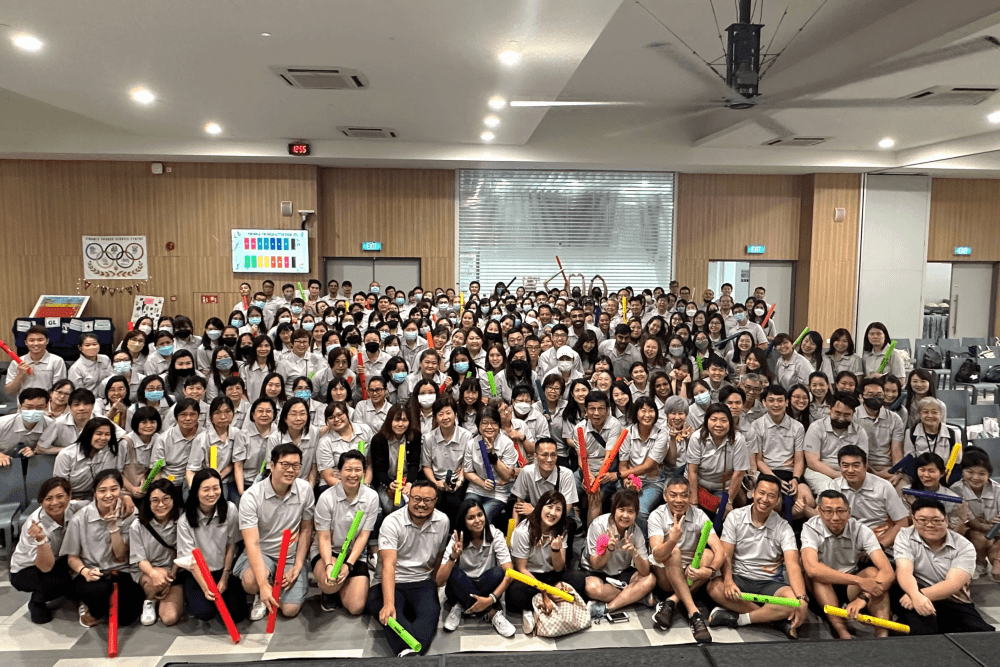
For groups above 100 participants, indoor team building is the safer default in Singapore. The combination of heat, humidity, and unpredictable rain makes outdoor formats a calculated risk rather than a straightforward choice. That does not mean outdoor is off the table, it means the decision needs to be made with a clear view of the trade-offs, not just based on what sounds more fun.
Over 10 years of designing and delivering corporate team building events in Singapore, we have run both formats extensively. The honest assessment: outdoor is enjoyable in the right conditions, but indoor consistently delivers more predictable engagement, and most of the time, participants cannot tell the difference once the programme starts. This guide covers everything that should inform that decision: weather, cost, group size, energy, logistics, and what experience tells us about how each format actually performs on the day.
Singapore’s weather is consistently hot and humid throughout the year, with no true dry season. Heat and humidity alone are enough to affect participant comfort within 30 minutes of outdoor activity, regardless of the time of year.
In our experience, participants are usually excited about being outdoors at the start. That energy fades noticeably once the heat sets in, and many quietly wish they were somewhere air-conditioned. We have seen this at events where the client was certain their team would love the outdoor setting. By the halfway mark, the mood shifts.
Beyond the baseline, there are two periods that carry additional risk. The monsoon season from November to January brings heavier and more prolonged rain, making outdoor events during this period significantly harder to manage without a strong contingency plan. June to September is peak heat, when the full effect of sun and humidity is most pronounced. For outdoor events in either period, timing and contingency planning are not optional extras, they are essential parts of the brief. Haze from regional fires is an additional variable that can affect outdoor plans with limited notice. Build a clear trigger point into your contingency plan: at what PSI reading does the event move indoors?
Use this as a general guide when planning outdoor events. Singapore has no truly ideal outdoor season, but some months carry more risk than others.
Period | Outdoor Suitability | What to Plan For |
February to April | Most manageable window | Post-monsoon, lower rainfall probability, slightly cooler mornings. Still hot and humid, but the most predictable period for outdoor planning. |
May to October | Moderate to high risk | Hot and humid throughout. June to September is peak heat. Participant energy drops noticeably with prolonged sun exposure. Plan activity pacing carefully and build in shade and hydration breaks. |
November to January | Highest risk | Northeast monsoon season. Higher probability of prolonged afternoon rain. A confirmed indoor contingency is not optional if your date falls in this window. |
As a general rule: if your preferred date falls in the monsoon window and you have flexibility, consider shifting to the February to April period. If the date is fixed, plan for indoor as the default and treat outdoor as a bonus if the weather holds.
Outdoor events are commonly assumed to be the cheaper option. In practice, this is often not the case, particularly for larger groups.
Indoor venues carry a higher upfront rental cost, but that rate typically includes tables, chairs, AV, and basic infrastructure. Setup complexity is lower, logistics are more contained, and there is no contingency cost to plan for. The total spend is more predictable from the start.
Outdoor space is rarely free. Parks and managed outdoor areas often require permits. Once you add tentage (for weather cover), generators for power and fans, tables and chairs, transport and setup costs, and a contingency budget, the total spend climbs quickly. For smaller groups below 80 participants, the fixed cost of outdoor setup can make it more expensive per head than an indoor alternative. The cost is also harder to pin down upfront because contingency requirements vary.
There is no absolute rule based on group size alone, but some practical patterns apply consistently.
Outdoor formats can work for groups from around 30 to 500 participants, but the logistical complexity increases significantly with scale. Coordinating movement, maintaining engagement, and managing safety across a large outdoor area introduces points of failure that do not exist in a controlled indoor environment.
Indoor formats scale more effectively. From 30 participants up to large-scale events with several hundred, indoor execution is easier to control, easier to adapt on the day, and less dependent on factors outside the organiser’s control. For groups above 100, indoor is the more reliable choice unless there is a specific format or client requirement that makes outdoor the right fit.
Outdoor activities are often assumed to produce better energy because of the movement and change of environment. The initial excitement is real. What does not always follow is sustained engagement. Heat and fatigue set in, and after the first 30 minutes outdoors, the energy curve tends to flatten or drop.
Indoor programmes, when well-designed and properly facilitated, produce more consistent engagement throughout. The assumption that indoor equals boring is one of the most persistent misconceptions we encounter. Engagement is driven by programme design and facilitation quality, not by whether the event is held inside or outside. A well-run indoor programme will consistently outperform a poorly executed outdoor one, every time.
A hybrid format often produces the best overall outcome. Participants enjoy going outdoors, but most do not want to stay in the heat for an extended period. A short outdoor segment, such as a mini race or movement-based opening activity, followed by a longer indoor programme allows you to capture the outdoor energy and novelty without exposing the group to the full effects of heat and weather.
The main practical constraint is venue availability. Spaces that offer both a usable outdoor area and a proper indoor facility are more limited in Singapore. If a hybrid format is the goal, venue selection needs to happen before the programme is finalised, not after.
February to April is generally the most suitable period for outdoor team building in Singapore. Rainfall is lower and heat, while still present, is more manageable than at the peak of the year. This does not mean outdoor events are straightforward during these months, only that the risk is relatively lower.
November to January carries the highest rain risk due to the monsoon season, and any event during this window should have a detailed rain contingency plan confirmed before booking. June to September is peak heat, and the full effect of the sun and humidity is most pronounced during this period.
When clients are set on an outdoor format, the first conversation is usually about walking through what that actually involves. Most people picture the enjoyable part of the experience and underestimate what comes with it: the heat after the first 30 minutes, the contingency logistics, the additional setup costs, and what happens to the programme if the weather does not cooperate.
In most cases, once these are laid out clearly, clients naturally move towards either an indoor format or a hybrid. The goal is not to talk anyone out of what they want. It is to make sure the decision is made with a realistic picture of what outdoor delivery actually requires at scale.
Indoor team building is not limited or repetitive. It covers a wide range of formats, energy levels, and group profiles. The categories below reflect the main types.
These are movement-driven formats adapted for indoor spaces. They maintain high energy and competitive engagement while keeping participants in a comfortable environment. Running Man, Squid Game Team Building, Wacky Wars, and Mini Olympics (adapted indoors) work particularly well for groups that want the outdoor feel without the weather exposure.
Build-based formats focus on teamwork, problem-solving, and collective achievement. Participants work together towards a shared physical outcome. DIY Coaster Adventure, Build A Car, and Build A Dream Team fall into this category. These work well for groups where the goal is collaboration and cross-team interaction rather than pure competition.
These are easier to manage for mixed groups and work well when physical intensity needs to be kept moderate. Minute To Win It, CSI Mystery, and Property Typhoon fall into this category. They are structured, engaging, and accessible regardless of fitness level or age range.
For groups where the priority is bonding over a shared experience rather than competition, culinary and creative formats offer a different kind of engagement. Makan Kakis, our culinary team building programme, is a strong example. Craft-based activities and painting workshops also fall in this space. These tend to work well for smaller groups or as part of a longer event that balances active and relaxed segments.
Venue plays a significant role in how any team building event lands. For indoor events, the key considerations are sufficient open space with minimal pillars, built-in logistics such as tables and chairs, good AV infrastructure, and a central location accessible for the group. Team building activities consistently require more floor space than standard seating layouts, always confirm the usable area rather than the stated capacity.
For groups wanting the option to go outdoors, venues that offer both indoor and outdoor spaces are ideal but more limited in Singapore. If a hybrid format is part of the plan, confirm the outdoor area and its usability before committing to the venue.
Factor | Indoor Team Building | Outdoor Team Building |
Weather risk | Minimal | High |
Comfort | Air-conditioned | Heat, humidity, rain exposure |
Cost predictability | More predictable | Variable due to setup and contingency |
Engagement | Consistent with good programme design | High initial energy, may drop after 30 minutes |
Logistics | Easier to manage | More complex |
Group control | Strong | More difficult for large groups |
Flexibility | Easier to adapt on the day | Limited once setup is fixed |
Best group size | 30 to 1,000+ pax | 30 to 500 pax |
Choose indoor team building when:
Choose outdoor team building when:
We work with clients to match format to group size, event date, and objective, then build the contingency in from the start. Fill in our enquiry form and we will give you a direct recommendation.
Read our guides about Indoor Team Building Activities, Outdoor Team Building Activities and Half-day Team Building Activities for Corporate Events.
Outdoor team building is possible year-round but carries consistent weather risk due to heat, humidity, and unpredictable rain. The highest-risk period is November to January (monsoon season). The safest window is February to April. Regardless of timing, proper contingency planning is essential for any outdoor event.
Outdoor is not always cheaper. Once permits, tentage, generators, furniture, transport, and contingency setup are included, the total cost can equal or exceed an indoor event. For groups below 80 participants, fixed outdoor setup costs can actually make outdoor more expensive per head. Indoor costs are generally more predictable and easier to manage against a set budget.
It is possible, but not recommended without a detailed backup plan. Rain disruptions are more frequent between November and January. If an outdoor event is planned during this period, a confirmed indoor contingency space and a clear trigger plan should be in place before the event is confirmed.
Several indoor formats are specifically designed for high energy and movement. Running Man, Squid Game Team Building, Wacky Wars, and Mini Olympics (adapted indoors) all maintain the competitive, active feel of an outdoor event while keeping participants comfortable. The energy level is driven by programme design and facilitation, not by the setting.
Good indoor venues for team building should have sufficient open space with minimal pillars, built-in furniture and AV infrastructure, and a central location accessible to the group. Hotels with function rooms, managed event spaces, and community club halls are common options at different budget levels. Venues that offer both indoor and outdoor components are ideal for hybrid formats but are more limited in availability.