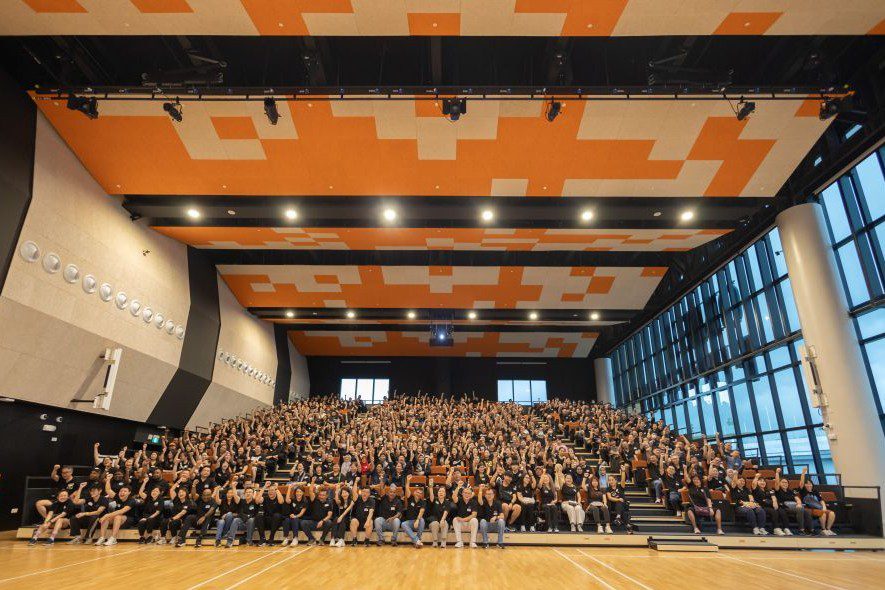
Indoor team building activities in Singapore typically fall into five categories: Dynamic and Active, Build and Create Together, Strategic and Problem Solving, Light and Casual Bonding, and Purpose and Values-Focused (CSR). For most corporate groups, indoor is the default choice because it offers better control, consistent participant comfort, and more predictable execution regardless of weather or group size.
We have been designing and facilitating indoor corporate events in Singapore for over 10 years, and in that time, the single most consistent pattern we see is this: clients initially lean towards outdoor, shift to indoor once they work through the full picture, and end up with a better event for it. Heat and humidity set in faster than expected, outdoor logistics add cost and complexity, and indoor programmes, when well-designed, deliver the same energy and engagement without the variables.
These are high-energy, movement-driven programmes adapted for indoor environments. They deliver the excitement and competitive feel people expect from outdoor events, in a controlled, air-conditioned space. Running Man, Squid Game Team Building, Wacky Wars, Mini Olympics, and Minute To Win It fall into this category. These work particularly well for groups that want high energy without the heat exposure.
Build-based formats are collaborative and hands-on. Teams work together towards a shared physical outcome, which naturally drives communication, problem-solving, and a sense of collective achievement. Build A Car, DIY Coaster Adventure, and Chain Reaction, where teams use everyday materials to design a sequence of cause-and-effect actions, are strong examples. In most cases, these programmes are paired with one or two lead-up games to warm participants up and build energy before the main activity begins.
These formats prioritise thinking, communication, and structured decision-making over physical activity. They suit groups where the goal is mental engagement, cross-team coordination, or working through a challenge together. CSI Mystery, puzzle-based challenges, and problem-solving simulations fall into this category. They are particularly effective for leadership groups, mixed seniority teams, or participants who are less comfortable with high-energy formats.
These are relaxed, inclusive formats focused on interaction and connection rather than competition. They work well when the objective is straightforward bonding, when the group profile is mixed, or when physical intensity needs to be kept low. Lighter versions of Minute To Win It and simple interactive game formats sit in this space. Corporate 100, PulseActiv’s indoor challenge programme, is also in this category.
CSR programmes combine team building with a social impact outcome. Common formats include building wheelchairs or assistive devices for donation, preparing care hampers, and challenge-based activities where teams earn points that translate into charitable contributions. The key to making these work is structuring them properly: when CSR activities are poorly facilitated, participants focus on completing a task rather than genuinely engaging with the purpose. A well-run CSR programme creates both a meaningful team experience and a real outcome.
Creative formats are more relaxed and work well for groups where the priority is bonding through a shared creative process. Big Picture, where teams each contribute to a section of a larger collective artwork, is a strong example. Painting workshops and other craft-based activities also fall here. These tend to work well for smaller groups or as part of a longer event that balances active and relaxed segments.
Indoor team building is highly adaptable. The same core programme can be structured to work for groups of 30 or groups of several hundred through adjustments to team groupings, the number of facilitators, flow and rotation structure, and space configuration.
A Running Man format, for example, can be run as a full-group experience or adapted into cluster rotations depending on the space and headcount. Build-based activities scale by adjusting complexity and team size. Table-based formats can be expanded or consolidated based on setup.
The question is not which programme works for a specific group size. It is how the programme is designed to work for your group. This is where experience in large-group facilitation matters: the same activity can land very differently depending on how it is structured, paced, and run on the day. We have delivered the same formats for groups of 50 and groups of 500, the mechanics are similar; the execution planning is entirely different.
The choice between a competitive or creative format depends on the group profile and the objective for the day, not just preference.
Competitive and high-energy formats work best when:
Creative, build, or bonding formats work best when:
From experience, leadership groups tend to gravitate towards structured, problem-solving formats. They respond well to activities that involve strategy, communication under pressure, and meaningful group outcomes. Formats that feel too light or purely fun can fall flat with senior teams if there is no depth to the challenge.
General or mixed groups tend to respond better to dynamic, interactive formats where energy is built gradually and everyone has a clear role. The key is designing the programme so that participation does not depend on seniority or confidence level. A well-facilitated indoor programme creates equal entry points for all participants, and that is not accidental. It is a result of how the programme is structured and how the facilitation team is deployed on the day.
Venue has a significant impact on how a programme runs. The considerations that matter most for indoor team building are usable floor space relative to group size, minimal pillars or obstructions, a layout that allows for movement and rotation, built-in logistics such as tables, chairs, and AV, and an accessible location.
A useful planning guideline: approximately 1.5 round tables per team for comfortable working space. Most venue capacities are quoted at maximum seating usage. For team building, you consistently need more floor space than standard seating layouts allow. Always confirm the usable area against your programme requirements, not just the stated capacity.
For groups that want the option to go outdoors, venues with both indoor and outdoor components are ideal but more limited in availability. If a hybrid format is part of the plan, confirm the outdoor area and its suitability before committing to the booking.
Relying on a venue’s maximum capacity number without considering the actual space needed for active programmes. Team building requires more floor area than standard seating configurations, and discovering this on the day is too late to fix.
Engagement is driven by programme design and facilitation, not the setting. This misconception leads some teams to push for outdoor formats that introduce weather, cost, and logistics risk without a meaningful gain in participant experience. We have run back-to-back indoor and outdoor events for the same clients, and the post-event feedback rarely reflects a preference for either format. What it reflects is whether the programme was well-run.
Trying to run high-movement programmes in tight or pillar-heavy venues affects flow, safety, and energy. The programme needs to be matched to the space, or the space selected to suit the programme.
Too many activity segments, poorly paced transitions, or a programme structure that does not build energy gradually. A session that feels fragmented or drags in the middle loses participant engagement quickly and is difficult to recover from.
Most clients come in asking for something high energy, different from what they have done before, and preferably outdoors. In practice, the first two are achievable indoors. The third is worth questioning.
Once cost, weather, and logistics are factored in, indoor consistently becomes the more practical and cost-efficient option, particularly for groups above 100 participants. Participants may enjoy the idea of going outdoors. What they remember at the end of the day is whether the programme was fun, well-run, and worth their time. A well-designed indoor programme delivers on all three without the variables.
Indoor programme pricing varies depending on duration, group size, and what is included in the package. For a full breakdown of per-pax benchmarks and what each budget tier covers, see our guide: How Much Does Team Building Cost in Singapore.
As a general note, indoor formats tend to be more predictable in cost compared to outdoor events, where contingency planning, permits, tentage, and setup logistics can add meaningfully to the total spend.
We work with clients across all group sizes and industries to match format to group profile and event objective. Fill in our enquiry form and we will recommend the right programme for your team.
Read our guides about Indoor vs Outdoor Team Building Activities, and Best Team Building Activities.
Contact us here to enquiry more or discuss about your event. Click here to read more articles like this.
Build A Dream Team is one of the most consistently well-received programmes across different group profiles: it is collaborative, structured, and works across seniority levels. Other popular formats include CSI Mystery, Property Typhoon, Squid Game Team Building, Wacky Wars, and Running Man. The right choice depends on your group profile and the energy level you are aiming for.
Common options include hotel function rooms, managed event spaces, community club halls, and corporate training facilities. The most important criteria are usable floor space, minimal obstructions, built-in furniture and AV, and central accessibility. Venues that also offer an outdoor component are ideal for hybrid formats but more limited in availability.
Yes. Indoor formats scale effectively with the right structure, facilitation team size, and venue. For groups of 100 or more, indoor is often the more reliable choice precisely because it removes the weather and logistics variables that become harder to manage at larger headcounts.
Table-based game formats, CSI Mystery, problem-solving simulations, Big Picture, and creative workshop formats are all suitable for participants of any fitness level or age. Indoor programmes are generally easier to design for mixed groups because the range of formats is wider.
Pricing depends on programme duration, group size, and what is included. For a full breakdown by budget tier and what each range covers, see our guide: How Much Does Team Building Cost in Singapore.