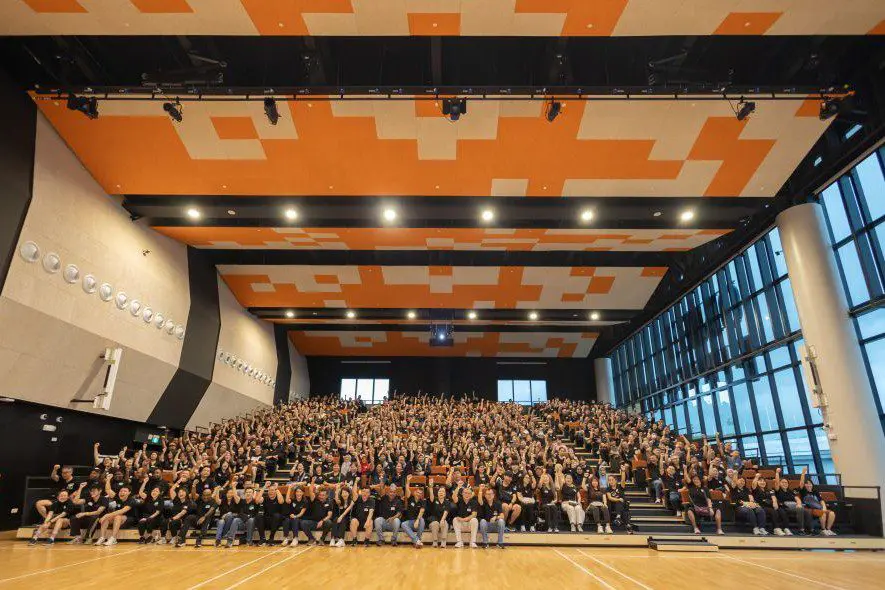
The right venue for a corporate team building event in Singapore depends on the activity format, group size, and whether a wet weather fallback is available. The most important factors are that the space fits the activity (not just the headcount), that outdoor programmes have a confirmed indoor option, and that the all-in cost including logistics, insurance, and catering restrictions has been reviewed before committing. Most venue decisions that cause problems were made based on capacity figures alone without checking whether the space actually works for the programme.
We have been providing venue sourcing advisory as part of our event design process for over 10 years, working with MNCs, large corporates, and organisations running events at 1,000 participants and above. The venue issues that follow are ones we encounter regularly, and most of them surface after the booking has already been made.
A venue that holds 200 people is not automatically a good venue for a team building event for 200 people. The number that matters is usable activity space, not seated capacity. A ballroom that accommodates 200 people for a dinner may not leave room for 10 activity stations plus circulation and equipment. A sports hall rated for 300 seated may have ceiling height restrictions that make certain activities unsuitable.
Before looking at any venue, confirm the activity format. Is it a sports day with a field component? A station rotation that needs multiple breakout zones? A race that uses the surrounding area? A creative activity that needs tables and power access? The answers narrow the venue shortlist faster than any other filter. Choosing a venue before the format is decided is one of the most common reasons events end up constrained by their venue rather than enhanced by it.
There are six broadly distinct venue types used for corporate team building in Singapore. Each has different strengths, limitations, and planning requirements.
| Venue Type | Best For | Key Advantage | Key Consideration |
| Hybrid venue (outdoor + indoor fallback) | Sports days, race formats, station rotation, any large-group activity | Most versatile; built-in wet weather cover | Limited supply; books out 3–6 months in advance during peak season |
| Sports hall / indoor arena | Sports day formats, Mini Olympics, large indoor games | Controlled environment; ceiling height for sports activities | Typically no on-site food logistics; catering must be arranged separately |
| Outdoor park or field | Race formats, station games, field sports | Open space, natural setting, lower cost | Permit required; fully exposed to weather; wet weather plan is mandatory |
| Beach or coastal venue | Beach games, station activities, sand-based sports | High-energy setting; unique atmosphere | Heat management critical; limited shade; logistics more complex |
| Multi-purpose hall / function room | Table-based games, creative activities, CSR builds, indoor station formats; some non-ball sports if space permits | Reliable logistics; F&B usually available | Ball games not suitable; ambience more functional than a purpose-built sports venue |
| Urban / city route | Amazing Race formats, Click Snap Move, city-based games | No venue rental cost; MRT provides built-in wet weather cover | Detailed planning required; cafes and retail require a booking or spend to use; groups under 50 should have a home base venue |
A hybrid venue combines usable outdoor space with a covered or indoor alternative in the same location. For event organisers, this solves the single biggest planning problem in Singapore: weather. The outdoor programme runs as designed, and if rain arrives, the fallback is already in place without relocating the group.
The most practical hybrid configurations are venues that have both a field or open outdoor area and an adjacent sports hall, multi-purpose hall, or covered pavilion. Schools with sports halls and adjacent fields, parks with covered multi-purpose spaces, and certain community venues with compound layouts fall into this category. The key qualification is that both spaces must be genuinely usable for the activity, not just technically present on the site map.
Demand for hybrid venues in Singapore consistently exceeds supply during the July to November peak season. The venues that genuinely work for large-group corporate activities, with adequate outdoor space, covered fallback, and workable logistics, are a relatively small pool. During peak season, these book three to six months in advance. Planning an event for September or October and starting venue conversations in July means working with what is left, not what is best. We help companies build their annual events calendar specifically to avoid this, locking venue and date first, then designing the programme around it.
Sports halls are the preferred venue for corporate sports day formats. The main requirement is ceiling height: activities that involve throwing, jumping, or elevated equipment need adequate clearance. Sports halls including badminton and basketball courts generally provide the floor space and ceiling height that work for corporate sports day programmes.
The most important thing to confirm upfront when using a sports hall is food and catering logistics. Most sports halls have no on-site catering infrastructure. There is no kitchen, no assigned caterer, and sometimes no agreement for external caterers to operate on-site. If food is part of the event, this needs to be confirmed and arranged separately, including delivery access, where food will be served, and whether the hall permits outside catering at all. This catches organisers more often than almost any other venue issue, and it surfaces late, when the booking is already locked and the caterer has already been briefed.
Sports halls are generally not the right venue when the programme includes a carnival, food stations, or a significant catering component. For those formats, a venue with integrated catering logistics is the more practical choice.
Open-air parks and fields offer space and a natural setting that is appealing for large-group active formats. The planning requirements are more intensive than indoor venues. Organised group activities at parks managed by national parks authorities in Singapore require a permit, and NParks maintains a dedicated venue booking portal for park bookings and permit applications. Open fields that look available may be private land, school grounds, or managed public spaces, all of which have their own booking and permit processes. Confirming the venue status before communicating any details to participants is essential.
For outdoor venues, a wet weather plan is not optional. It must be confirmed before the event, not arranged if rain arrives. Options include a pre-booked tentage structure large enough for the full group, an adjacent covered space already confirmed and reserved, or a programme design that has a documented wet weather version ready to activate. The tentage cost for a large outdoor event is a real budget item and should be included in the base quote, not treated as a contingency.
Beach venues generate high energy and a distinctive atmosphere that works well for active, informal programmes. The primary consideration that is consistently underestimated is heat. Afternoon events at beach locations in Singapore, particularly from May through September, expose participants to direct sun with limited shade. Heat management needs to be designed into the programme: rest intervals, hydration points, available shade at key moments, and monitoring of participants who may be more affected by heat.
The tentage and wet weather requirements for beach venues are the same as for outdoor parks: a confirmed structure must be in place before the event, not arranged if rain arrives. Beach and park tentage is a real budget item, not a contingency. Equipment transport, sand management for certain activities, and the absence of an adjacent covered fallback at most beach locations require more detailed pre-event planning than park or hall venues. Groups arriving by their own transport need clear guidance on parking and access. For groups transported by coach, access points and drop-off logistics need to be confirmed with the venue.
Multi-purpose halls and hotel or building function rooms are well-suited to table-based team building activities, creative formats, CSR build programmes, and problem-solving activities that use materials and table space rather than large floor areas. If the hall is sufficiently large, non-ball sport formats and station-based active programmes can also work. Ball games are not suitable in this venue type. The ambience of a multi-purpose hall is also more functional than a purpose-built sports venue, which may or may not suit the tone the organiser is going for.
The practical advantage of function rooms is reliability: catering is usually available, AV infrastructure is in place, and the logistics are familiar. The limitation is space. A function room that holds 150 people for a dinner will be crowded for 150 people running an active programme. When reviewing a function room for a team building activity, ask for the floor plan showing tables and chairs removed, not the standard banquet layout. Usable activity space per person is the relevant measure.
Some activities require more table space than others. A table-based game that works with one round table per team requires far less floor area than a build activity like a car challenge, which needs significantly more working space per team for parts, tools, and assembly. Confirm the layout requirements for the specific activity against the cleared floor plan before committing.
Function rooms in hotels and commercial buildings sometimes have sound restrictions, curfews, or activity restrictions in the lease. Confirm whether the activity involves loud music, shouting, or physical contact before committing. Finding out on event day that the venue prohibits certain elements of the programme is a recoverable but avoidable problem.
For race-based formats, the city itself is the venue. Amazing Race formats and similar web-based race programmes use checkpoints across the central business district, neighbourhood precincts, or public areas accessible by MRT. There is no venue rental cost for the route itself, and the MRT network provides a structural wet weather tool built into the format: teams move between checkpoints via covered public transport. Urban routes are possible, but they require detailed planning and the logistics are more complex than fixed-venue events.
One of the most common misconceptions about urban routes is that cafes and retail locations can be used as checkpoint venues informally. They cannot. Cafes and retail shops will not allow a group to use their space unless there is a booking or a minimum spend arrangement in place. Any checkpoint that involves a commercial premise needs to be confirmed and arranged in advance as a commercial agreement, not just a briefing call.
For groups under 50 participants, a home base venue is strongly recommended even for race-based formats. A central holding point, ideally near key landmarks or an MRT interchange, gives the group somewhere to gather before the race, store bags, and return to in the event of rain. Without a home base at this group size, wet weather has no ready solution and the event loses its anchor point. The home base should be selected before the route is designed, not added on as an afterthought.
Urban routes are not suitable for programmes that involve large equipment, props, or materials. They work best for groups where mobility and self-direction are central to the experience.
The headline venue rental rate is rarely the final cost. Several additional charges apply across venue types in Singapore and are frequently missed in early budget planning.
| Cost Item | Why It Catches Organisers | What to Do |
| Public liability insurance | Many venues require this as a booking condition. It is frequently absent from the initial rental quote. | Ask for this in the first enquiry |
| Cleaning and restoration fees | Applied after the event, especially if food, equipment, or high-traffic activity is involved. | Confirm in writing before signing |
| Panel catering | Some venues require you to use their approved caterer list at fixed pricing. This removes your ability to negotiate or switch vendors. | Ask whether catering is open tender or panel before committing |
| Logistics and equipment access | Loading bays, freight lifts, and time slots for equipment delivery and collection are not always included and sometimes charged. | Confirm equipment access and timing during site recce |
| Overtime charges | Events that run beyond the booked slot incur per-hour charges that can be significant at premium venues. | Build buffer into your booked time slot |
| Tentage or wet weather structure | For outdoor events, tentage adds to cost and cannot be treated as a contingency item. It must be budgeted from the start. | Include in base budget, not as an optional add-on |
The most reliable approach is to ask every venue for a fully itemised all-in quote at the first enquiry stage, before the venue is shortlisted. Comparing all-in figures across venues, not headline rates, prevents budget surprises after a commitment has been made. When we handle venue sourcing for clients, this is the first document we request — and the difference between headline and all-in can be significant.
Venue capacity figures are a starting point, not a planning tool. For team building events, what matters is usable activity space per person and per station, not maximum seating capacity. Use the table below as a general guide when shortlisting venues.
| Group Size | Recommended Venue Types | What Changes | Key Action |
| Up to 50 pax | Function room, MPH, small sports hall, futsal pitch with roof, park with covered structure | Most venue types are accessible; format drives the choice more than size | For race formats, still recommend a home base for bag storage, gathering and wet weather even at this group size |
| 50–150 pax | Function room, MPH, sports hall, hybrid venue, field with tentage | All venue types remain applicable; usable floor space becomes more important to verify | Confirm usable space with furniture removed, not banquet or theatre capacity figures |
| 150–300 pax | Hybrid venue, large field with tentage or covered fallback, large sports hall | Logistics, station layout and wet weather planning become critical at this scale | Walk the venue with a layout sketch; confirm equipment access, catering logistics and fallback space simultaneously |
| 300 pax and above | Large hybrid venue, school compound, indoor arena | Venue supply is genuinely limited at this scale | Book as early as possible; very few venues handle 300+ with usable activity space and F&B |
For events with stations or activity zones, allow a minimum of 15 to 20 square metres per active station plus circulation space. For sports day formats with simultaneous field events, the outdoor space needs to accommodate multiple concurrent courts or lanes without overlap. Always walk the venue with a floor plan or rough sketch of your intended layout before confirming the booking.
Planning for over 100-pax event is different from planning for under 100 pax. It’s not just the number changes and more space. The operational design changes too and you can see full breakdown in our venues for 100-pax team building guide.
When assessing a venue, always ask for the round table capacity excluding stage, not the standard banquet or theatre figure. This gives you the clearest read on usable floor space for an active programme.
As a working guide:
These figures are for activity space only and do not include table and chair setup for meals or briefings.
Accessibility affects attendance and arrival stress, both of which affect the energy of the event. A venue that is difficult to reach by public transport will see more late arrivals, especially for large groups where not everyone has a car. For groups arriving by coach, confirm that coach parking or drop-off zones can accommodate the number of vehicles.
For outdoor venues, confirm that the access route from the main gate or road to the activity area is manageable. Venues that require participants to walk a significant distance from the car park or bus stop to the event site, particularly in afternoon heat, need this factored into the arrival programme. Equipment delivery routes, loading bay access, and the timeline for setup all need to be confirmed separately from participant access routes.
July to November is the peak season for corporate team building in Singapore. This is when the majority of Q3 and Q4 team events, year-end activities, and annual celebrations are held. Demand for the most functional hybrid venues, large sports halls, and well-located outdoor spaces is at its highest during this period.
• Hybrid venues and schools with outdoor + indoor space: 3 to 6 months in advance during peak season (July to November)
• Sports halls and indoor arenas: 2 to 4 months in advance during peak season
• Outdoor parks and fields: 6 to 8 weeks minimum for permit processing; longer for peak season
• Function rooms and hotel ballrooms: 4 to 8 weeks is often sufficient outside of peak season; 2 to 3 months during peak
• Urban/city routes: 2 to 4 weeks for logistics coordination; no venue booking required but checkpoint locations need advance briefing
For large events of 200 or more participants with specific space requirements, the window for finding a venue that genuinely fits narrows significantly during peak season. Starting venue conversations as soon as the event month is confirmed is more reliable than waiting until an activity is finalised.
Certain situations come up repeatedly in corporate event planning and are worth flagging directly.
Venues that look hybrid on paper but are not in practice. A sports hall with a small courtyard is not a hybrid venue for 150 people. The outdoor space must be proportionate to the group size and the activity.
Venues booked based on photos or past reputation rather than a current site visit. Venues change management, renovate, change their permitted use, or impose new restrictions. A site visit or a detailed written confirmation of permitted activities, access, and what is included should be part of every booking process.
Locking in venue and activity separately without checking compatibility. The event company and the venue need to be confirmed together, not in two separate conversations that are merged later. An activity that has been designed for a sports hall and then moved to a function room because the hall was not available requires a significant redesign.
Assuming all outdoor venues work for all outdoor activities. Beach venues are not interchangeable with park venues. A field with a hill or uneven terrain is not the same as a flat field. Confirm that the specific outdoor space is suitable for the specific activity before the booking is finalised.
Venue selection is one of the most consequential decisions in corporate event planning, and it is also one of the areas where early guidance makes the biggest difference. We provide venue sourcing advisory as part of our event design process and have extensive experience matching activity formats to the right spaces across Singapore.
Whether you are planning a sports day for 500, a creative afternoon for 80, or a race across the city for a smaller group, we can provide a shortlist, flag the right questions to ask, and help you avoid the surprises that show up after the contract is signed. Use the enquiry form to get in touch and we will respond within one business day.
Read our guides about How to Plan a Corporate Team Building Event and Corporate Team Building Budget Guide.
Contact us here to enquiry more or discuss about your event. Click here to read more articles like this.
A hybrid venue that combines outdoor activity space with an indoor or covered fallback option is the most versatile choice for most corporate team building events in Singapore. It allows the programme to run as designed while providing a confirmed wet weather alternative in the same location. For groups that specifically want sports day formats, a sports hall with adequate ceiling height and floor space is the most functional choice. For lower-intensity creative or problem-solving activities, a multi-purpose hall or function room works well.
For hybrid venues and any venue that has both outdoor and indoor space, three to six months in advance is the standard during the July to November peak season. These venues have limited supply and are consistently the first to book out. Sports halls and indoor arenas should be confirmed two to four months out during peak season. Function rooms and hotel venues are more accessible, but two to three months ahead is still advisable for peak season dates. Outdoor parks with permit requirements need at least six to eight weeks for the permit process alone, independent of venue availability.
Walk the full venue with your activity layout in mind, not just the main hall or field. Check usable activity space with furniture removed, ceiling height if the activity involves any elevated movement, access routes for equipment delivery and participant arrival, whether food can be served on-site and by whom, any sound or activity restrictions, and what is included in the rental fee versus what is charged separately. Ask specifically about public liability insurance requirements, cleaning fees, and whether catering is open or panel-only.
Yes, but organised group activities at parks managed by national parks authorities in Singapore require a permit, and the application timeline needs to be factored into planning. Open spaces that look publicly available may have their own management conditions. Confirm the booking and permit status of every outdoor space before communicating any event details to participants. A confirmed wet weather plan is also essential for any outdoor park event. The plan must be in place before the event, not arranged on the day if rain arrives.
The most frequently missed costs are public liability insurance (required as a booking condition at many venues), cleaning and restoration fees, panel catering restrictions that remove the ability to use your preferred caterer, logistics and equipment access charges for loading and delivery, and overtime charges if the event runs past the booked slot. For outdoor events, tentage is a real cost that must be included in the base budget. Always ask for a fully itemised all-in quote and compare across vendors before committing.