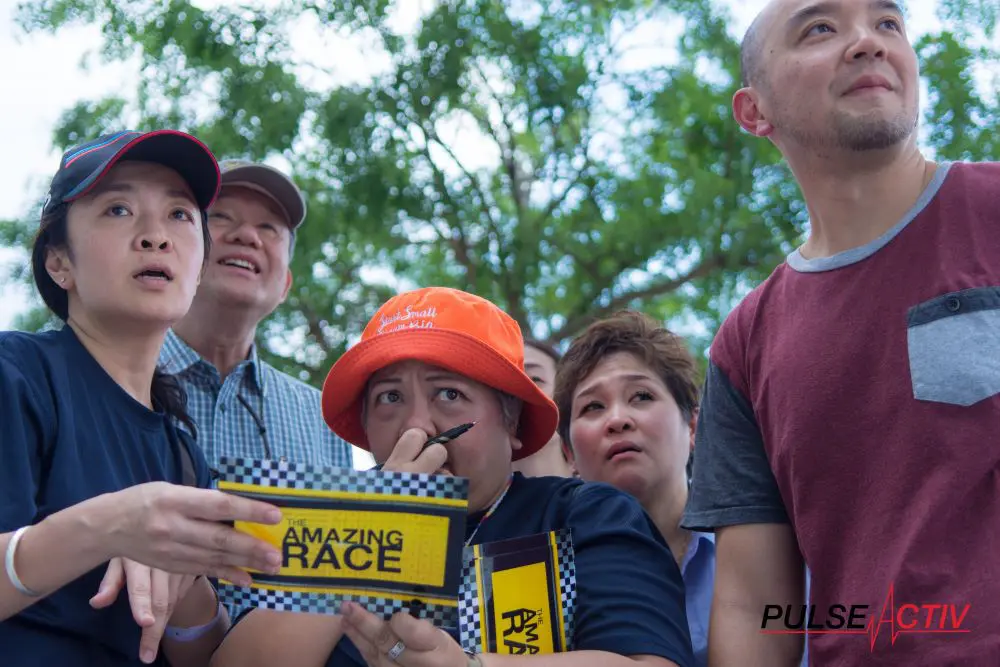
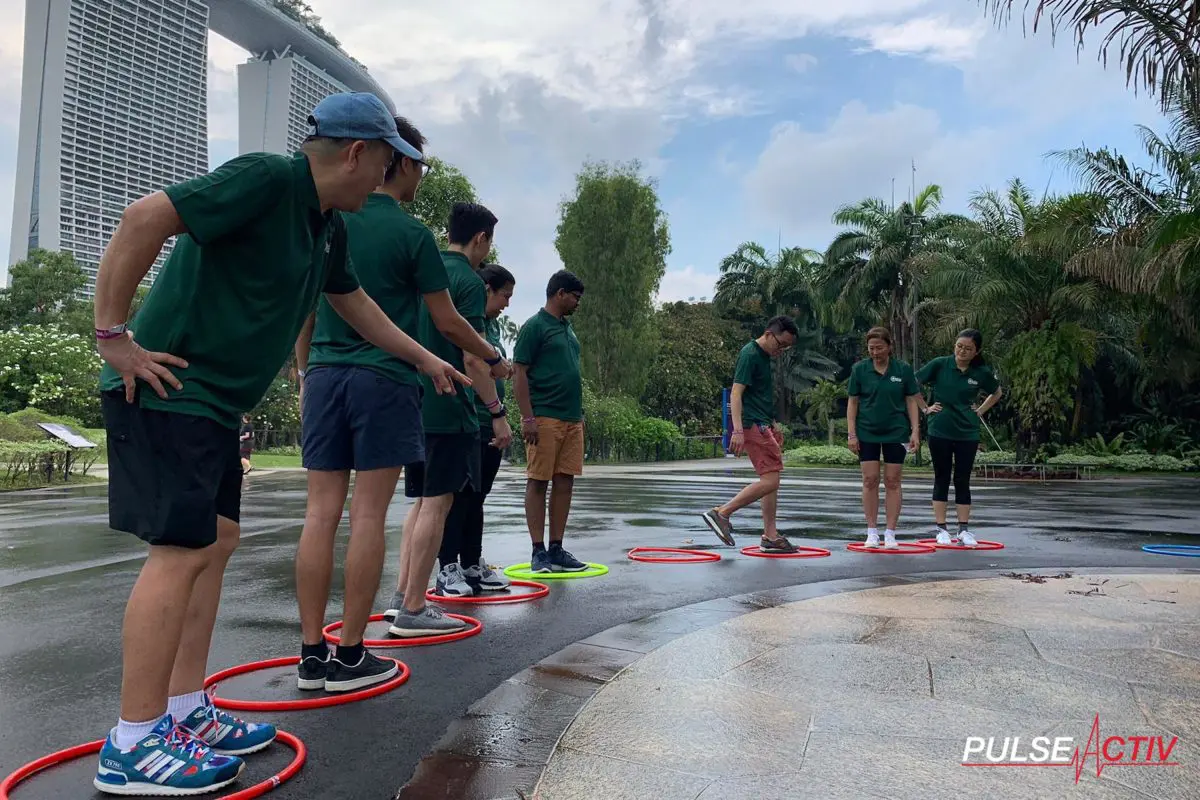
Think you’ve got what it takes to race across Singapore with your team by your side? Inspired by the hit TV show, our Amazing Race brings the same excitement, minus the camera crew, plus a whole lot more teamwork. Set around iconic landmarks, this adventure is all about working together, thinking fast, and adapting on the go. Each stop along the way brings new surprises, unexpected twists, and challenges that will keep everyone on their toes.
It’s less about being the fastest, and more about how well your team communicates, collaborates, and has fun doing it. Whether you’re looking to build stronger bonds or just want a refreshing change from the usual day out, this one’s made to energize, engage, and bring people together. Plus, it’s fully customizable. Keen to find out how it works? Let’s plan your next race.
Lioe HY, Meta
Anabel Choa, Johnson & Johnson
R Sekhar , Changi Airports International
SWAPD Team , Ministry of Education
Inspired by the popular race format, Pulse Amazing Race gets teams moving, thinking and working together as they solve clues, complete challenges and explore different parts of Singapore.
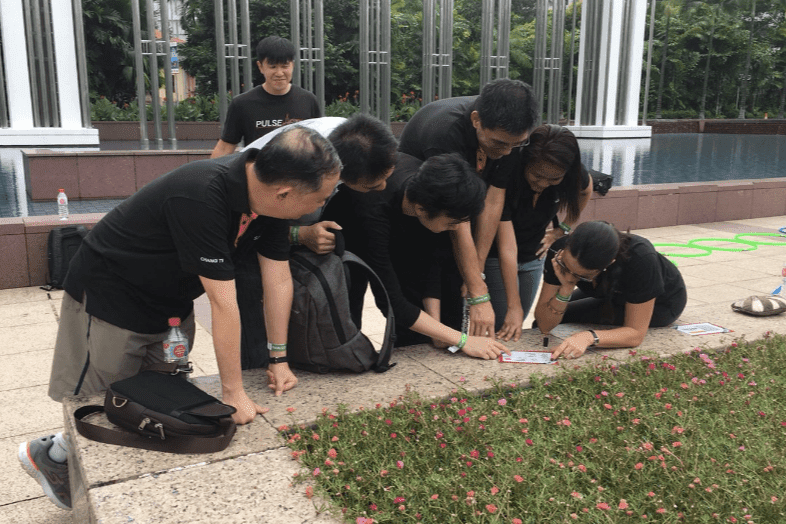
In a typical Amazing Race, teams move from station to station. They will solve a clue, travel to the next checkpoint, complete a team-based challenge, then unlock the next part of the race. The format creates a clear sense of progression and works especially well when you want your team to explore a location together instead of staying in one event space.
The route, challenge intensity and clues can be adjusted based on the group profile, venue and event objective. The experience should feel like an adventure, not just a long walk from point to point.
Our take: A good Amazing Race should feel like an adventure, not a long walk. The route, radius, stations and team flow must be planned properly so teams stay engaged from the first clue to the final checkpoint.
Pulse Amazing Race works best for groups of around 100 to 200 pax. Larger groups can still be considered depending on the route, radius, number of landmarks and number of station setups, but the format needs to be planned carefully.
Because Amazing Race is sequential, teams generally move through the race in a planned order. For smaller groups, this creates a strong shared journey. For bigger groups, we may use multiple routes or different starting points to spread teams out, but the routes must still feel fair, balanced and similar in distance.
For groups above 300 pax, a free-for-all or web-based race format may create a smoother experience because teams can choose their own stations, spread out naturally and tailor the intensity to their own comfort level.
Our take: Amazing Race is great when the route fits the group size. For larger events, giving teams more power of choice usually creates better flow and less waiting time.
Most corporate Amazing Race programmes work well with around 2 to 3 hours of race time. You should also allow time for registration, grouping, briefing, safety instructions, refreshments, prize presentation and closing.
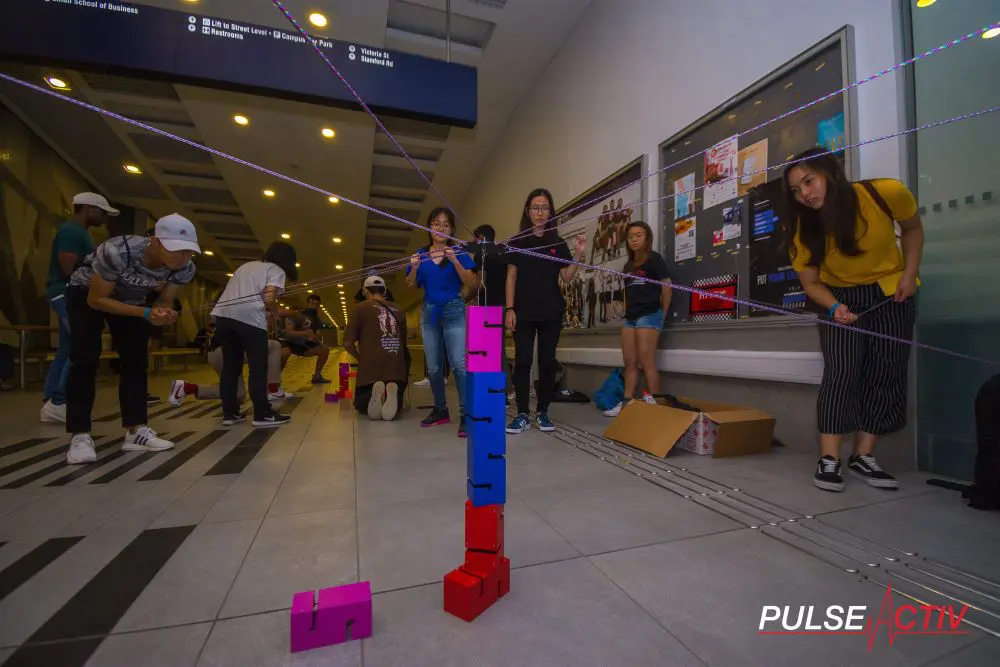
A race programme is not 100% gameplay. In a well-planned route, teams may spend around 5% of the time solving clue cards, 40% to 45% travelling between points and around 50% on station games or team-based challenges. The travel should still feel like part of the experience, not dead time.
As a guide, walking distances between stations should usually feel manageable, often around 300m to 700m with some variation depending on the location. A total route of about 2.5km to 3km can work well for many groups, but the final distance should always match the team profile and weather conditions.
Our take: The route should be exciting, but not exhausting. If the radius is too wide, the race becomes more about walking than teamwork.
The best Amazing Race locations are not just the prettiest places. They need enough landmarks, local quirks, parks, nature or interesting features for clues and challenges to feel meaningful. There should also be a big enough space for briefing, gathering and closing.
Popular options include Sentosa, City, CBD, Marina Bay / MBS, Kampong Glam and Chinatown. Sentosa works well because teams can move using tram, monorail or walking routes. City, CBD and Marina Bay are strong for landmarks, public transport access and a more urban race feel. Kampong Glam and Chinatown are suitable when you want more heritage, culture and local discovery.
The route should also be practical. We look at walking distance, road crossings, shelter, toilet access, crowd levels, MRT links and whether the end point can comfortably bring everyone back together.
Our take: A good location gives teams things to discover, not just places to walk to. The best route balances fun, safety, distance and operational flow.

Amazing Race is usually a sequential, clue-based race inspired by the TV-style format. Teams solve clues, move through planned checkpoints and complete station challenges along the way.
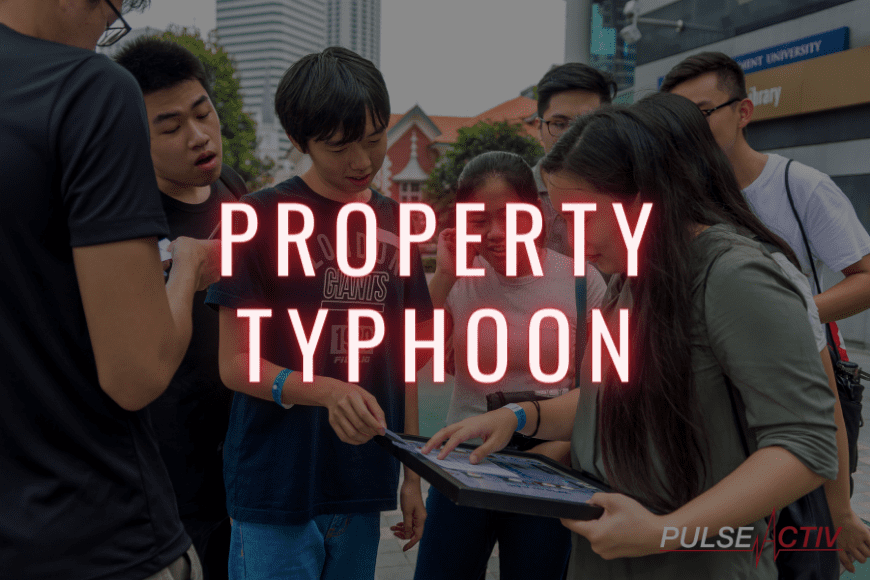
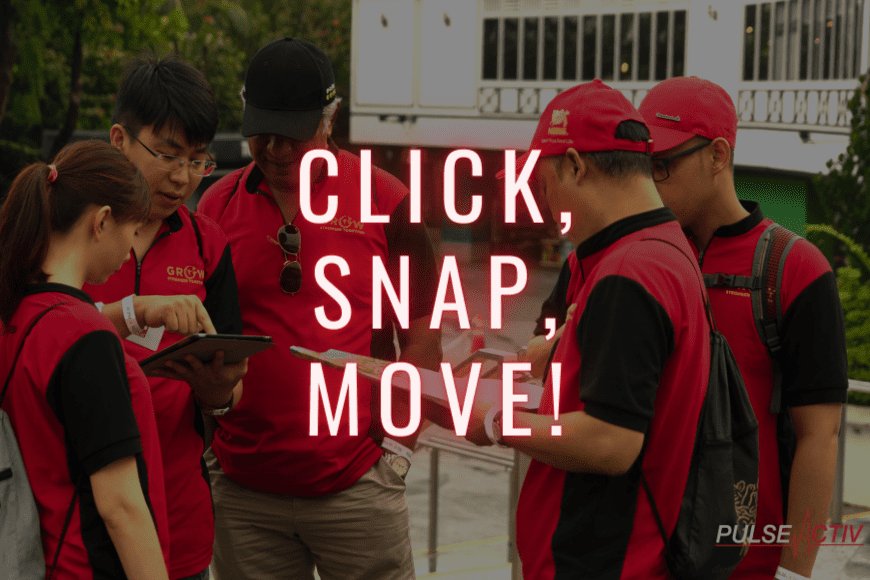
Other race formats work differently. Property Typhoon is inspired by Monopoly and usually offers more stations, often around 10 to 15, with more room for strategy and choice. Makan Kakis is a food and culture-themed race, suitable when clients want local flavour, food discovery and tiered challenge options. Click, Snap, Move is a digital race format with live scoring and can be run as either free-for-all or sequential, depending on the event design.
The right race format depends on group size, desired intensity, route, objective and how much choice you want teams to have. Bigger groups often benefit from formats where teams can spread out instead of all moving in the same sequence.
Our take: Not every race should be an Amazing Race. The strongest race experience comes from choosing the format that best fits your people, location and event goals. More in-depth details about Race-format team building activities is available.
Yes. The route structure should stay operationally sound, but the content can be customised to make the race feel more meaningful for your company.
Common customisations include company-related clue cards, interesting facts about the organisation, themed missions, photo or video tasks, team-based challenges, fast passes, detours and location-specific tasks. Some clients prefer a light and fun race, while others want the clues or stations to reflect company values, leadership messages or event themes.
Customisation should improve the experience, not make it confusing. If too many messages are forced into the race, teams may spend more time decoding the brief than enjoying the activity. The aim is to make the content relevant while keeping the flow simple and fun.
Our take: The best customisation feels natural. It should help teams connect the activity back to the company without turning the race into a lecture.
Wet weather should be planned from the start, not treated as a last-minute problem. For outdoor race formats in Singapore, we usually plan rain-ready routes, sheltered links, MRT-connected checkpoints and wet-weather holding options where suitable.
For light rain, the race may continue with ponchos and route adjustments if conditions are still safe. If weather conditions become unsafe, the outdoor segment may be paused, shortened or shifted to the wet-weather plan. Safety comes first, especially when lightning risk, heavy rain or poor visibility affects movement between checkpoints.
Where possible, the route should include practical shelter points so the experience does not collapse the moment it starts raining. This is especially important for groups that are less comfortable outdoors or events with tight schedules.
Our take: A wet-weather plan is not just a backup slide in the proposal. It should be built into the route, timing and communication plan from the start. We also cover wet weather backup plans for outdoor events in more detail.
Most issues are not caused by the game concept itself. They usually happen when the race format, route or station setup does not match the group.
The top three problems are usually a route that is too long, not enough station setups for the number of teams, or choosing the wrong race format for the group size and profile. For example, if 20 teams are sent through too few station setups, waiting time builds up quickly. If the route is too wide, teams may spend too much time travelling and too little time playing.
There are also other practical details to manage: briefing clarity, hydration, finishing times, wet-weather movement, end-point gathering and how to keep early finishers engaged while waiting for the rest of the teams.
Our take: The best race is not the one with the most stations. It is the one where teams keep moving, thinking and working together without unnecessary waiting time.
Beyond price and activity names, ask how the race will actually run on event day. A good vendor should be able to explain the route logic, number of stations, number of setups per station, estimated team flow and how waiting time will be managed.
You should also ask about wet-weather plans, route distance, starting and ending points, safety considerations, facilitator deployment, clue design, customisation options and whether the format suits your group size. If the race is digital, ask how live scoring works and what happens if teams face tech issues.
A vendor who understands race flow will be able to explain why a certain route or format is recommended, not just show you a list of games.
Our take: Choose a race organiser who can explain the operational thinking behind the fun. The smoothest races are designed before the first team even receives their clue card.
Not necessarily. Amazing Race can be planned with low, medium or high intensity depending on the group profile. The race does not have to be about running; it can be about teamwork, clue solving, communication, decision-making and completing team-based challenges together.
For mixed age groups or less active teams, we can reduce the walking radius, use more sheltered routes, include MRT-connected points and choose lower-intensity station games. For younger, more energetic or competitive teams, the race can be faster-paced with more movement and challenge elements.
The important thing is to be honest about your group. A route that works for a sporty team may not be suitable for a senior management group, mixed-age department or team that has just finished a long meeting.
Our take: Amazing Race should get your team outdoors, but it should not push them beyond what is enjoyable. The intensity should be adjusted so the experience feels energising, not draining.