The best corporate team building activities in Singapore span a range of formats: high-energy active programmes, collaborative build-based challenges, strategic problem-solving activities, and lighter social experiences. For large groups of 80 participants or more, the most consistently effective formats are Running Man, Pulse Amazing Race, Mini Olympics, Wacky Wars, Build A Dream Team, and Build A Car. For a full breakdown of what these events cost, see our guide on How Much Does Team Building Cost in Singapore.
The activity you choose matters. How it is designed and facilitated matters more. This guide covers what actually works, who each format suits, and what experienced organisers look for when choosing an activity for a large corporate group.
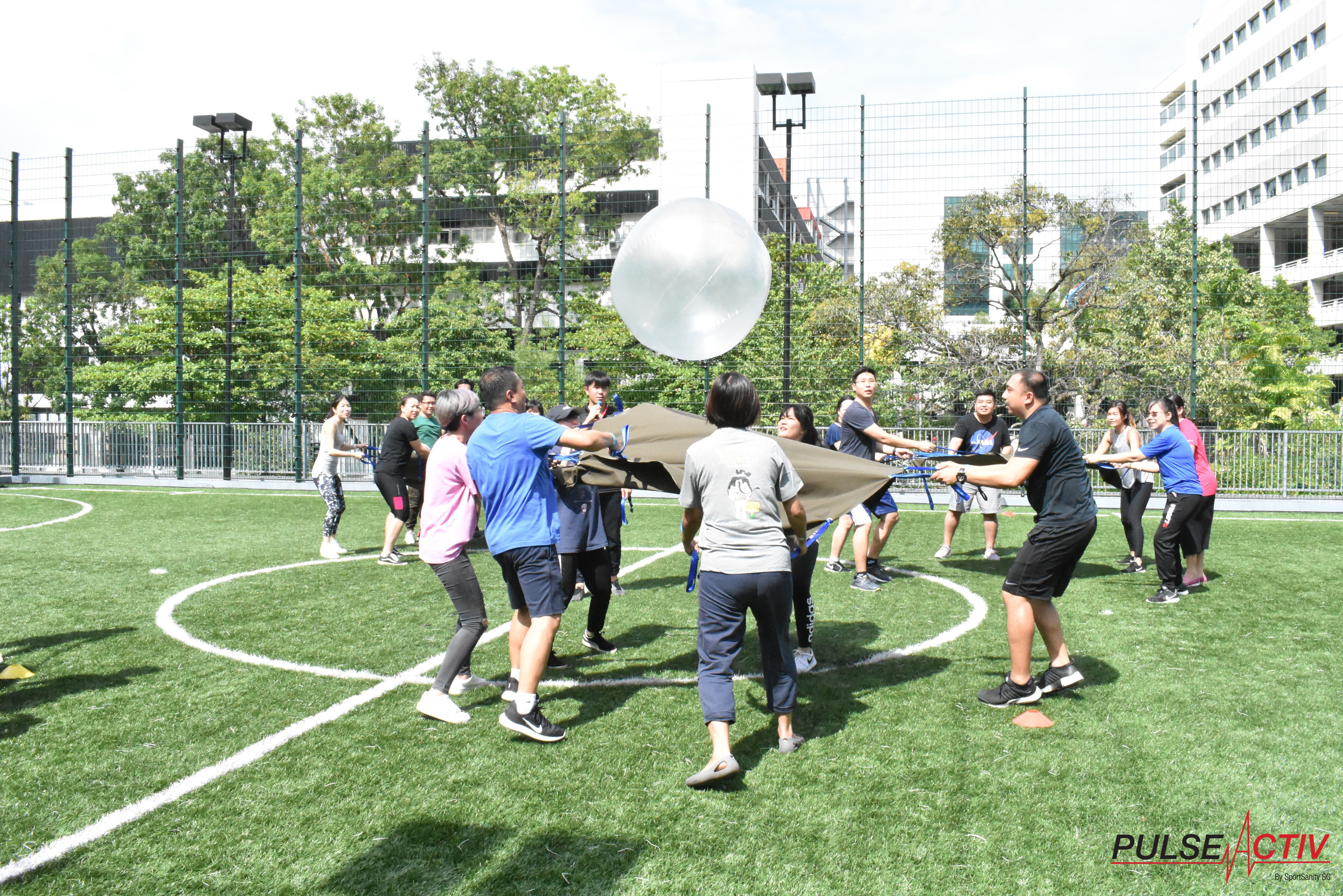
Running Man is PulseActiv’s most recommended activity for first-time corporate clients and consistently generates the strongest post-event feedback. The name suggests a physical race. It is not. Running Man is a series of team-based games where everyone plays together: challenge rounds, collaboration tasks, and competitive elements drawn from the spirit of the television format but redesigned around genuine team engagement. The games are fast, varied, and energetic without being physically demanding, which means the whole group stays in.
It works for groups up to around 300 participants before the format benefits from adapting to a cluster structure.
Best for: groups of 50 to 300, first-time corporate events, mixed seniority teams, anyone who wants high energy without outdoor exposure. Learn more about Running Man.
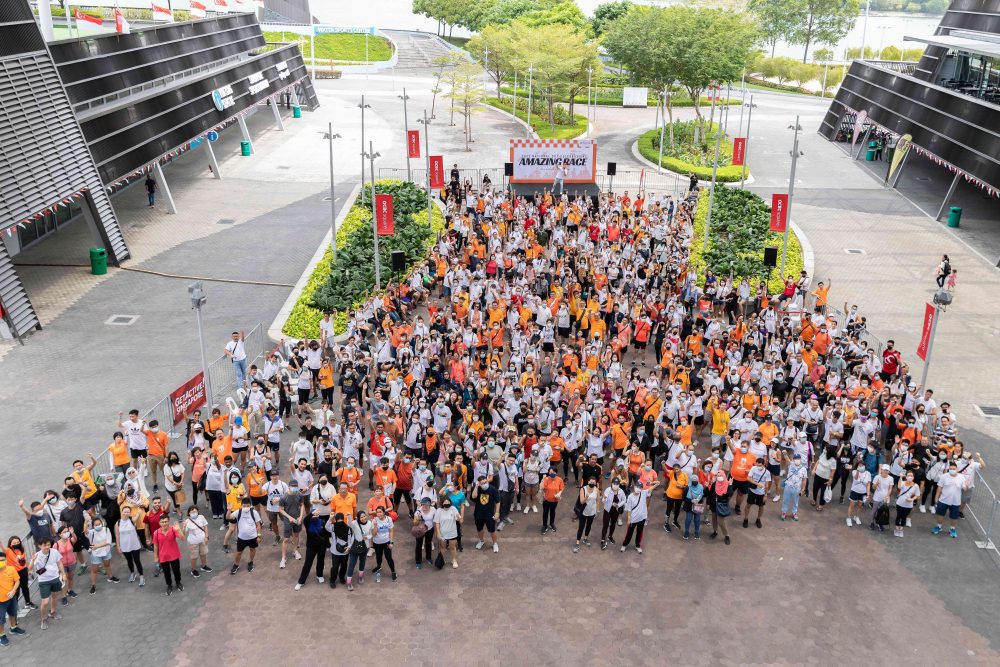
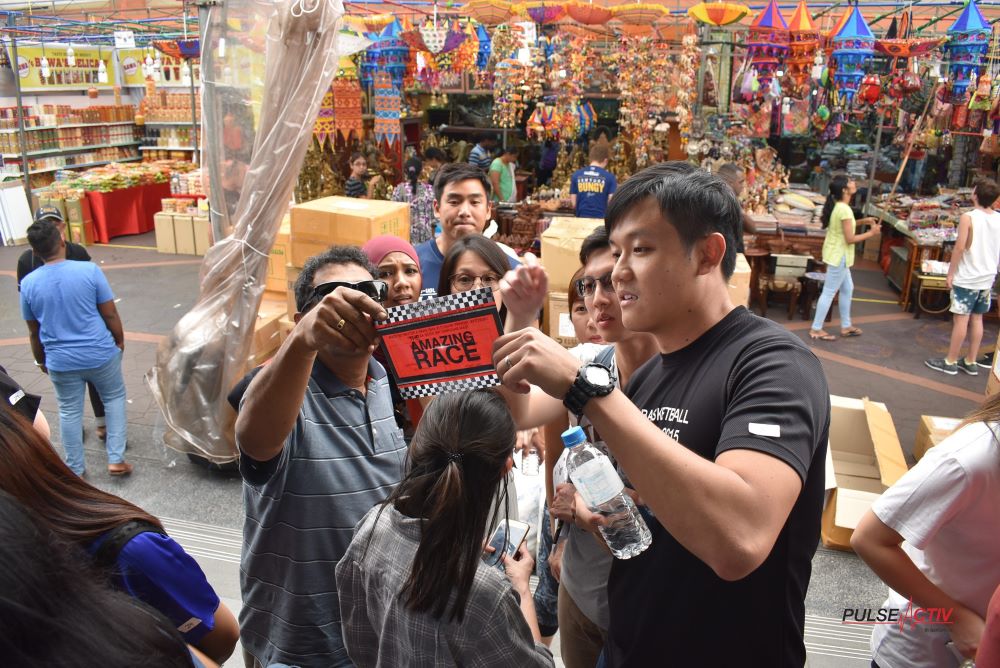
Pulse Amazing Race is a station-based format where teams move through a series of challenges, with each station designed as a distinct team task rather than individual tests. It works well indoors or in semi-outdoor environments and scales reliably for large groups. The competitive structure, time pressure, and variety of station challenges keep energy high throughout. It is one of the most frequently recommended activities for groups that want movement and competition without committing to a fully outdoor event.
Best for: groups of 50 to 300, mixed-age corporate groups, organisations wanting a structured competitive format. Learn more about Pulse Amazing Race.
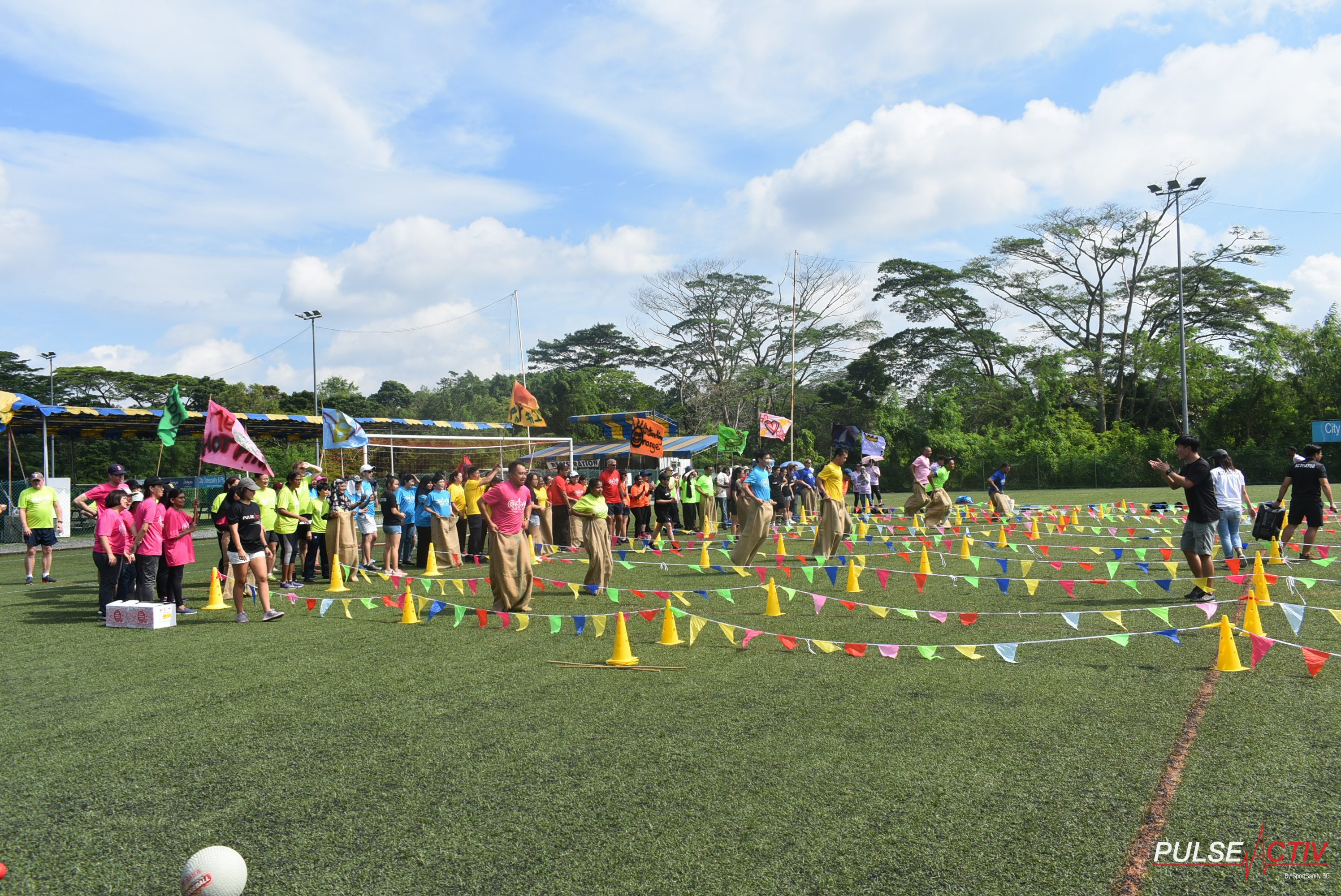
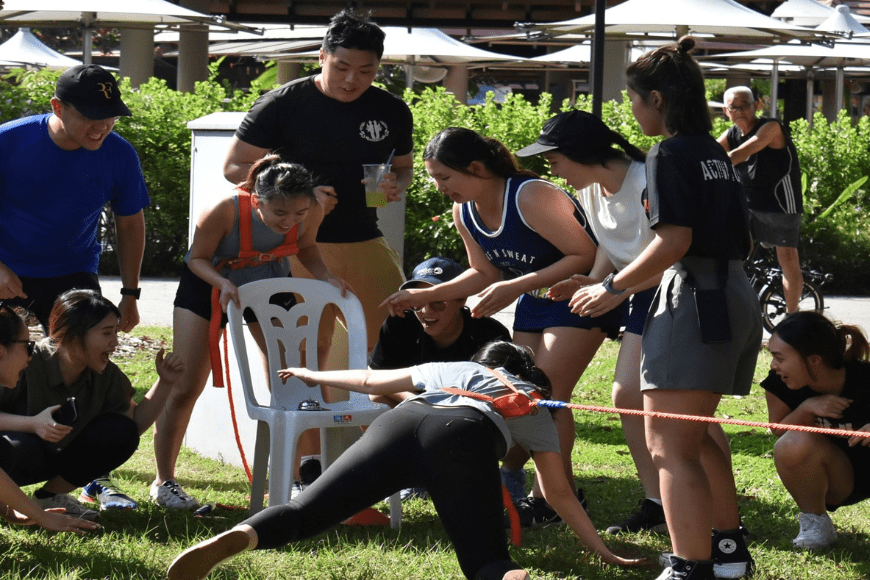
Mini Olympics is one of the most popular choices for large corporate groups in Singapore. It runs in three phases that build to a natural climax. Part 1 is a Telematch section: team-based relay and coordination games that get everyone warmed up and engaged from the start. Part 2 opens into concurrent sports events running simultaneously across the venue, so all teams are active at the same time rather than watching and waiting. Part 3 is the Finale, a high-stakes collective moment such as tug of war, where the day’s scores converge into a decisive group experience.
The format scales from 100 participants up to several hundred. Events can be designed around team strategy rather than individual physical fitness, so mixed-ability groups participate on equal terms. For companies wanting a traditional Sports Day feel with proper facilitation and scoring, this is the format.
Best for: groups of 100 to 500+, annual company days, large milestone celebrations. Learn more about Mini Olympics.
Wacky Wars is built around friendly head-to-head competition. The design is deliberate: teams go up against each other through a sequence of challenges where competition is the engine driving the energy, not just a backdrop to collaboration. That competitive dynamic, played out in a lighthearted setting, is what makes the event work. Groups get genuinely invested in the outcome, and that investment produces participation rates and event energy that purely collaborative formats often cannot match.
The energy is consistently high, participants regularly describe it as one of the most enjoyable events they have been part of, and it adapts to cluster structures for larger headcounts.
Best for: groups of 50 to 300, organisations wanting a high-energy format with strong competitive team dynamics. Learn more about Wacky Wars
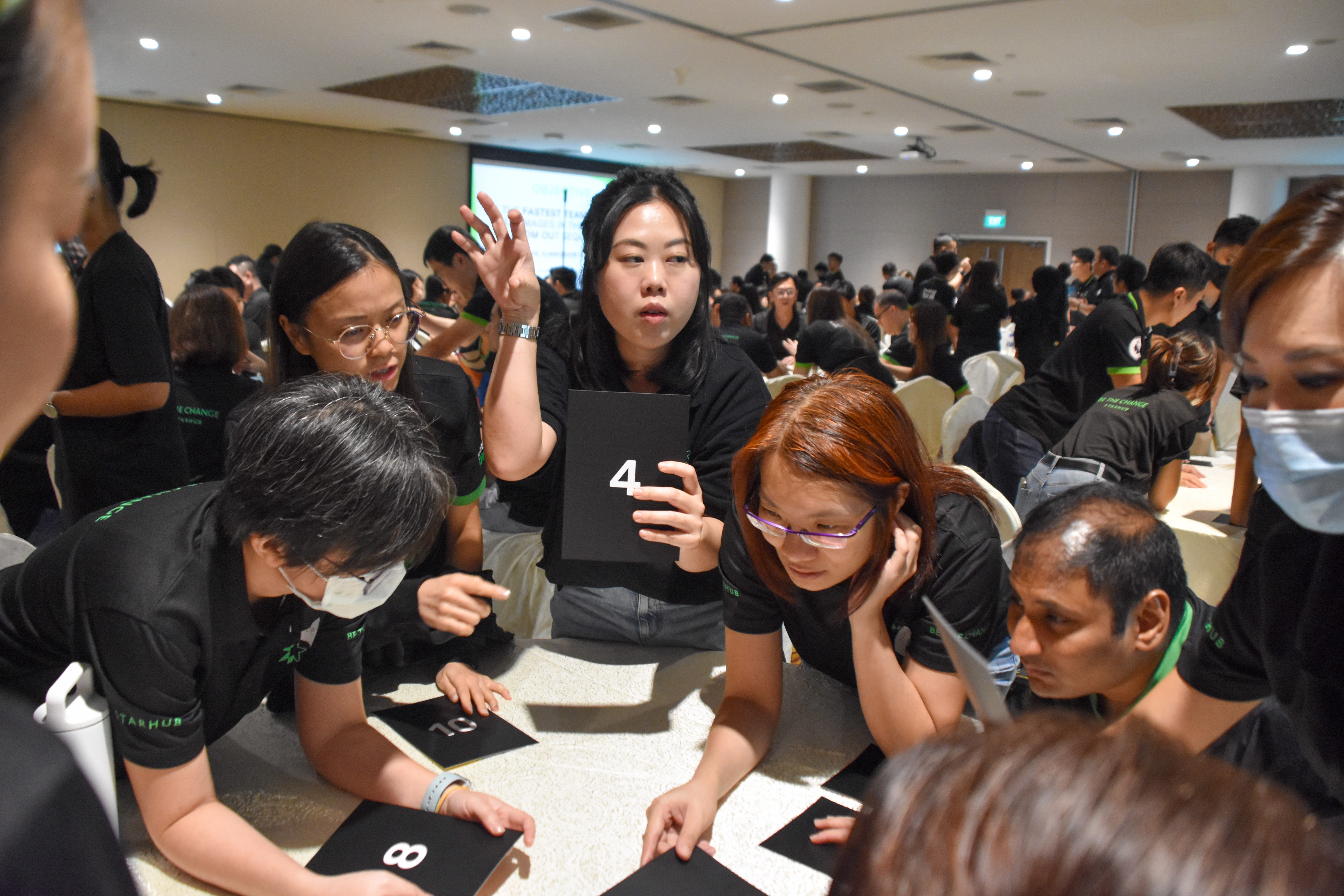
Build A Dream Team is the most broadly applicable activity across different corporate group profiles. It is collaborative, table-based, and works across seniority levels without requiring physical activity. Teams work together to build and present their vision of an ideal team, which drives communication, shared thinking, and outcomes that connect directly to workplace dynamics. It is the activity that translates most naturally into a post-event conversation. For first-time clients who are uncertain about group energy or physical ability range, this is often the safest and most meaningful recommendation.
Best for: mixed seniority groups, leadership teams, organisations wanting outcomes that connect to workplace culture. Learn more about Build A Dream Team
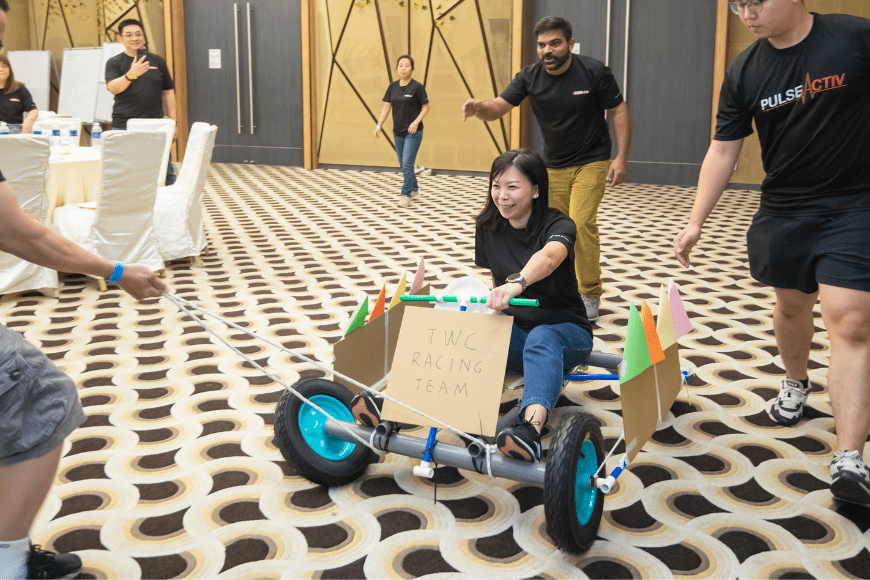
Build A Car is a hands-on collaborative challenge where teams design and build a working model car together. The format drives clear role assignment, creative problem-solving, and team accountability because the output is tangible and tested. It works well for groups that respond better to building something real than to game-based competition, and the reveal and race element at the end creates a genuine collective moment.
Best for: groups of 30 to 150, organisations focused on collaboration and problem-solving outcomes. Learn more about Build A Car
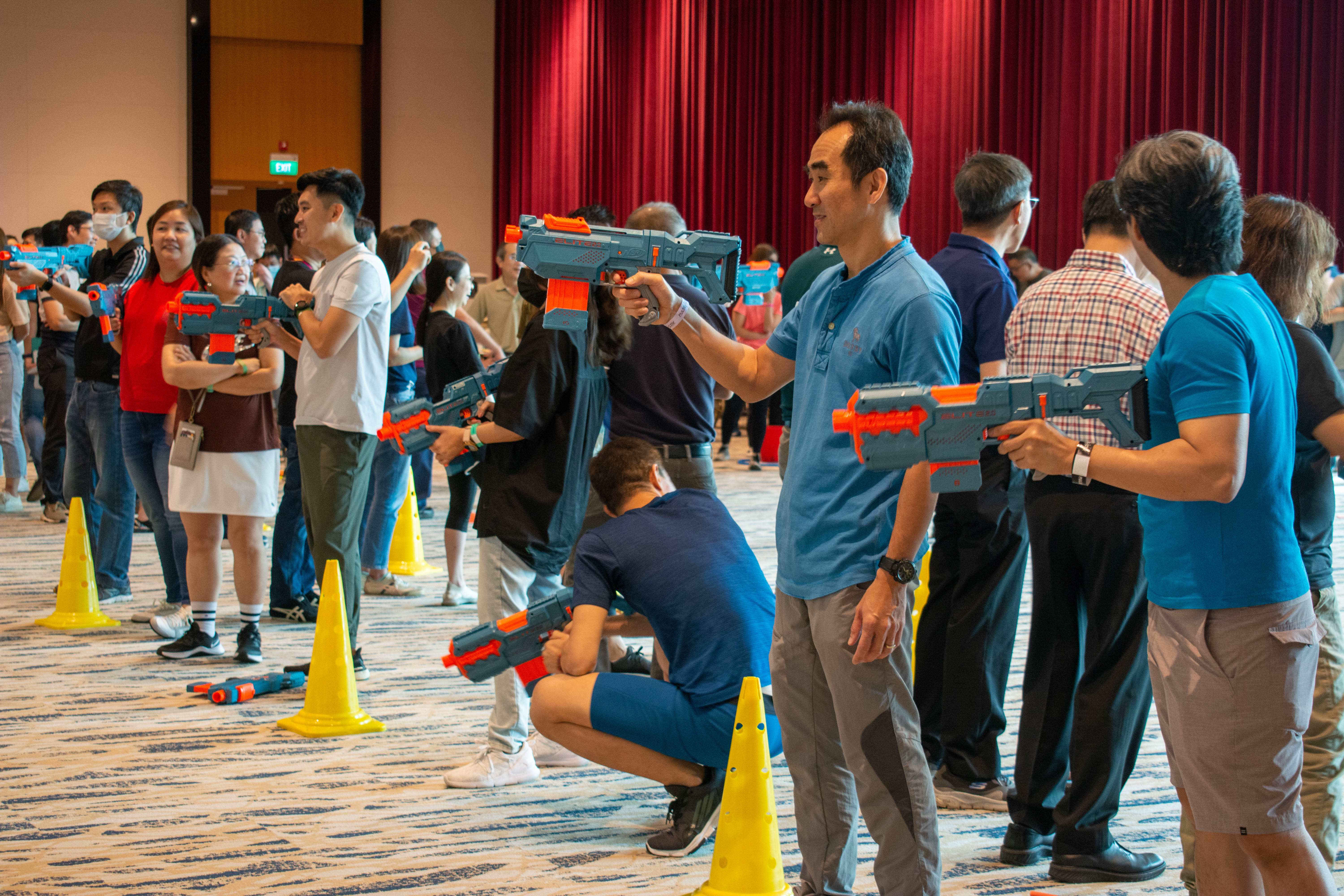
Squid Game Team Building draws on the cultural recognition of the series to create immediate engagement and anticipation. The format uses the visual language and challenge structure of the show but is designed around team participation rather than elimination. It generates strong pre-event buzz and works particularly well for groups that respond to shared cultural references. The format is most effective for groups up to around 150 participants.
Best for: groups of 40 to 150, organisations wanting high novelty and strong pre-event excitement. Learn More about Squid Game
Property Typhoon blends strategic decision-making with team movement. Teams manage resources, make property investment decisions, and compete across challenges that test both strategy and execution. It scales particularly well for large groups: PulseActiv has run Property Typhoon for over 2,000 participants using a Free and Easy structure where stations are multiplied to ensure no waiting. For organisations wanting a format that feels sophisticated rather than purely physical, this is a strong option.
Best for: groups of 80 to 2,000+, large milestone events, organisations wanting strategy and movement combined. Learn more about Property Typhoon
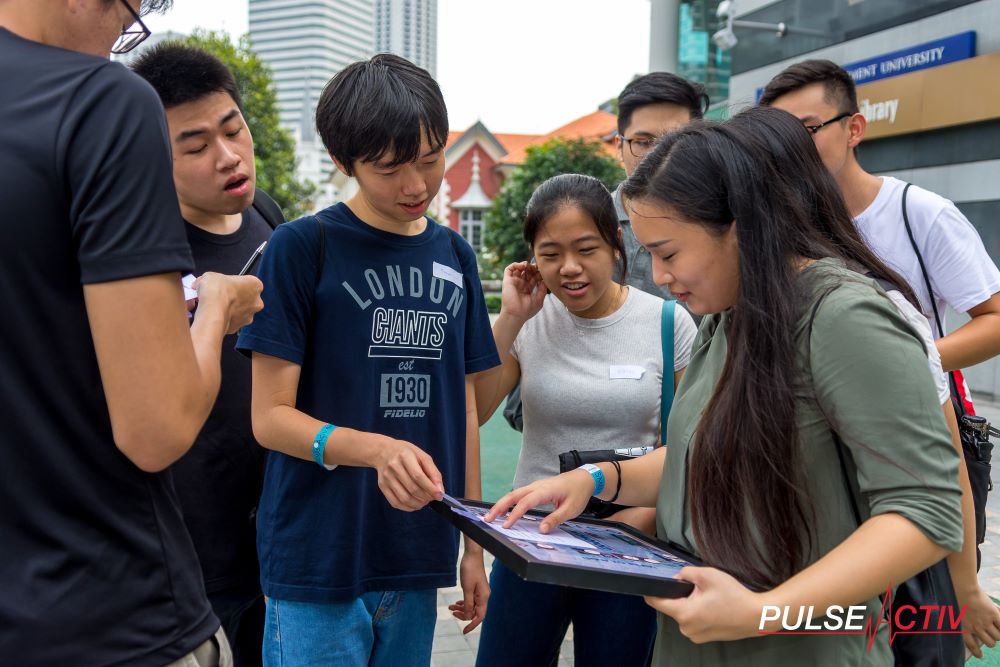
CSI Mystery is an investigation-format activity where teams work through clues, evidence, and challenges to solve a structured case. It suits groups that prefer mental engagement over physical activity, and it works particularly well for mixed groups where not everyone is comfortable in high-energy formats. The narrative structure keeps participants focused and the debrief creates a genuine shared outcome.
Best for: groups of 30 to 150, mixed groups with varied fitness levels, organisations focused on problem-solving and communication. Learn more about CSI Mystery
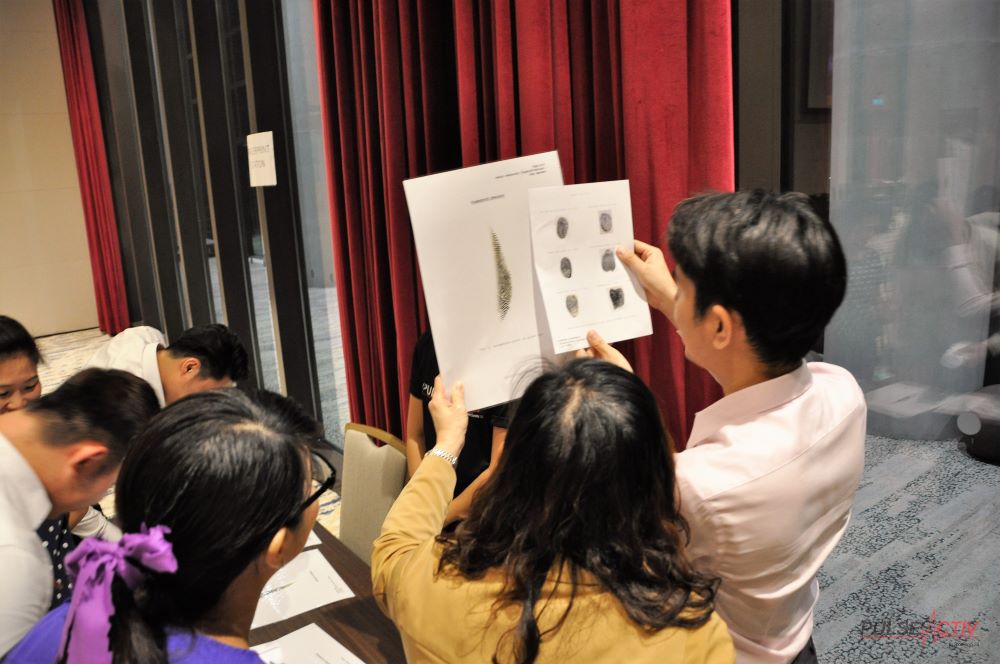
Not every corporate event calls for competitive energy. These formats sit at the lighter end of the spectrum and are designed to create connection through good times, laughter, and shared experience rather than structured competition.
Makan Kakis centres on food as the bonding medium. Teams work through food-related challenges in a relaxed, social setting where the shared eating experience carries as much weight as the games. It works well as part of a longer event day or as a standalone programme for groups where the goal is a relaxed, enjoyable afternoon together.
Minute To Win It is table-based team bonding at its most accessible. Fast-paced mini challenges, genuine laughter, and a low-pressure atmosphere make it a natural fit for groups that want to have a good time without the intensity of competitive formats. It is consistently one of the most crowd-pleasing activities for mixed groups.
Corporate 100 is an indoor physical challenge format launching soon from PulseActiv, bringing high-energy movement into an office or function room setting for groups that want physical engagement without going outdoors.
Best for: groups of 30 to 100, corporate social events, anniversary celebrations, mixed groups where a relaxed and enjoyable experience is the priority. Learn more about these activities.
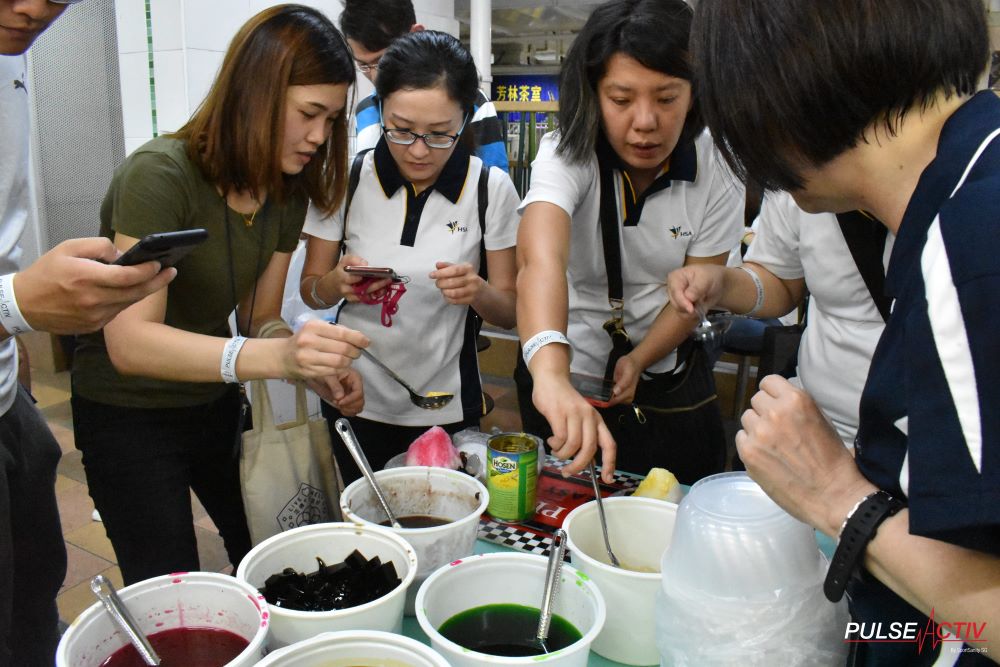
For companies with a community giving objective, CSR formats offer a different kind of team bonding. Participants work together toward something that benefits others, which creates a shared sense of purpose that purely competitive or social formats cannot replicate.
Simple CSR formats include hamper building, where teams assemble and pack care packages for donation, and wheelchair assembly, where teams build functional wheelchairs that are donated to charity. CSR Mini Golf is a build-and-play format where teams construct their own golf holes using provided materials, with the finished course donated or repurposed for a charitable cause. These formats are accessible for all fitness levels and work well as part of a longer event day.
More immersive CSR programmes involve participants directly in community outreach: beach cleanups, home cleaning and repair visits, and similar hands-on giving experiences. These are not listed on the standard activity menu but can be arranged for companies with a specific community purpose. Speak to PulseActiv directly if this is the direction you want to take.
Best for: groups of 30 to 200, companies with ESG or community giving objectives, events where a sense of purpose is as important as the team fun. Learn more about these activities.
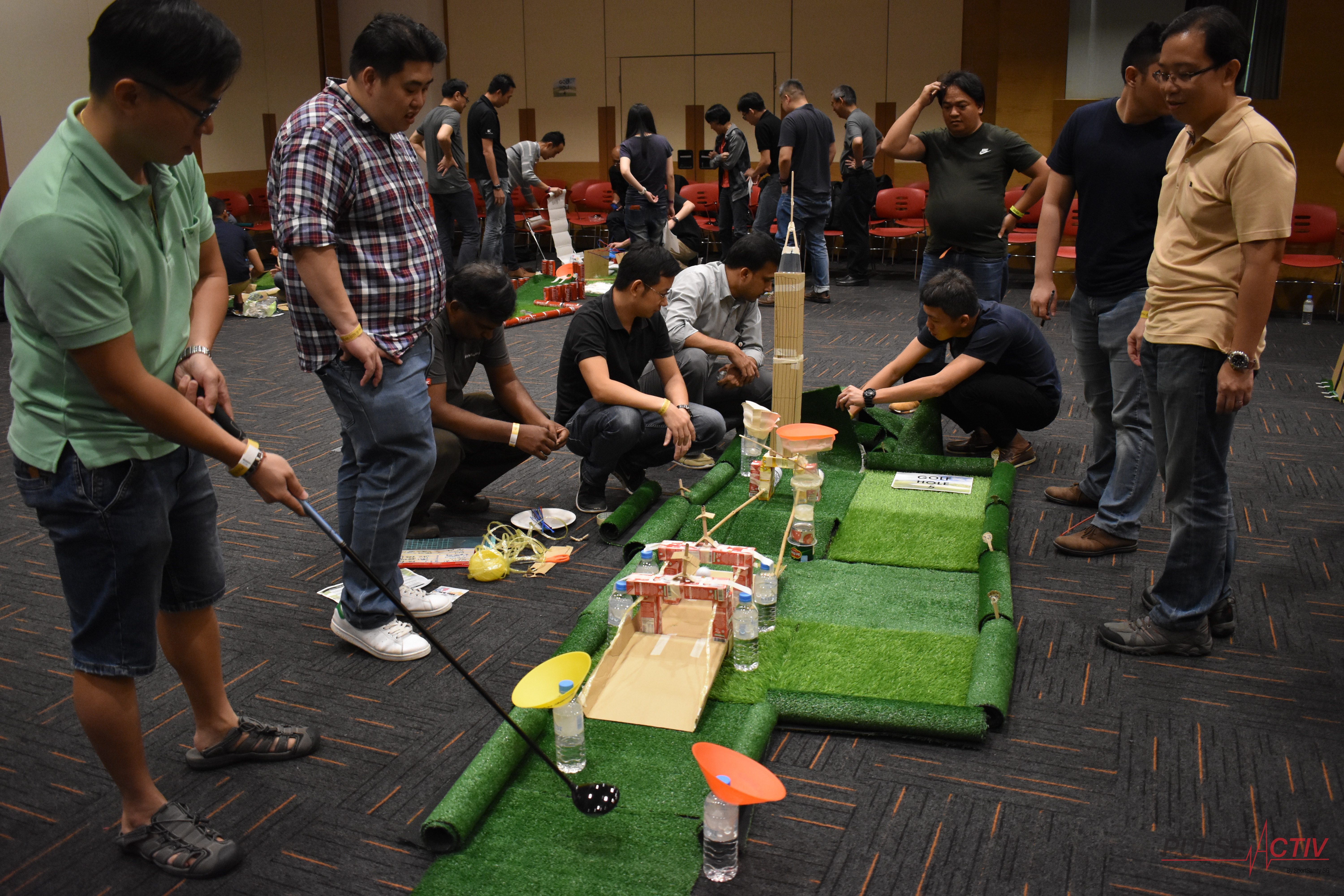
The activity name is rarely the deciding factor. Three things matter far more.
The same activity run by a strong facilitation team and a weak one produces completely different events. Energy, pacing, game explanation, crowd management, and the ability to adapt when something does not go to plan are all driven by the facilitation team, not the activity brief. When evaluating a vendor, the quality of the facilitation team is more important than the activity on offer.
An activity that works well for one group profile can fall flat with another. A high-energy competitive format for a group that has never met before and includes a wide seniority spread needs different handling than the same format for a tight-knit team. The best activity for your event is the one that fits your specific group, not the one with the most impressive-sounding description.
Not all activities scale. What works for 30 people does not automatically work for 200. For large corporate groups, the activity needs to be designed for the headcount: sub-group structure, station count, briefing approach, and facilitation team size all need to match the scale of the event. An activity that cannot be adapted for your group size is not the right activity, regardless of how well it is reviewed.
At this size, most activity formats are accessible. Running Man, Wacky Wars, Pulse Amazing Race, and Build A Dream Team all work well. This is also the range where CSI Mystery and Build A Car deliver well-contained, high-quality experiences. The facilitation team is smaller and more adaptable, which gives you flexibility to adjust pacing on the day.
Cluster formats and programmes with concurrent activity streams become more important at this scale. Mini Olympics, Pulse Amazing Race, Running Man (in cluster format for the upper end), and Property Typhoon all scale reliably here. Build A Dream Team continues to work well because its table-based structure is not dependent on floor movement. Avoid formats that require the full group to wait together between stages: at 150 or more participants, that waiting time compounds quickly.
At this scale, programme design and facilitation team size are the decisive factors. Mini Olympics, Property Typhoon, and Pulse Amazing Race are the most reliable formats. Running Man and Wacky Wars work well in structured cluster formats. For very large groups, the Free and Easy (Power of Choice) structure, where participants choose their own station sequence, gives the event the flexibility to absorb different group sizes and interests simultaneously. PulseActiv has delivered events at this scale for financial institutions, technology companies, and government bodies across Singapore.
Running Man and Wacky Wars are the two activities clients most often misjudge from the name alone. Running Man sounds like a race. Wacky Wars sounds like chaos. Neither is accurate. Running Man is a series of structured team-based games where everyone plays together. Wacky Wars is driven by friendly head-to-head competition that creates genuine investment in the outcome. Both are carefully designed, with facilitation that brings the energy of their respective references without the physical demands or randomness people assume.
They are two of the most consistently well-received activities in the PulseActiv range precisely because the gap between expectation and experience works in the programme’s favour: participants expect fun and get something more structured and rewarding than they anticipated. When facilitated properly, these are not gimmicks. They are among the strongest team engagement formats available.
Activity | Format | Energy | Best group size | Indoor / Outdoor | Physical intensity |
Running Man | Team games | High | 50–300 | Indoor | Moderate |
Pulse Amazing Race | Station-based | High | 50–300 | Both | Moderate |
Mini Olympics | Multi-format | High | 100–500+ | Both | Moderate |
Wacky Wars | Head-to-head | High | 50–300 | Indoor | Low–Mod |
Build A Dream Team | Collaborative | Medium | 30–500+ | Indoor | Low |
Build A Car | Build-based | Medium | 30–150 | Indoor | Low |
Squid Game TB | Team games | High | 40–150 | Indoor | Moderate |
Property Typhoon | Strategic | Med–High | 80–2,000+ | Both | Low |
CSI Mystery | Problem-solving | Medium | 30–150 | Indoor | Low |
Makan Kakis | Social/Relaxed | Relaxed | 30–100 | Indoor | Low |
Minute To Win It | Team bonding | Light | 30–150 | Indoor | Low |
An activity that looks impressive in a brochure but does not match the group’s comfort level, seniority mix, or energy will underperform every time. The most successful events are chosen by working backwards from the group profile and the objective for the day, not forwards from an activity wishlist.
Two vendors quoting the same activity at different rates are rarely offering the same thing. The facilitation team, its experience with large groups, and its ability to read and adapt to the room on the day are what produce a good event. Price-comparing activities without evaluating the facilitation behind them is one of the most reliable ways to end up disappointed.
An activity that a vendor runs beautifully for 40 people may not translate to 200. Always ask: how do you run this for our group size specifically? What changes in the structure? How many facilitators? If the answer is vague, that is useful information.
At PulseActiv, pricing is based on programme duration rather than which activity is chosen. This means the full range of activities listed above is accessible across budget levels. What changes with budget is the quality of execution surrounding the activity: venue, food, prize structure, and production value.
Total event budgets vary depending on whether venue and food are included. At hotel function rooms, venue and food is typically bundled into a single per-head rate starting from $80 per person, which means the venue and food component can look like a single line item rather than a separate cost. External venues work differently and will price separately. For a full breakdown of how to read and plan a corporate team building budget, see our guides on How Much Does Team Building Cost in Singapore and the Corporate Team Building Budget Planning Guide.
Contact us here to enquiry or fill our form for a quote. Click here to read more articles like this.
Read our guides about Common Mistake when Planning a Team Building Event, How to Choose a Team Building Vendor and Indoor vs Outdoor Team Building Activities.
Running Man is consistently one of the most requested and highest-rated activities for large corporate groups in Singapore. It generates strong post-event feedback because the format delivers genuine team energy, collaboration, and fun without the physical demands or weather risk of outdoor events. Mini Olympics and Pulse Amazing Race are also among the most frequently booked for large-group corporate events.
Total event costs depend on how the venue and food are structured. At hotel function rooms, the venue and food component typically starts from $80 per person. Activity and facilitation pricing at PulseActiv is based on programme duration. See our full cost guide for a detailed breakdown of how budget is typically distributed across a corporate team building event.
Mini Olympics, Pulse Amazing Race, Property Typhoon, Running Man, and Wacky Wars all scale reliably for groups of 100 or more when properly designed for the headcount. Build A Dream Team also works well at large scale. The key is that the programme is structured for your group size: cluster formats, adequate facilitation team sizing, and activity formats calibrated to eliminate waiting time. See our guide on team building for large groups for a full breakdown.
Yes. The majority of the activities listed above are designed for indoor environments and can be run year-round regardless of weather. For large corporate groups, indoor is generally the preferred format because it provides consistent comfort, more predictable costs, and removes the weather and logistics variables that complicate outdoor events at scale.
Evaluate on facilitation team experience with your group size, not just activity variety. Ask how many people they deploy for an event your size, what their facilitation structure looks like, and how they have handled events at similar scale before. A vendor who has consistently delivered large-group events in Singapore and can speak specifically to the logistics and design decisions involved is the right choice. Also ask how their programmes are structured: a good vendor designs the full event experience as a package, not a set of components that can be stripped out individually. Price is a factor, but it should be the last comparison you make, not the first.