Competitive Team Building Activities in Singapore
Competitive team building activities in Singapore use structured competition between teams to create energy, drive engagement, and build camaraderie through shared challenge. The most effective formats for corporate groups are Running Man, Pulse Amazing Race, Wacky Wars, Mini Olympics, Sports Day, and Property Typhoon — each offering a different type of competitive experience suited to different group sizes and objectives.
Over 10 years of running competitive corporate events in Singapore, the consistent finding is this: when competitive formats work, they produce the highest-energy, most memorable events in the corporate calendar. When they go wrong, it is almost never because the activity was wrong — it is because the competitive structure was not properly designed for the group. Getting this right is the difference between an event that people talk about for months and one that feels flat by the halfway mark.
Why Competitive Formats Work for Corporate Groups
Competition creates a natural engagement mechanism. When teams are working toward a score, the stakes of each game are immediately clear — every participant understands what matters and why they should care. This is why competitive formats consistently outperform purely collaborative ones in terms of energy and participant engagement.
The key to making competition work in a corporate setting is design. Competitive team building is not about finding out who the best team is — it is about creating a shared challenge that brings a group together through the experience of competing. Scoring, team structure, and game design all need to be calibrated so that the competition feels meaningful without becoming divisive.
In our experience, the groups that resist competitive formats at the briefing stage almost always enjoy them once the programme starts. The resistance is usually about concern that competition will create friction. In practice, well-facilitated competitive team building does the opposite — it creates a shared emotional experience that builds connection faster than most collaborative formats.
Competitive Team Building Activities at PulseActiv
Running Man
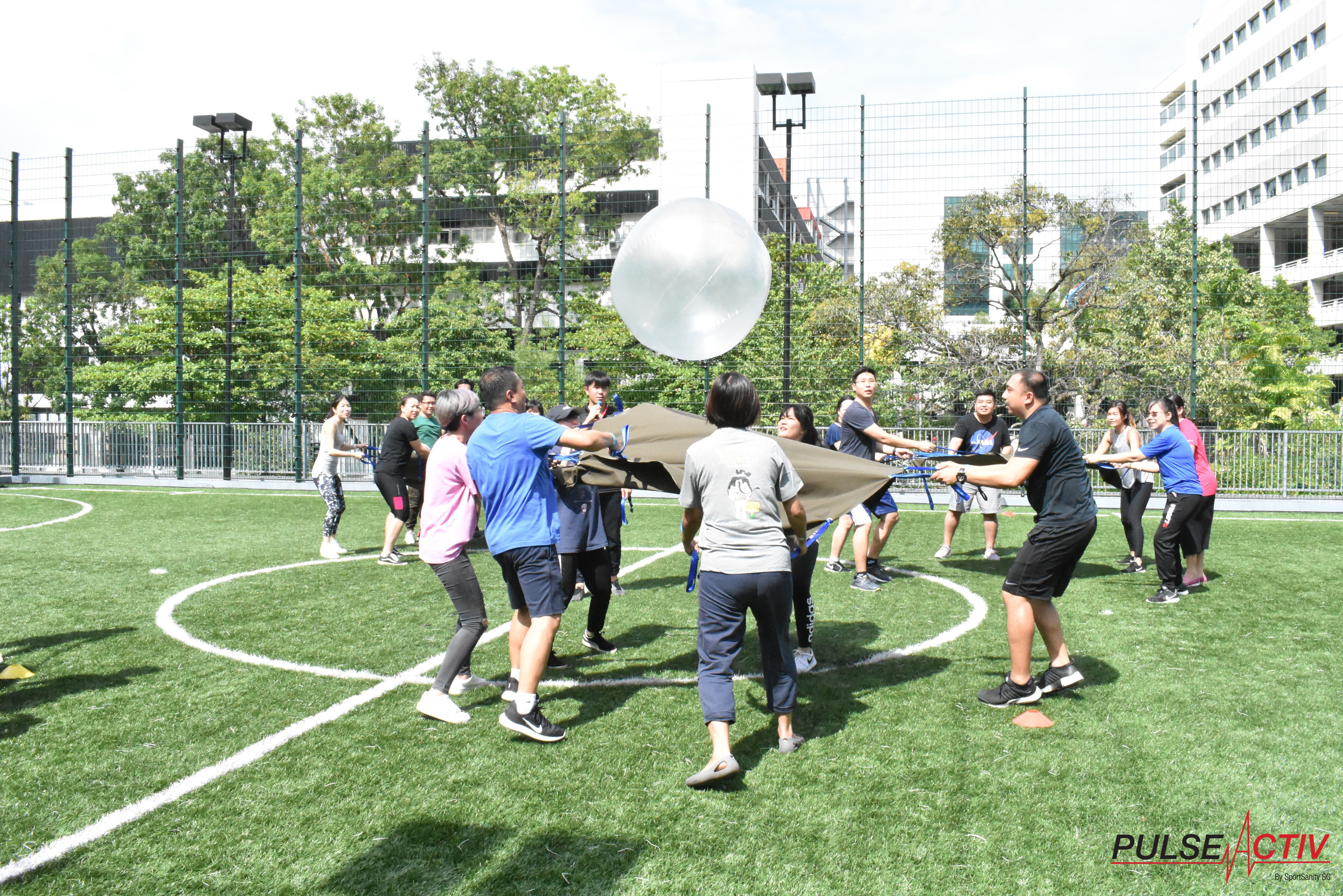
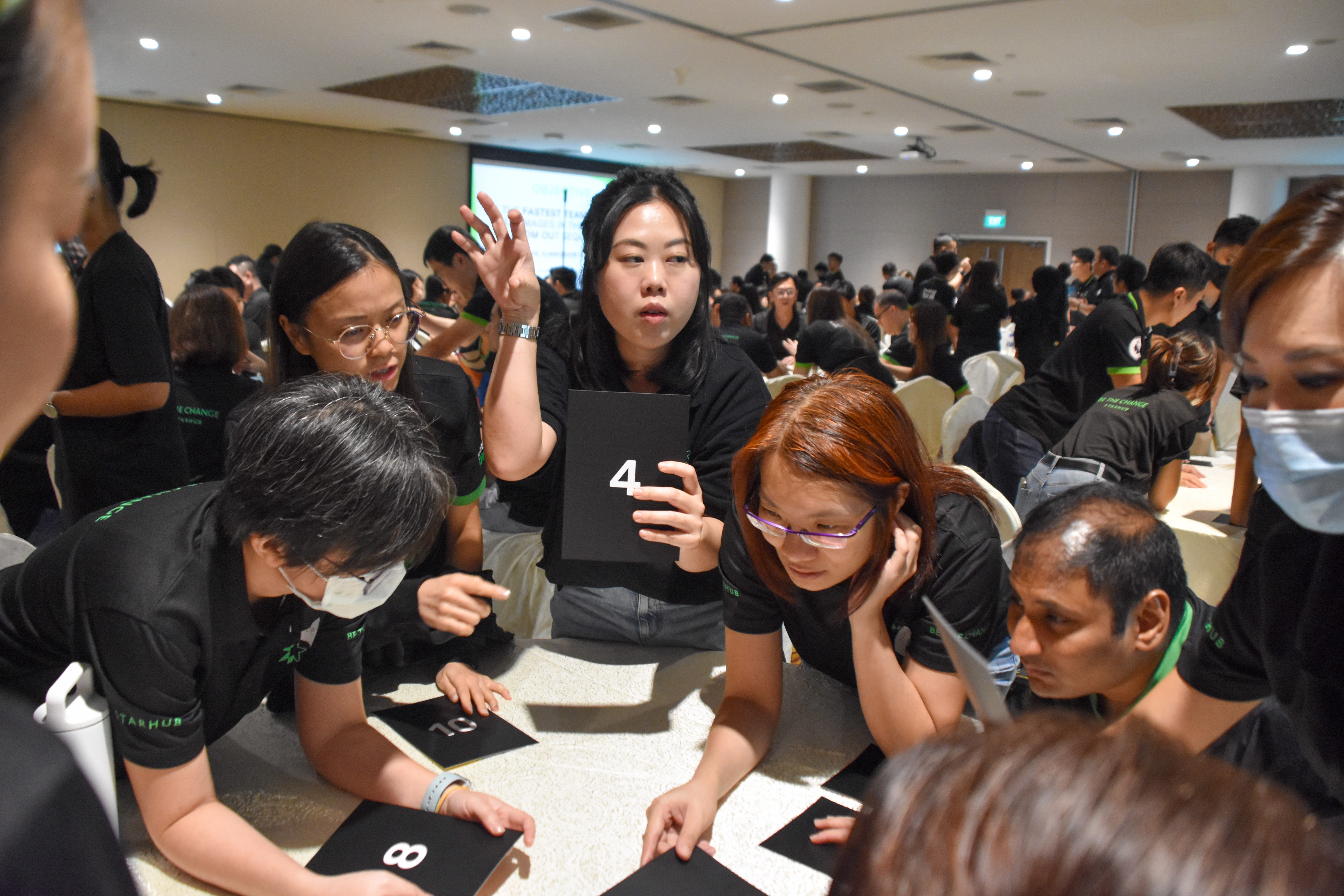
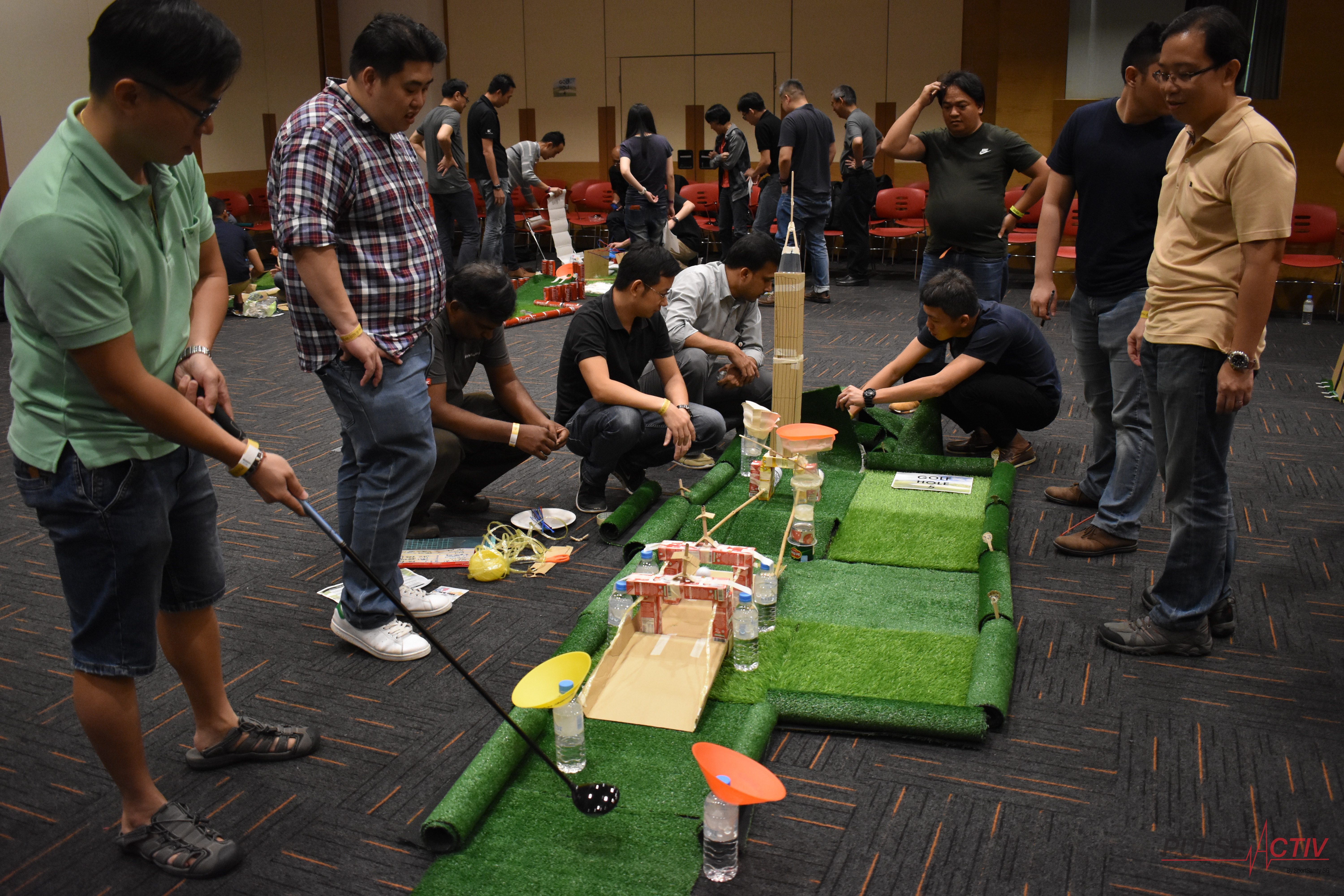
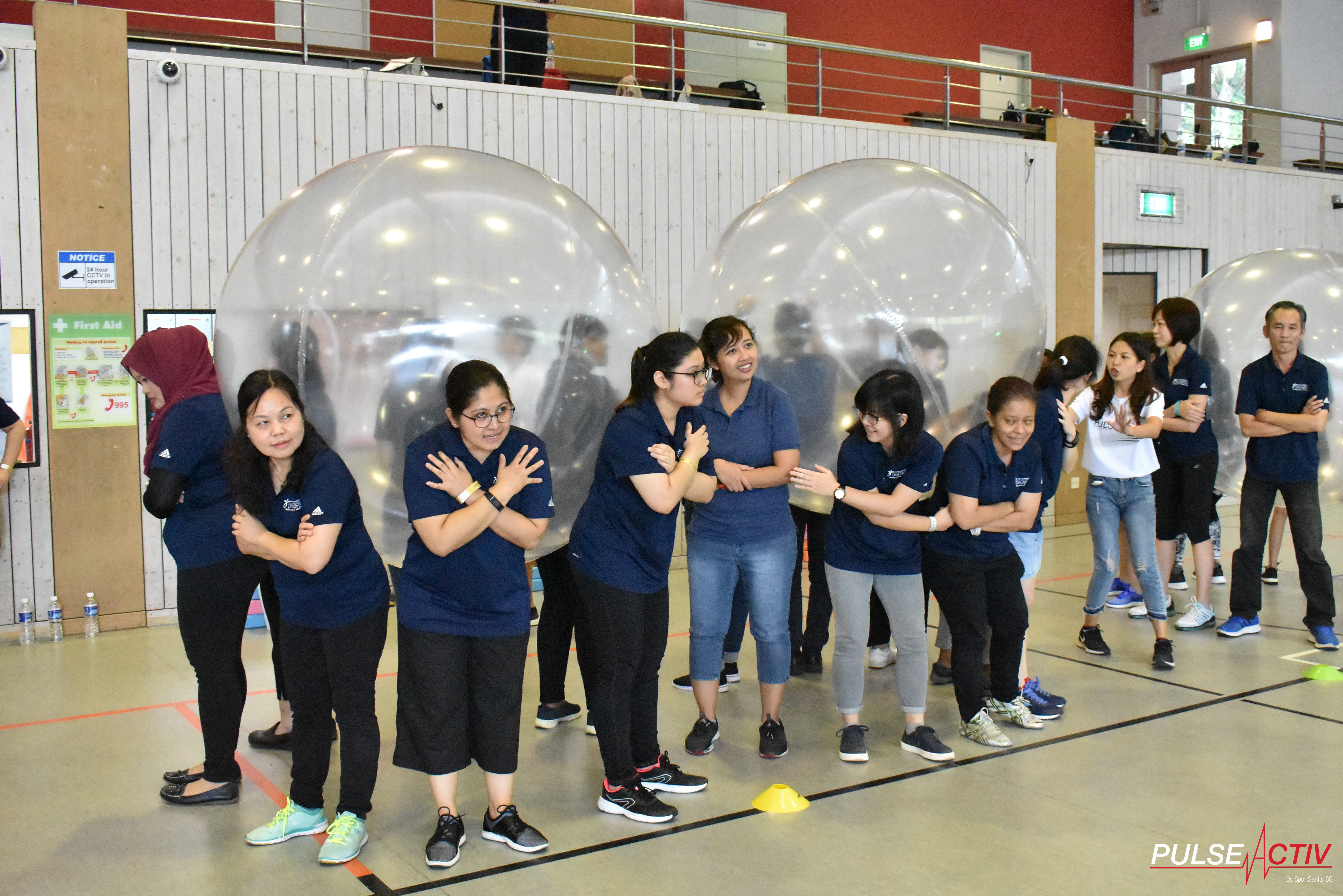
Running Man is a series of team-based challenges where all teams play simultaneously, competing for points across each round. The format builds progressively — earlier rounds establish energy and group dynamics, later rounds escalate the stakes. The competitive arc is deliberate: by the final round, every team is fully engaged and the outcome genuinely matters to participants.
What makes Running Man work as a competitive format is that it balances individual team challenge with whole-group energy. Every team is competing, but the collective energy of the whole group playing simultaneously creates an atmosphere that purely team-versus-team formats do not always achieve. It is our most recommended competitive format for first-time corporate clients.
Works for groups of 30 to 300. Adaptable to cluster formats for larger groups. Suited to both indoor and outdoor settings.
Wacky Wars
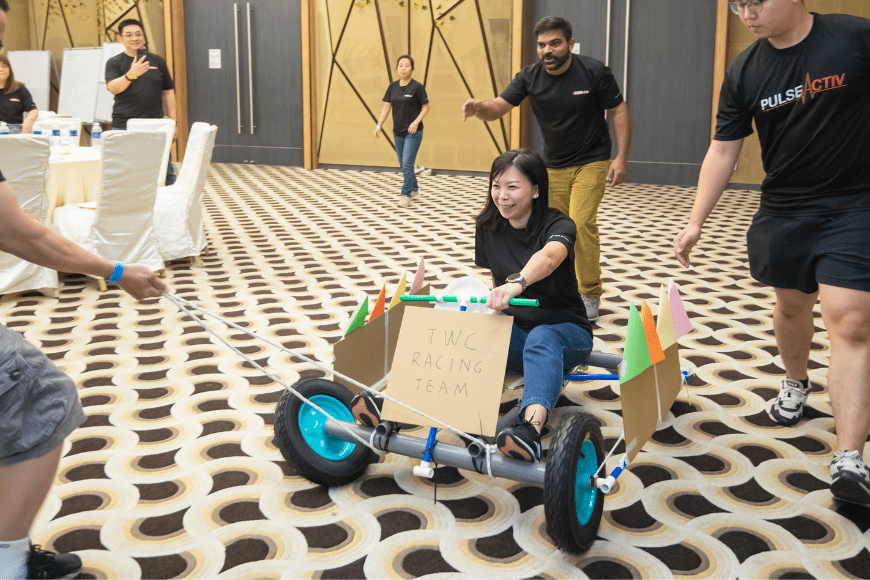
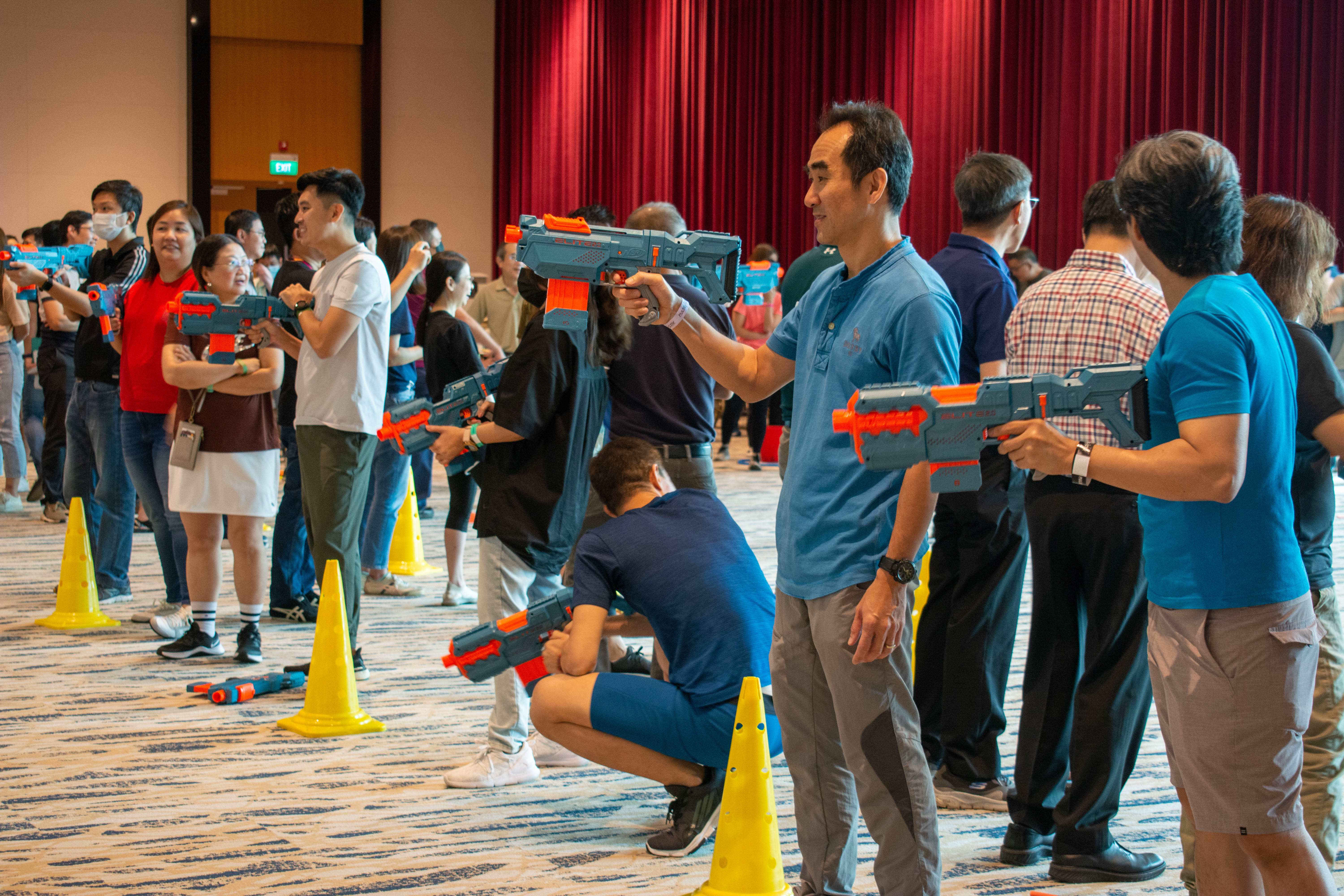
Wacky Wars is a direct team-versus-team competitive format where teams compete in a series of active games across an event. The competitive structure is more explicit than Running Man — teams face each other directly in each game rather than competing simultaneously for points — which produces a different kind of energy: more focused, more intense, and with clearer individual moments of victory and defeat.
This format works best for groups that are comfortable committing to active competition. It rewards openness and willingness to play hard. For groups with a strong team culture and existing chemistry, Wacky Wars produces some of the highest-energy events we run. For more conservative or mixed-profile groups, the direct head-to-head structure can create visible hesitation — and Running Man is typically the better choice.
Works well for groups of 30 to 200. Best suited to groups that already know each other reasonably well.
Pulse Amazing Race
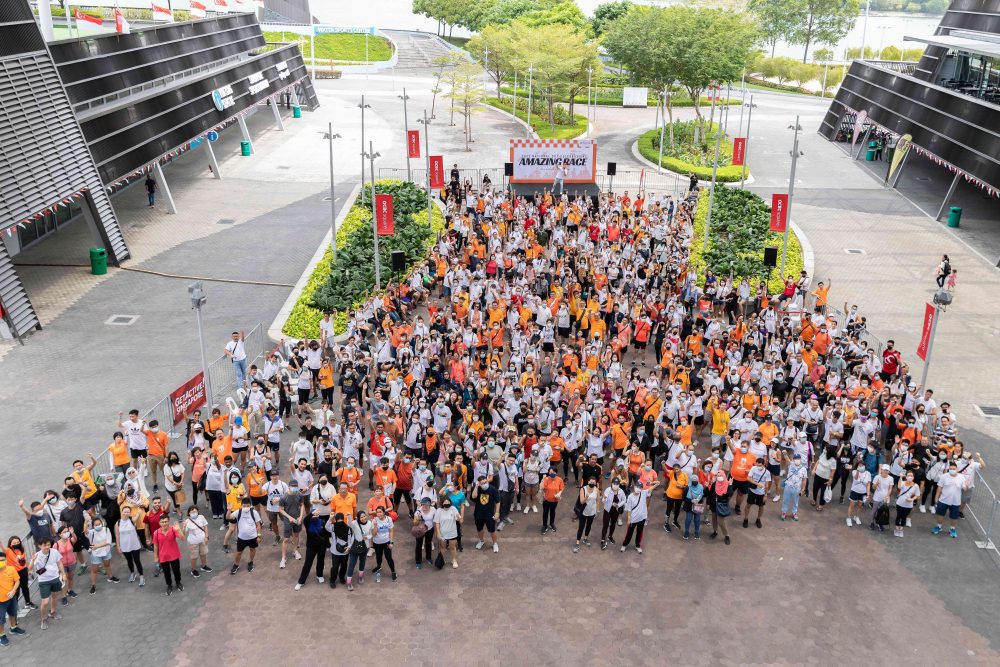
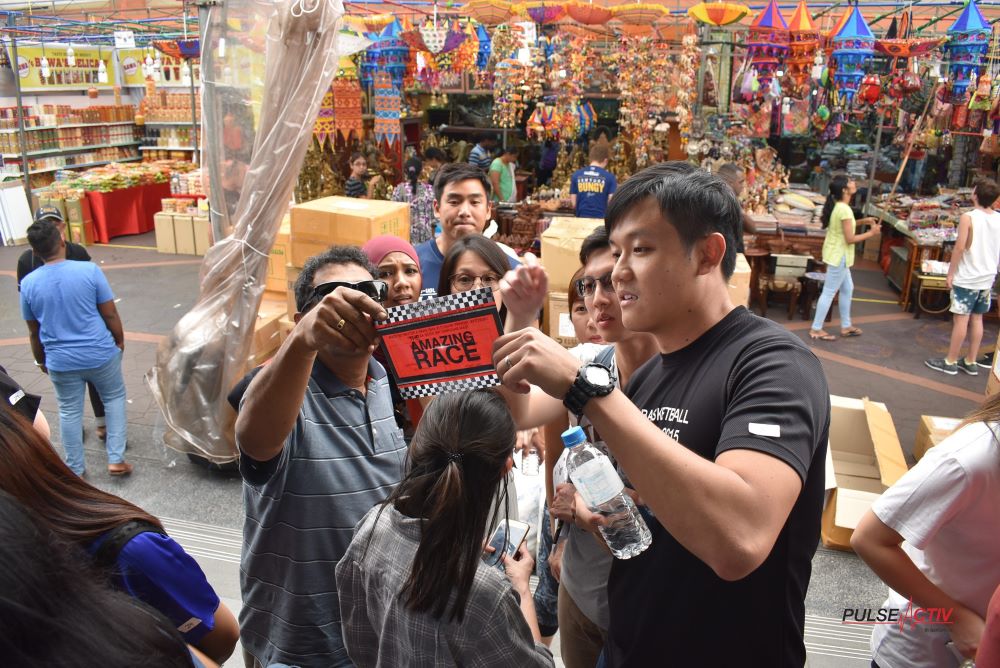
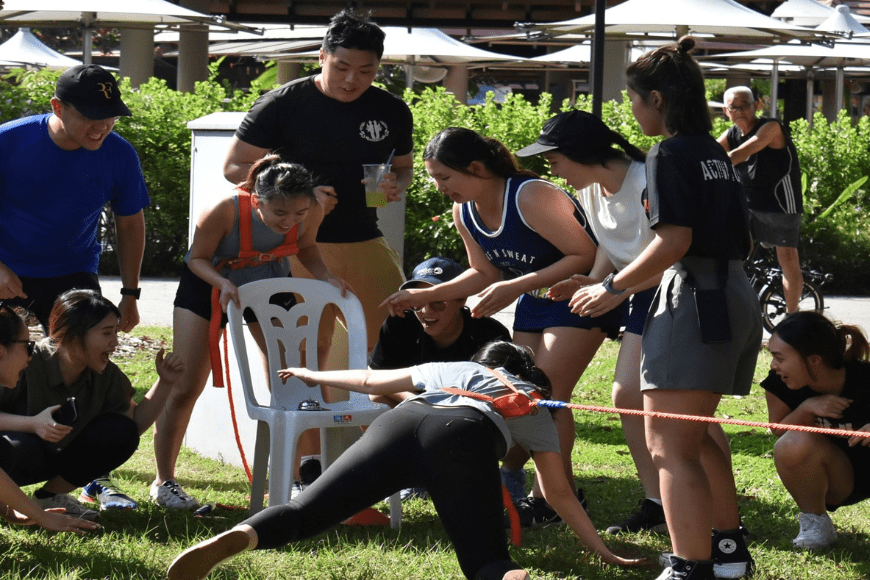
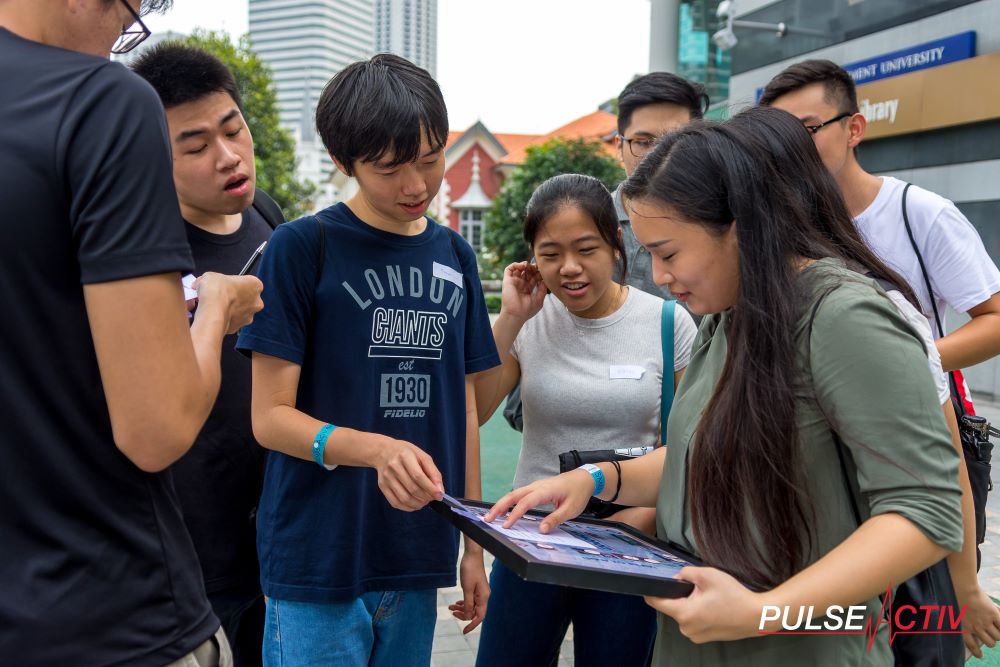
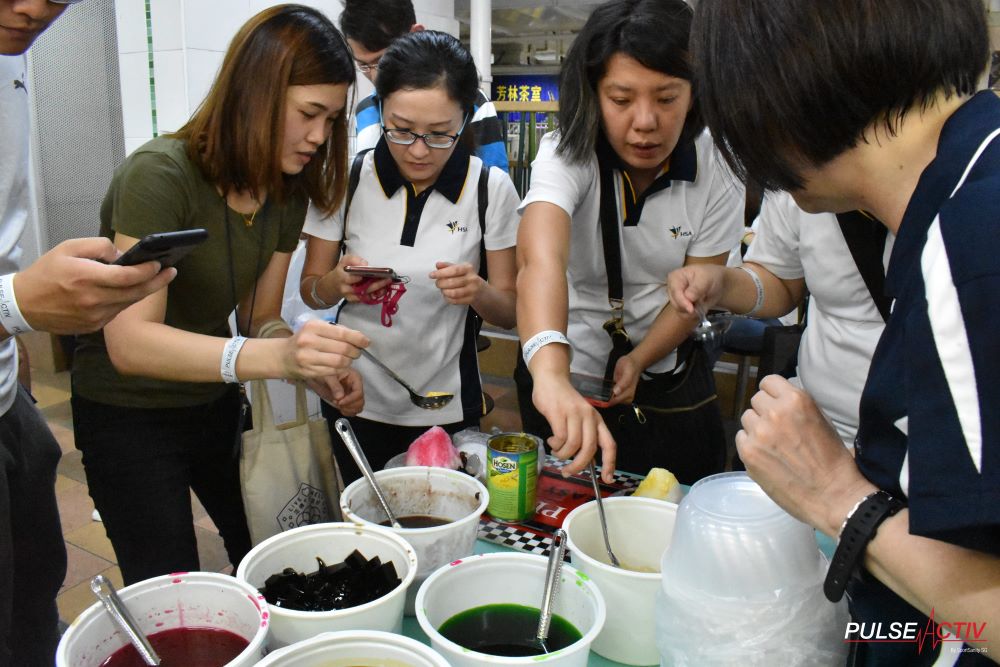
Pulse Amazing Race is a station-based race where teams move through a series of challenge points across a venue or outdoor area, completing tasks and accumulating points at each station. The competitive element is woven through the entire event — teams are always aware of other teams, always working against the clock, and always making decisions about which station to prioritise.
The Amazing Race format is one of the most scalable competitive formats available. We have designed and delivered this programme from 30 participants up to groups of 2,000 and above. The structure distributes participants naturally, which means it handles large groups without the bottleneck issues that affect other competitive formats at scale.
The format is also highly adaptable in theme and content. Stations can be themed to a company’s brand, products, or values — making it a strong choice for events that have a specific communication objective alongside the competitive experience.
Mini Olympics
Mini Olympics is a station-based competitive format where teams rotate through a series of physical or skills-based challenges, accumulating points across the event. Unlike Wacky Wars or Running Man, the competition in Mini Olympics is structured across the full event rather than within individual games — teams build their score progressively, and the final standings are revealed only at the closing ceremony.
This structure creates sustained competitive tension throughout the event. Every station matters because the cumulative score determines the winner. It also accommodates mixed fitness levels well: station design can balance physical challenges with strategy and coordination-based tasks so that athletic ability alone does not determine the outcome.
Strong choice for groups of 80 to several hundred. One of the most popular formats for annual corporate sports days and large team cohesion events.
Property Typhoon
Property Typhoon introduces a strategic layer to competition. Teams compete not just through physical challenges but through decision-making, resource management, and negotiation across rounds. The competitive stakes are real — decisions made in earlier rounds affect standing in later ones — but the competition is as much about thinking as it is about physical energy.
This is the competitive format we recommend most often for mixed seniority groups, corporate environments with a strong analytical culture, or events where the organiser wants competition without the full-throttle physical intensity of Wacky Wars or Running Man. The format reliably scales to large groups and has been delivered for groups of over 2,000 participants.
Squid Game Team Building
Inspired by the structured elimination format popularised by the series, Squid Game Team Building uses dramatic framing and escalating stakes to create intense competitive engagement. Teams compete in a series of challenges with elimination mechanics — the competitive pressure is immediate and the stakes feel genuinely high.
This format works well for groups that want something that feels different from a standard competitive programme and are open to committing to the format. The dramatic framing creates strong engagement from the start. Best for groups with existing team chemistry and a high tolerance for competitive intensity.
Sports Day / Telematch
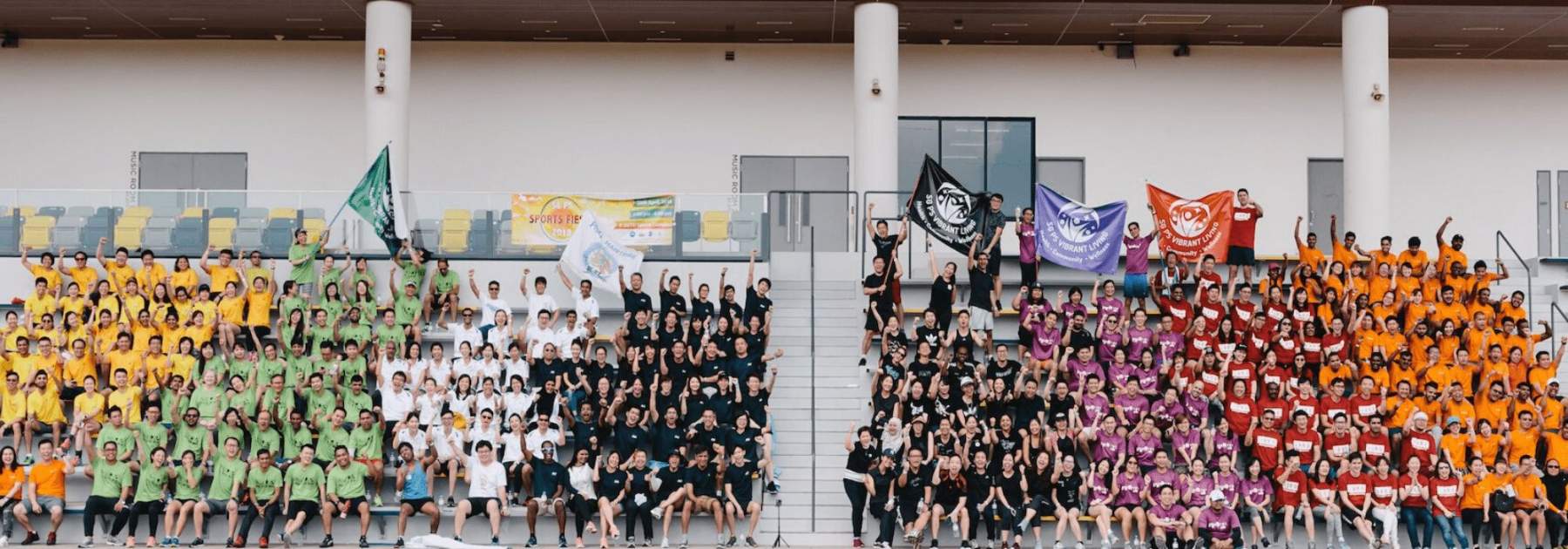
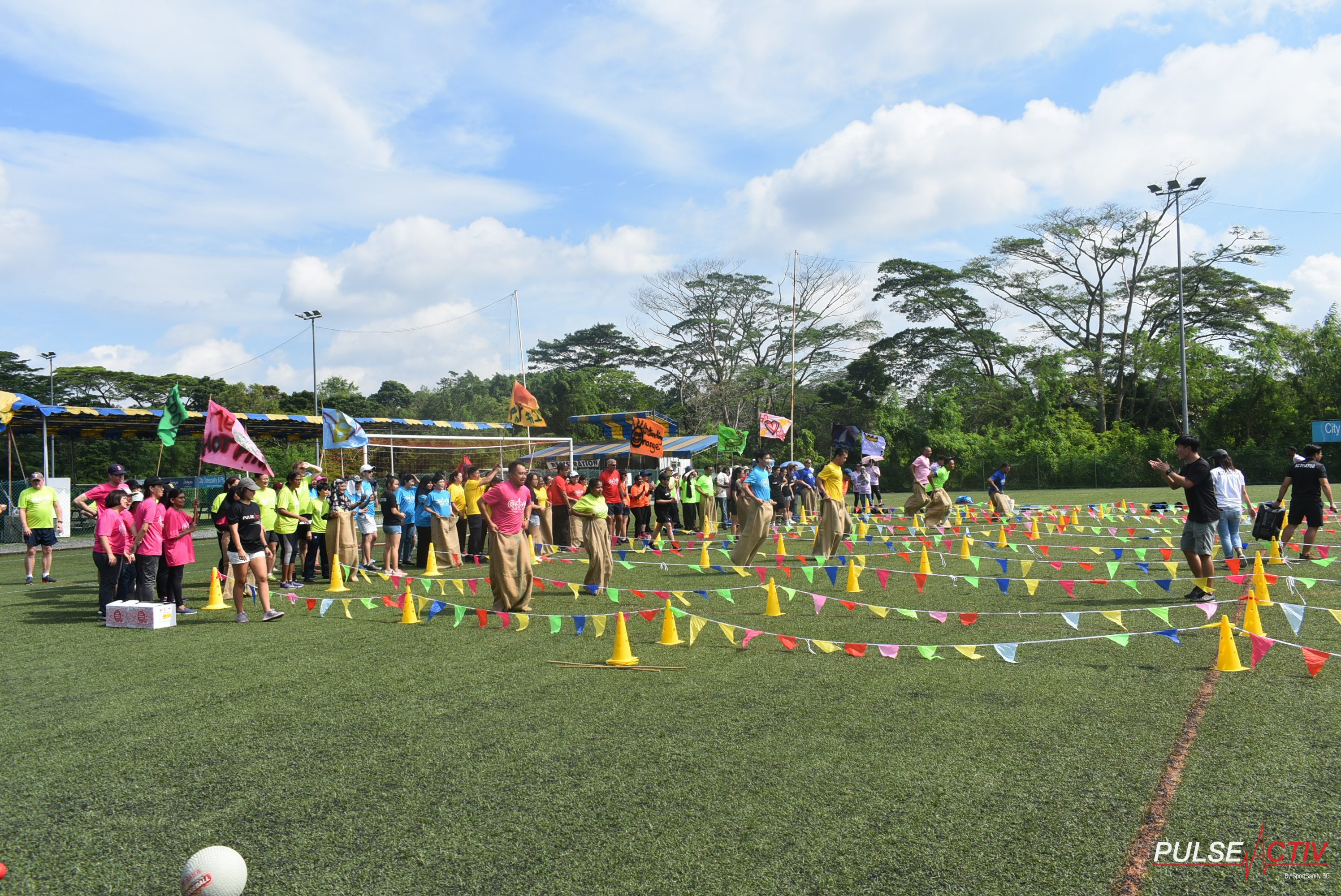
Traditional sports day and Telematch formats bring a sense of community and occasion to competitive team building. Teams compete across a full event programme with a mix of physical challenges, relay-style games, and team-strategy activities. The competitive element is framed around collective team performance rather than individual skill, which makes it one of the most inclusive competitive formats available.
Sports Day formats work particularly well for large corporate groups and annual events where the occasion itself is as important as the programme. The format scales effectively to groups of several hundred and has a natural energy arc that builds through the day toward a finale.
How to Make Competition Work for Your Group
The design of the competitive structure matters as much as the activity itself. These are the variables that determine whether a competitive format creates the right energy or the wrong kind.
Team Mixing
For most corporate events, teams should be deliberately mixed across departments, seniority levels, and job functions. Same-department teams compete well — but the whole-group connection that team building is supposed to create does not happen if teams map to existing org structure. Mixed teams force interaction across the group and create the cross-organisation relationships that justify the investment in the event.
Scoring Transparency
Competitive formats work best when participants can track how their team is doing throughout the event. Live scoring boards, emcee score updates after each round, and visible cumulative standings all contribute to sustained engagement. When participants do not know where they stand, the competitive energy dissipates — each game starts to feel isolated rather than part of a progression.
The Finale Matters
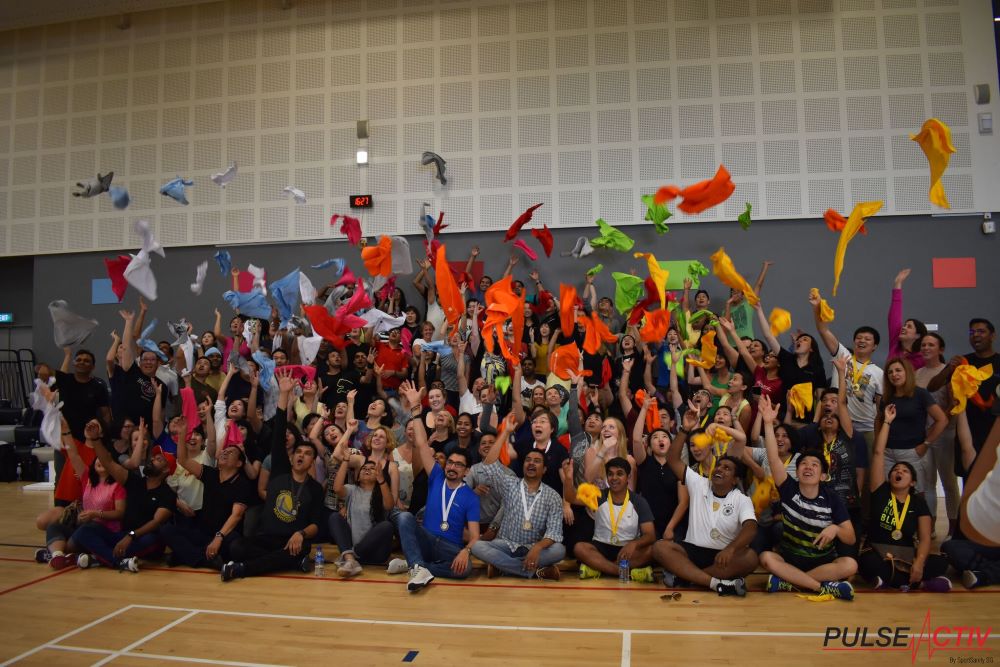
The closing ceremony is the competitive payoff. The announcement of final standings, prize presentation, and public recognition of the winning team are what make the competitive arc complete. Events that rush or skip the finale leave participants with the energy of the competition but no resolution. Protect this time in the schedule — it is disproportionately important to how participants remember the event.
Prizes and Recognition
Prizes do not need to be expensive to create the right effect. What matters is that they are presented publicly, in a moment of genuine recognition. The combination of prize plus public acknowledgement is what makes winning feel meaningful. Budget for prizes covering around 30 to 40 percent of participants — enough that a significant portion of the group has a tangible outcome from the competition.
Competitive vs Collaborative: Do You Have to Choose?
Most of the competitive formats above include meaningful collaborative elements — teams working together, making decisions collectively, and supporting each other through the activity. Competition and collaboration are not mutually exclusive in team building design. They are most effective when combined: the competition creates stakes and energy; the collaboration within each team creates connection and shared experience.
The choice of format is really about the dominant energy of the experience. Competitive formats use the pressure and excitement of competition as the primary driver. Collaborative formats use shared achievement as the primary driver. Both produce genuine team building outcomes — the question is which energy is right for your group at this point in time.
Want a Competitive Event That Actually Delivers?
We have been designing and running competitive corporate events in Singapore for over 10 years. Fill in our enquiry form with your group size and what you want the event to feel like — we will match you to the right format
Frequently Asked Questions
What are the best competitive team building activities for corporate groups in Singapore?
Running Man, Pulse Amazing Race, Wacky Wars, Mini Olympics, and Property Typhoon are the most consistently effective competitive formats for corporate groups. Running Man is the most widely recommended starting point for groups without a strong existing preference. For large groups of 150 or more, Amazing Race and Sports Day formats provide the best combination of competitive structure and scalability.
Is competitive team building suitable for all corporate groups?
Competitive formats work for most corporate groups when the programme is designed correctly. Team mixing, scoring transparency, and facilitation quality are the variables that determine whether competition creates energy or friction. For groups with diverse seniority levels or participants who are less comfortable with physical competition, formats like Property Typhoon and Running Man offer competitive structure without requiring individual physical performance.
How do you prevent competition from becoming too intense or divisive?
Team design is the primary lever. Mixed teams prevent inter-department rivalry from amplifying existing tensions. Scoring structures that reward collective team performance rather than individual standouts keep the focus on group achievement. Strong emcee facilitation maintains the tone — keeping energy high without allowing competitive intensity to become personal. These are not afterthoughts; they are built into the programme design from the start.
Can competitive team building work for large groups of 200 or more?
Yes. Station-based competitive formats — Pulse Amazing Race, Mini Olympics, Sports Day — are designed for large groups. The key is that the facilitation team, number of simultaneous stations, and briefing approach are all scaled appropriately for the headcount. For groups above 150, cluster rotation structures typically produce a better experience than all-together formats.
What competitive team building activities work best indoors?
Running Man, Wacky Wars, Mini Olympics (adapted for indoor space), Property Typhoon, and Squid Game Team Building all run effectively indoors. High-energy competitive formats do not require outdoor space to deliver their energy — a well-facilitated indoor competitive event will match the energy of an outdoor one, with more predictable conditions and less weather and logistics risk.
If you want to know more about these activities from PulseActiv, click here.
Contact us here to learn more about these activities.
Click here to read more articles like this.