How to Choose a Team Building Vendor in Singapore
What to Look For and What to Watch Out For
There is no shortage of team building vendors in Singapore. A search will surface dozens of providers ranging from full-service event companies with dedicated facilitation teams to one-person operators running a single format. From the outside, the market is difficult to read. Proposals look similar. Pricing varies considerably. And because the quality of the experience depends almost entirely on what happens on the day, it is hard to evaluate a vendor before you have committed to them.
This guide is for HR managers, L&D professionals, and corporate event organisers who want a structured way to evaluate team building vendors in Singapore, starting from whether to hire a vendor at all, through to the specific questions you should ask before signing.
Should You Organise In-House or Hire a Vendor?
The first decision is not which vendor to choose. It is whether to use a vendor at all. Both approaches are viable. The right choice depends on your internal capacity, the scale of the event, and the kind of experience you want to create.
|
Organising In-House |
Hiring a Professional Vendor |
|
|
Cost |
Lower direct cost; no event management fees |
Higher cost; reflects expertise, equipment, facilitation, and logistics management |
|
Time and effort |
Significant internal time required for planning, logistics, and day-of management |
Most planning and day-of operations handled by the vendor; internal team can participate fully |
|
Quality of experience |
Depends heavily on internal capacity and experience; higher risk of gaps in facilitation quality |
Consistent, professionally designed and facilitated experience |
|
Flexibility |
Easy to adjust plans in real time; no external dependencies |
Changes require vendor coordination; less agile for last-minute shifts |
|
Objective viewpoint |
Internal planners may bring unconscious bias or limited perspective to activity design |
External vendor brings fresh perspective; no internal dynamics or preferences affecting design |
|
Best for |
Small teams, limited budget, simple activities, strong internal event capability |
Larger groups, higher-stakes events, where quality and participant experience matter most |
One factor worth naming directly: when internal staff organise the event, they are managing it rather than participating in it. The person running registration, managing logistics, and tracking the run sheet on the day is not fully present as a colleague. A professional vendor handling the operational weight frees your team to show up as employees, which is often the point of the event.
For most medium to large corporate events in Singapore, the case for using a vendor is strong. The expertise gap is real, the time cost of internal planning is often underestimated, and the difference between a professionally facilitated event and a self-organised one is visible on the day.
How to Find and Shortlist Vendors
Start with a straightforward search. Most reputable team building vendors in Singapore maintain a strong search presence. Look through each vendor’s website to get a sense of the activities they offer, the scale they work at, and the clients they have worked with.
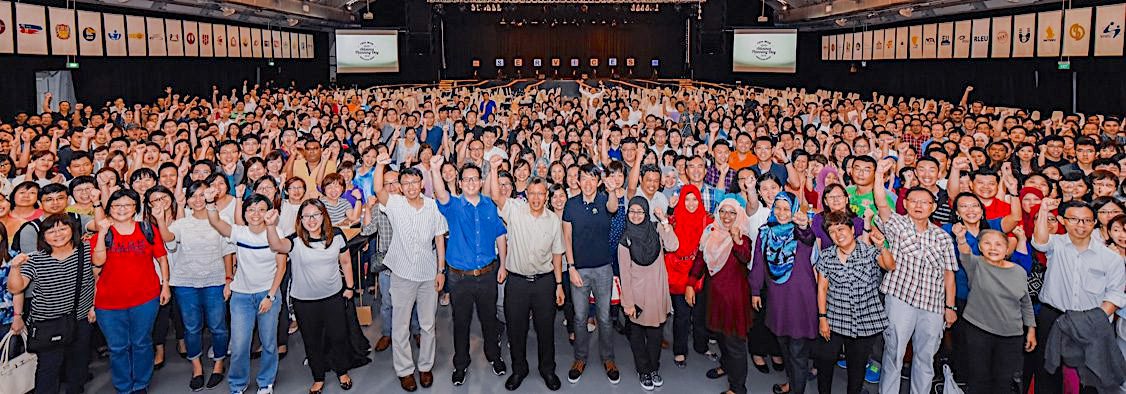
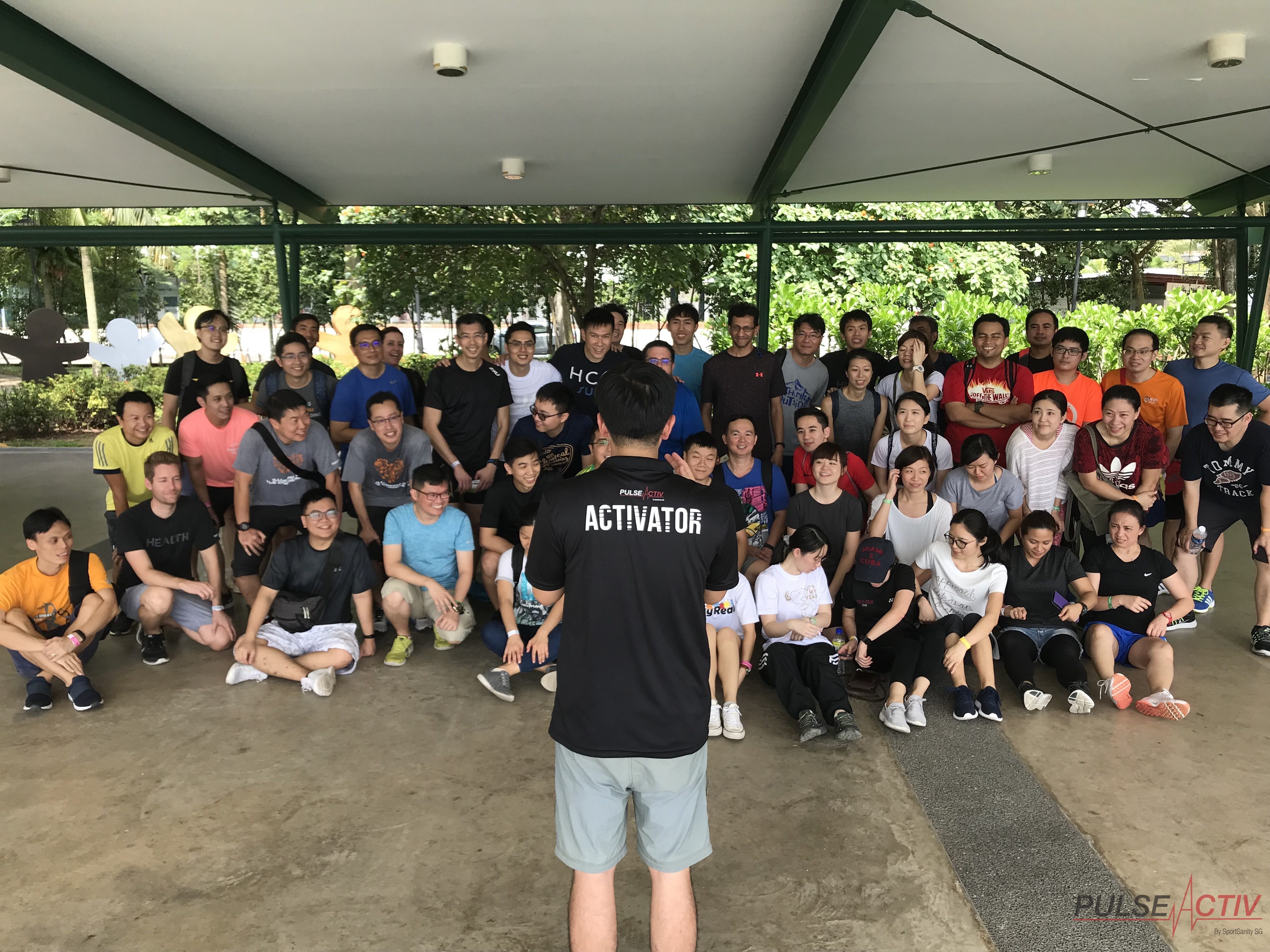
Pay close attention to the photography. A vendor’s real event photos are one of the most reliable indicators of what you will actually get. Many vendors use stock images or heavily staged shots on their websites. Check their gallery, their social media, or ask directly for event photos from past programmes. Real photos from real events, showing real participants engaged in the activity, tell you far more than a polished proposal document.
Shortlist two to four vendors to contact properly. When you reach out, provide as much information as possible upfront. The more context a vendor has, the more accurate their proposal will be, and the better you can assess whether they have genuinely understood your brief. Key information to provide:
- Event date and time
- Expected number of participants
- Participant demographics: mix of seniority, departments, age range, any specific diversity considerations
- Your objectives for the event
- Any activities you have run previously that participants have enjoyed or found less effective
- Preferred location or venue type
- Budget range
How a vendor responds to this brief is itself an evaluation signal. Do they read it carefully and ask follow-up questions, or do they send a generic proposal that could have been written for anyone? A vendor who engages with your brief is more likely to design an event that serves your actual situation.
The Five Things That Actually Determine Quality
1. Who Is Running the Event on the Day
This is the single most important question to answer before confirming any vendor, and the one most commonly glossed over in the sales process.
Most team building providers in Singapore use external facilitators rather than full-time employees. This is standard practice and not inherently a problem. What matters is the layer above the facilitators: whether the provider actively trains, manages, and maintains quality standards across the people they deploy, or whether facilitators are simply sourced on demand and parachuted in with minimal oversight.
A provider with a well-managed external facilitation pool, where facilitators are trained in the specific programmes and consistently briefed before events, delivers reliably consistent results. The facilitators know the formats, they have run them many times, and there is a clear standard they are held to. This is very different from a provider who outsources facilitation to whoever is available, with no training investment and no quality accountability.
The same applies to the host or emcee role. A professionally trained host who has experience in corporate team building reads a room differently from a general events host or an everyday person pressed into the role. The ability to manage energy, keep timing, and adapt to an unexpected moment on the day is a trained skill. Ask what the host’s background is and how they are prepared for a programme like yours.
The question to ask: how do you train and manage the facilitators and hosts you deploy? A provider who has thought about this will give you a specific answer. A provider who hasn’t will pivot to describing the programme instead.
2. Whether the Programme Is Genuinely Customised
Most providers say they customise. Very few do it in any meaningful way. The difference between genuine customisation and superficial personalisation is one of the most important distinctions in the market, and almost impossible to detect from a proposal alone.
Superficial personalisation: your company name appears in the slides, one activity element has been renamed to reference a company value, the programme is otherwise identical to the one delivered to every other client.
Genuine customisation: the programme has been configured to serve your group profile, your objective, and the specific dynamics of your event. Team compositions are structured with a purpose. The warm-up is designed for the energy level and familiarity of your specific group. The activity format has been chosen because it is the right fit for your people, not because it is the vendor’s easiest offering.
The clearest signal of genuine customisation is the quality of questions a vendor asks before making a recommendation. A vendor who proposes a specific programme before understanding your group composition and objective is selling off a menu. A vendor who asks about these things first and uses the answers to shape the recommendation is doing the real work.
3. The Scope of What They Manage
Before committing to any vendor, map out everything that needs to happen between brief and event completion, and ask explicitly which items the vendor owns versus which remain with you.
Areas where scope is often unclear include: registration management and participant flow on arrival, directing latecomers, emcee coverage and whether it is included or an add-on, setup access and teardown coordination, and post-event logistics. A vendor who cannot give you a clear and specific breakdown of their scope and yours is a vendor who may create gaps on the day.
Full-service providers take end-to-end ownership: programme, facilitation, equipment, emcee, setup, and often logistics coordination. Your internal team’s role is limited to providing the brief, managing participant communications, and being present on the day. For organisations with limited event management capacity, this model reduces coordination overhead significantly.
4. What Is Included and What Is Not
A vendor’s headline price rarely tells the full story. Before accepting any quote, get explicit clarity on what the price covers and what it does not.
The baseline to check: is a professional emcee included, or is facilitation limited to activity running? What equipment is provided, and is it appropriate for your group size and format? Is there a specific list of games and activities within the programme, and how much range or flexibility is there? Can you see photos of the equipment and activity setups in use at real events?
Common items that are sometimes excluded from initial quotes and added later: customisation that was described as standard, additional facilitators above a minimum ratio, transport of equipment to the venue, and any F&B or catering coordination. Before signing, ask: is this quote the full cost for what we have discussed? Are there items commonly added at a later stage? A vendor who is confident in their pricing will answer both without hesitation.
An apple-to-apple comparison across vendors requires getting to a consistent scope baseline. If one quote includes emcee, full equipment, and facilitation at a certain ratio, and another quote does not, comparing headline prices is misleading. Clarify the scope of each quote before treating them as comparable.
5. How They Communicate: Including When They Are Busy
The way a vendor communicates throughout the sales and planning process is a reliable signal of how they will operate when it matters. This includes not just how quickly they respond, but the quality and attentiveness of the response itself.
A vendor who sends a thoughtful, specific reply to your initial inquiry, even if they are at capacity, is demonstrating the same quality of attention they will bring to your event. A vendor who sends a generic reply, deflects details, or takes an unreasonable amount of time to follow up on straightforward questions is showing you the operational standard to expect.
This matters especially when the vendor is busy. Any provider worth working with will have periods of high demand. The quality of their response under pressure, whether they are still attentive, clear, and proactive even when stretched, is often more revealing than their response when they have plenty of capacity.
Check their event photography and the overall standard of how they present themselves. Providers who take their own work and presentation seriously tend to take their clients’ events seriously.
Payment Terms and Contracts: What to Check
Before confirming any vendor, review the commercial and contractual terms as carefully as you review the programme.
Payment terms vary across the market. Most vendors require a deposit to confirm the booking, with the balance due before or on the event date. Understand the payment schedule, what the deposit confirms, and whether it is refundable under any circumstances.
Cancellation and postponement policy is one of the most important terms to check and one of the most often overlooked. Understand: what is the policy if you need to cancel, at what notice period do charges apply, and what does the vendor’s policy look like if they need to cancel or make a significant change to the programme? The answer tells you about the vendor’s confidence in their own reliability and how they handle risk sharing with clients.
Confirm that the quote you are signing against is all-in. Ask directly: does this cover everything required to run the event as described, or are there additional costs that commonly arise after this stage? A clear, confident answer to this question is a signal of a well-run operation. Evasiveness or a list of potential add-ons at this point is worth noting.
Red Flags to Watch For
Great Proposal, Generic Questions
A strong proposal produced without meaningful questions about your group and objective is almost always a template. It has been sent to dozens of clients with minor surface-level changes. Ask yourself honestly: did this vendor learn anything specific about us before making this recommendation?
Stock Photos or Limited Real Event Photography
A vendor who cannot show you recent, real photography from events of comparable scale and format to yours is a vendor whose actual event quality is unverified. Proposals are easy to write well. Events are harder to run well. Real photos are one of the most honest indicators of what the experience actually looks like on the day.
Vague Answers to Operational Questions
Questions about facilitation team composition, emcee coverage, equipment, and what happens if something goes wrong should produce specific, confident answers. If a vendor becomes vague or deflects when you ask who will actually be running the event, how many facilitators will be on the ground, or what the contingency plan is, that usually reflects either inexperience or a delivery model they prefer not to explain in detail.
Costs That Keep Appearing After the Initial Quote
A well-run vendor provides a clear, comprehensive quote that covers the full scope of what has been discussed. If additional costs appear through the planning process that were not disclosed upfront, this reflects either a low-ball quoting strategy or a disorganised commercial process. Either way, it makes budgeting unreliable and creates friction when it should not exist.
One Format, Every Client
A vendor who recommends the same programme to every client regardless of group profile or objective is not doing consultative work. They are selling what they have. A reputable vendor should be able to offer a genuine range of activities suited to different objectives, demographics, and group sizes, and should be able to explain specifically why a particular format is the right choice for your situation.
The Evaluation Checklist
|
Area |
What to Ask |
What to Look For |
|
Facilitation and hosting |
How do you train and manage the facilitators and hosts you deploy? |
Specific answer on training approach, programme briefing process, and quality standards; not a deflection to programme content |
|
Customisation |
How did you arrive at this recommendation for our group? |
Specific reference to your brief, group profile, and objective |
|
Scope |
What do you manage vs what does our team handle? |
Detailed breakdown across planning and event day including emcee, registration, setup |
|
Inclusions |
What is included in this quote and what is not? What is commonly added later? |
Comprehensive answer: emcee, facilitators, equipment, games range all clarified |
|
Photography |
Can you share real event photos from events similar to ours? |
Recent, real photography at comparable scale and format; no stock images |
|
Payment and terms |
What are the payment terms, deposit, and cancellation policy? |
Clear schedule; cancellation terms disclosed upfront; no surprises |
|
All-in confirmation |
Is this the full cost for what we have discussed? |
Direct yes, with any genuine exceptions explained clearly |
|
Communication quality |
Assess across the full inquiry process |
Specific, attentive, proactive — including when the vendor is busy |
Full-Service vs Programme-Only: Choosing the Right Model
|
Full-Service Provider |
Programme-Only Provider |
|
|
What they manage |
Programme, facilitation, emcee, logistics, equipment, often catering coordination |
Programme and facilitation; venue, catering, logistics managed by client |
|
Best for |
Teams with limited internal event capacity; single point of contact preferred |
Teams with strong internal support or specific venue and catering preferences |
|
Planning involvement |
Provider manages most operational detail; client focuses on brief and participant comms |
Client carries more coordination responsibility throughout planning |
|
Day-of experience |
Provider team handles setup, transitions, wrap-up; client participates fully |
Client team manages more on-the-day logistics alongside provider facilitation |
|
Cost |
Higher, reflecting broader scope |
Lower headline cost; client absorbs coordination overhead |
Evaluating Team Building Vendors in Singapore?
We are happy to answer every question on this list. Tell us your group size, event date, and what you want your team to experience, and we will send you a comprehensive proposal covering programme, facilitation, logistics, and full pricing with no surprises.
Read our articles about Best Team Building Activities in Singapore and How to Choose the Right Team Building Activity.
Contact us here to enquiry or learn more about our activities. Click here to read more articles like this.
Frequently Asked Questions
For small teams with a limited budget and strong internal event capability, organising in-house can be a practical choice. For most medium to large corporate events, hiring a professional vendor produces a meaningfully better experience. The expertise gap is real, the time cost of internal planning is consistently underestimated, and the difference between a professionally facilitated event and a self-organised one is visible to participants. The other consideration is participation: internal organisers manage the event rather than experience it, which defeats part of the purpose.
Not by itself, no. Most team building providers in Singapore work with external facilitators, and this is standard practice across the industry. What matters is whether the provider has genuine management and training in place. A provider who trains their facilitators in specific programme formats, briefs them properly before each event, and holds them to a quality standard delivers consistent results regardless of employment structure. The risk is with providers who source facilitators on demand with no training investment. Ask specifically how a vendor prepares and manages the people they deploy, rather than asking about employment terms.
The only way to compare meaningfully is to get every quote to the same scope baseline. Ask each vendor whether their quote includes an emcee, the full facilitation team at an appropriate ratio for your group size, all equipment and props, setup and teardown, and any customisation discussed. If the scope is different across quotes, either ask the vendors to requote on a consistent basis or add up the true cost of the missing items before comparing. Comparing headline prices across different scopes is a reliable path to choosing the wrong vendor.
A fair cancellation policy typically applies charges on a sliding scale based on notice period: full refund or minimal charge for cancellations well in advance, partial charges as the event date approaches, and a higher charge or no refund for very late cancellations that leave the vendor unable to redeploy resources. What matters is that the policy is disclosed clearly before you sign, is proportionate, and covers both directions: what happens if you cancel, and what happens if the vendor needs to make a significant change. A vendor who cannot articulate their cancellation terms clearly before signing is one to probe further.
An apple-to-apple comparison means evaluating quotes at an equivalent scope. Team building proposals often differ in whether they include an emcee, the number of facilitators, the range of games or activities covered, equipment quality, and logistics management. If you are comparing a quote that includes all of these with one that covers only the activity and a single facilitator, the lower-priced option may not be cheaper once the missing items are accounted for. Ask each vendor to describe precisely what their quote includes before treating the numbers as directly comparable.
It matters as a signal of experience and flexibility more than as a direct benefit. A vendor with a broad and well-developed programme repertoire has typically run enough events to know which formats work for which group profiles. When they recommend a specific activity for your situation, that recommendation is informed by real experience rather than defaulting to the one format they know. It also gives you confidence that if your requirements change, the vendor can adapt rather than having to start the selection process again.
Look at the quality of their communication across the whole inquiry process, not just the speed. A vendor who gives you a specific, well-considered reply that demonstrates they read your brief carefully is showing you the same attention they will bring to your event. Speed matters, but attentiveness and quality matter more. Pay particular attention to how they respond when they are clearly busy: a vendor who maintains quality communication under pressure is a more reliable operating partner than one who only communicates well when they have plenty of capacity.