Categories
Blogs

Half-Day Team Building Activities for Corporate Events in Singapore

Half-Day Team Building Activities for Corporate Events in Singapore

A half-day corporate team building event in Singapore typically runs between 3.5 and 4 hours. It is the most common format for corporate groups because it fits within a working day, gives the programme enough time to build genuine energy, and allows for a proper opening, main activity, and closing ceremony with recognition. The formats that work best in a half-day are station-based races, high-energy group games, build and collaborative activities, and structured competitive formats.

Having designed and delivered half-day programmes for corporate groups ranging from 30 to over 1,000 participants, our view is clear: a well-structured half-day is consistently more effective than a rushed full-day. The constraint of time forces better programme design, every segment earns its place, and the energy has a natural arc that a longer format can lose. This guide covers what works, how to structure the time, and what catches most organisers off guard when planning a half-day event.

What Half-Day Actually Means in Practice

A half-day team building event is typically structured across one of two time windows:

Morning session: 9.00am to 1.00pm, followed by lunch. This works well when the afternoon is reserved for meetings or travel. Energy is generally high in the morning and the programme can finish on a peak before lunch provides a natural close.

Afternoon session: 2.00pm to 6.00pm, followed by dinner or drinks. This window works well for events that flow into an evening programme. The challenge is managing the post-lunch energy dip in the early afternoon, which is why the first 30 minutes of programme pacing matters more in this slot.

Either window provides enough time for a full experience but the programme needs to be designed for the slot, not just transplanted from a different format.

The Half-Day Programme Structure That Works

Across hundreds of half-day events, the structure that consistently delivers the best participant experience follows a clear pattern.

Time Block

What Happens

Why It Matters

First 30 mins

Registration, arrival, team assignment

Getting 50 to 200 people checked in and into teams takes longer than most organisers plan for. Build this time in explicitly.

30 to 60 mins

Warm-up or lead-up game

One or two lighter games before the main activity. Breaks ice, builds energy gradually, gives the facilitation team a read on the group before the main programme starts.

60 to 180 mins

Main activity

The core programme — race, competition, build activity, or structured format. This is where the event earns its energy.

Final 30 to 45 mins

Finale, prize presentation, group photo

The closing ceremony is not optional. Public recognition, prize announcement, and a proper group close give the event a memorable end. Events that skip this feel unfinished.

The most common mistake in half-day planning is underestimating registration time and then cutting the warm-up to compensate. This consistently produces a flat start to the main activity. Build the registration window in properly and protect the warm-up.

Best Half-Day Team Building Activities in Singapore

Running Man

Running Man is the most consistently recommended format for a half-day corporate event. A series of team-based challenges played together as a full group, it builds energy naturally through shared competition, starting lighter and escalating as the group warms up. The format fits cleanly into a half-day window: a warm-up game leads into three to four rounds of escalating challenge, ending with a finale round and scoring ceremony.

Works well for groups of 30 to 300. For very large groups, cluster adaptations extend the format without losing its energy. Suitable for indoor and outdoor settings.

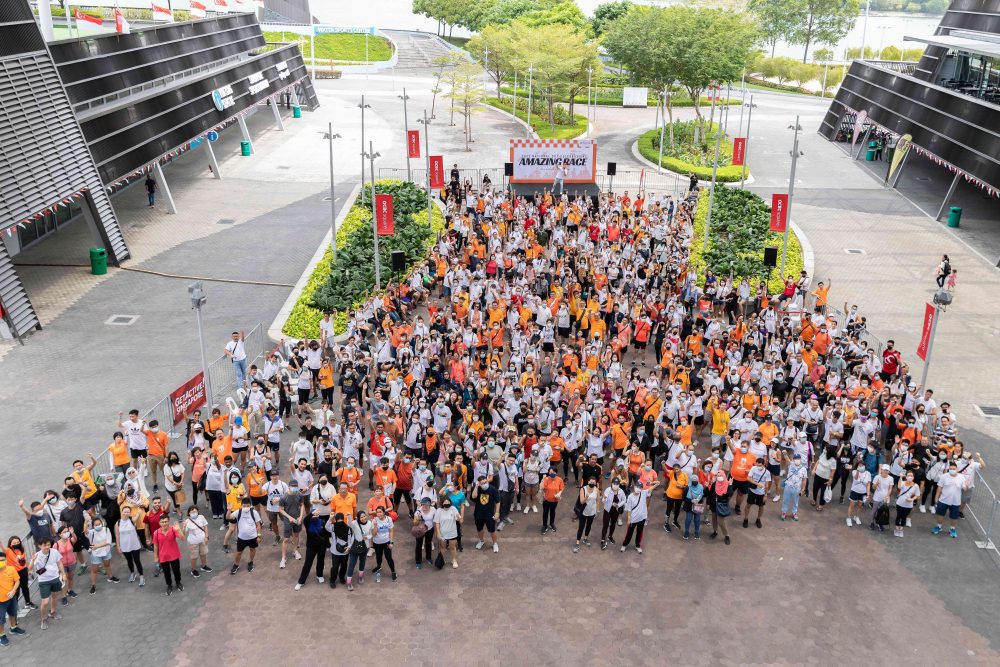
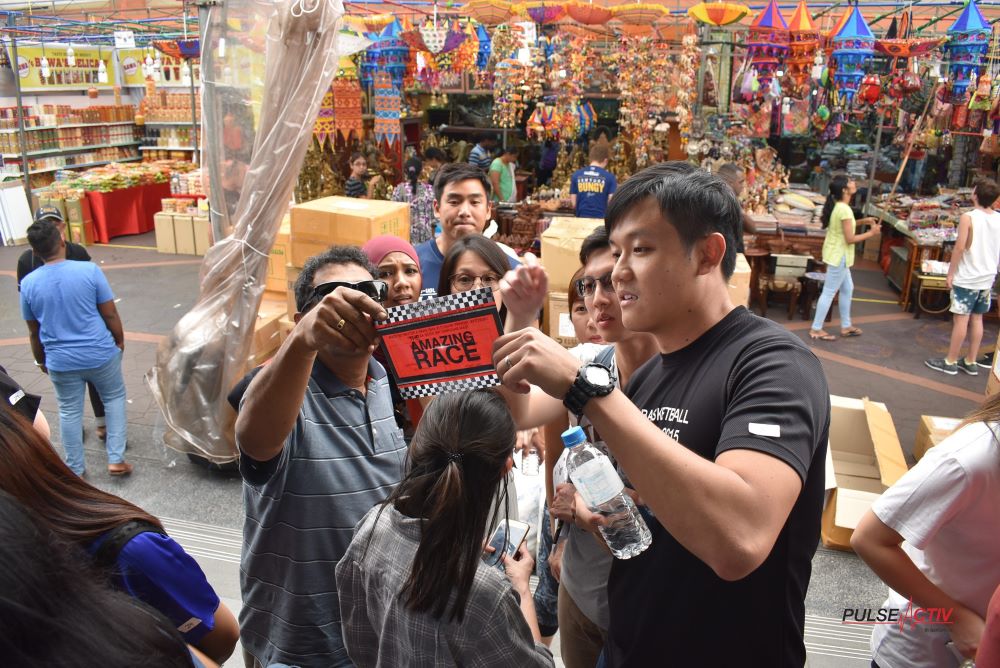
Pulse Amazing Race

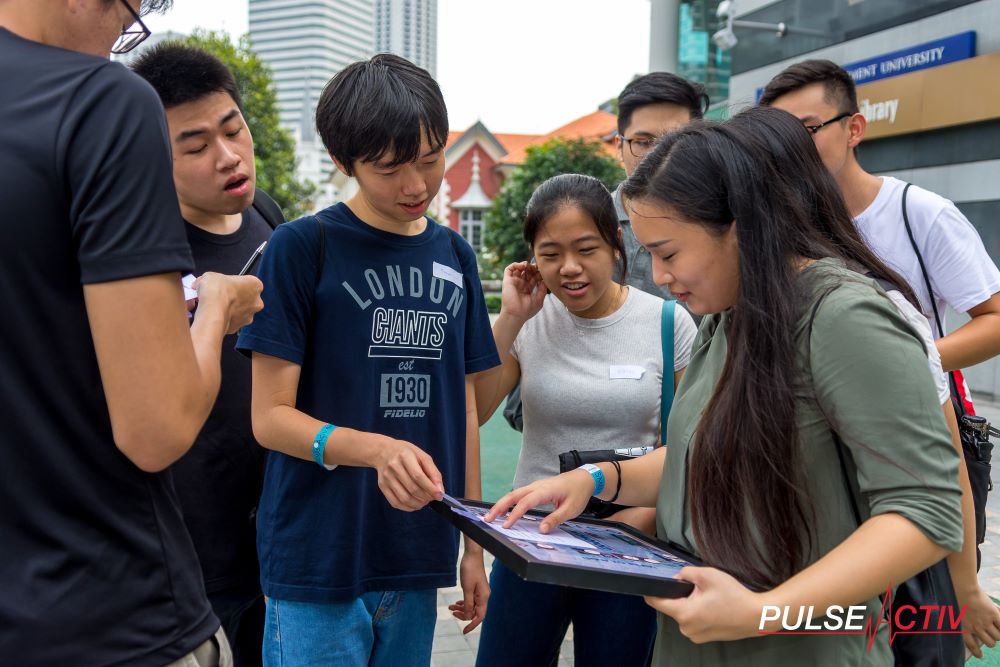
A station-based race where teams move through a series of challenges across locations, accumulating points and completing tasks at each stop. The format distributes participants naturally and keeps energy high throughout because teams are always moving between objectives.

In a half-day window, a well-designed Amazing Race typically runs 8 to 12 stations depending on group size and venue layout. The closing ceremony, where all teams return, scores are tallied, and prizes are awarded, is a strong natural finish to the half-day format. Works from 30 to 2,000+ participants.

Wacky Wars

Team-versus-team competitive games with a clear points structure and escalating intensity. Wacky Wars fits well into a half-day because the format is self-contained, each game is complete in itself, so the programme can be adjusted in real time without disrupting flow.

Best for groups that want active competition and are comfortable committing to the format. Works well for groups of 30 to 200.

Mini Olympics

Teams rotate through a series of physical or skills-based stations, accumulating points across the event. The station-based structure means no one is standing around, teams are always engaged at their current station while other groups are simultaneously active elsewhere.

Mini Olympics is an effective half-day format for groups of 80 to 300. The number of simultaneous stations can be scaled up or down to match headcount and venue size. Accommodates mixed fitness levels well when stations are designed around team coordination rather than individual athleticism.

Property Typhoon

A strategic format combining decision-making, negotiation, and team movement across stations. More depth than pure physical competition, teams are thinking and strategising alongside moving and competing. Works well in a half-day window for corporate groups where a layer of mental engagement is part of the objective.

Strong choice for mixed seniority groups, larger corporate teams, and events where the facilitator wants to balance energy with substance. Scales reliably from 50 to large-group formats.

Squid Game Team Building

Inspired by structured elimination-style team games, this format creates strong engagement quickly through dramatic framing and clear competitive stakes. The half-day window works well for this format because the elimination structure naturally escalates energy toward the finale.

Best for groups that are comfortable with competitive formats and want something that feels distinctly different from a standard team building day.

Build A Dream Team

A structured, table-based activity combining strategy and team interaction. Works well as a half-day format for groups where the priority is connection and collaboration rather than physical competition. Best for mixed groups, cross-department teams, or as a contrast to a previous high-energy event.

How to Choose Between Half-Day Formats

If you want…

Best half-day format

Maximum energy and laughter for a typical corporate group

Running Man

Movement and variety across the half-day

Pulse Amazing Race

Direct competitive format, teams against each other

Wacky Wars or Mini Olympics

Strategy and substance alongside competition

Property Typhoon

Something that feels different and dramatic

Squid Game Team Building

Connection and collaboration across mixed groups

Build A Dream Team

Large group (150+) that needs tight structure

Amazing Race or Sports Day format

Half-Day vs Full Day: When Does Each Make Sense?

A half-day event is not a compromise; it is often the better choice. For most corporate groups, the question is not whether a full day would be more impactful, but whether the additional time produces proportionally more value.

Half-day is the right choice when:

  • The event sits within a working day and participants cannot commit to a full day
  • The programme follows or precedes another event (annual dinner, company meeting, onboarding session)
  • The group is large and a tighter, more controlled programme will produce better energy than a sprawling full-day format
  • Budget is a consideration; half-day programmes are more cost-efficient per hour of engagement

Full day makes sense when:

  • The event is the centrepiece of an annual calendar; an anniversary celebration, annual games day, or retreat
  • Multiple activity segments are genuinely needed to cover different programme objectives
  • The group is travelling together and the day itself is part of the experience

The Common Half-Day Planning Mistakes

Not Building Enough Buffer Around Registration

For groups of 80 or more, registration always takes longer than expected. Participants arrive in clusters, name tags need to be found, teams need to be assigned. Cutting into this time to start the programme early consistently produces a fragmented opening. Build a genuine 30-minute registration window and treat it as a fixed part of the schedule.

Skipping the Warm-Up

The warm-up game is not wasted time. It breaks ice, builds group energy before the main activity demands it, and gives the facilitation team critical information about the group’s mood and energy level. Half-day events that skip straight to the main programme often feel cold for the first 20 minutes, and that energy loss is difficult to recover from.

Cutting the Finale

The closing ceremony, scoring announcement, prize presentation, group photo, is what participants remember. It gives the event a proper ending and creates the moment of collective recognition that the whole programme builds toward. Events that run long on the activity and skip the finale consistently leave participants with a sense that something was missing. Protect this time in the schedule.

Booking a Venue Based on Capacity Rather Than Space

Half-day team building requires more floor space than a venue’s stated seating capacity suggests. Active programmes, rotation-based formats, and movement between stations all need room, for participation, for facilitators to move, and for transitions. Always confirm the usable activity space, not just the headcount capacity.

Planning a Half-Day Event?

Tell us your group size, preferred time slot, and what you want the day to feel like and we will put together a programme structure that fits. Fill in our enquiry form and we will come back with a recommendation.

If you want to know more about these activities from PulseActiv, click here.

Contact us here to learn more about these activities. Click here to read more articles like this. 

Frequently Asked Questions

Running Man is the most consistently recommended half-day format for corporate groups. It builds energy naturally, works across a wide range of group profiles, and fits cleanly into a 3.5 to 4 hour window. For larger groups of 150 or more, Pulse Amazing Race and Mini Olympics formats are strong alternatives with better scalability.

A half-day team building event typically runs between 3.5 and 4 hours, including registration, warm-up, the main activity, and a closing ceremony. This is usually structured as either a morning session (9.00am to 1.00pm) followed by lunch, or an afternoon session (2.00pm to 6.00pm) followed by dinner.

Yes — a well-structured half-day consistently delivers better engagement than a poorly structured full day. The key is programme design: a proper warm-up, a well-paced main activity, and a dedicated closing ceremony. The constraint of the half-day window actually forces tighter design, which usually produces a sharper, more energetic participant experience.

Half-day team building works for groups from around 20 to several hundred participants. The format and facilitation structure need to match the headcount: smaller groups have more flexibility in format choice, while larger groups benefit from station-based and cluster rotation structures that keep everyone active simultaneously.

Costs depend on group size, venue type, format, and whether food is included. For a professionally facilitated half-day event with venue and basic catering, planning benchmarks range from $100 to $180 per person for smaller groups and $80 to $130 per person for larger groups. For a full breakdown by headcount and budget tier, see our guide: Corporate Team Building Budget: A Line-by-Line Planning Guide.
Categories
Blogs

Creative Team Building Activities for Corporate Teams in Singapore

Creative Team Building Activities for Corporate Teams in Singapore

Creative team building activities use hands-on making, building, or shared creative challenge as the vehicle for team connection. The formats that work best for corporate groups in Singapore are Build A Car, DIY Coaster Adventure, Chain Reaction, and Big Picture. Each produces a different kind of engagement, and each suits a different group profile, objective, and occasion.

One thing worth saying clearly upfront: creative in team building does not mean being good at art. The best creative programmes are not about artistic skill. They are about how a team thinks, decides, adapts, and works through constraints together. The creative output is the vehicle, not the point.

Creative formats occupy a distinct place in the corporate team building mix. After more than 10 years of designing and delivering these programmes, our honest view is that they work brilliantly for the right group and objective, and are the wrong choice when a group primarily needs energy and movement. This guide covers the full picture.

What Creative Team Building Actually Delivers

The word creative is often used loosely in team building. In the context of corporate programmes, creative formats share three specific characteristics that distinguish them from purely competitive or collaborative game-based activities.

First, there is a tangible output. At the end of a creative team building programme, teams have made something, a functioning model car, a working coaster, a sequence of cause-and-effect mechanisms, a section of a collective artwork. The output gives the activity concrete stakes: the team’s communication and coordination decisions are visible in the final result.

Second, the format involves decision-making under constraints. Creative programmes require teams to allocate roles, make trade-offs, and coordinate toward a shared outcome. Not every format guarantees that every person is physically building at every moment, but the decisions and coordination required keep people engaged and invested in the result.

Third, the energy is more focused and sustained than competitive formats. Creative programmes do not produce the same peaks of excitement as a well-run Running Man or Wacky Wars event. What they do produce is a different kind of engagement, the satisfaction of making something, the investment in the outcome, and the natural conversation and laughter that comes from working through a creative challenge as a team.

Creative Team Building Activities at PulseActiv

Build A Car

Teams design and build a car that must actually support the weight of a team member. The activity is structured in phases: planning and design, construction, and a final test where the car is loaded and put to the real challenge it was built for.

Build A Car is primarily a critical thinking and decision-making format. Teams have to make trade-offs with materials, weigh competing design priorities, and commit to choices under time pressure. Unlike fully group-participation formats such as Running Man, not every participant will be physically building at every moment. Some members take on planning, coordination, and decision roles. For groups where full-body participation and energy are the priority, this format is not the right fit. For groups that respond well to thinking and problem-solving under constraints, it consistently delivers.

The programme benefits from being paired with one or two active warm-up games at the start. Build activities require a different headspace than competitive games, participants need to shift out of work mode before the main programme begins.

Works well for groups of 20 to 150. Requires more floor space per team than table-based activities.

DIY Coaster Adventure

Teams build a coaster track using specially designed tubes and pipes, with the objective of getting a ball to travel through the complete course successfully. The activity combines engineering problem-solving with creative design: teams need to plan the track, build it, test it, and adjust. The ball either makes it through or it does not, which gives the activity clear, immediate feedback on every design decision.

What sets DIY Coaster apart is the cross-team dimension. Teams connect their individual sections into a larger structure, which means teams sometimes need to modify their own designs to adapt to what neighbouring teams have built. The challenge of coordinating your section to work as part of a bigger picture is where the real team dynamic emerges.

The iterative nature of the challenge, designing, testing, failing, adjusting, and testing again, is often more team-building than the final result.

Works well for groups of 20 to 100.

Chain Reaction

Chain Reaction is themed around a house: the whole group is the house, and each team is assigned a room. Every team builds a sequence of cause-and-effect mechanisms within their room, timed and designed so the end of their chain triggers the start of the next team’s. At the finale, the complete chain runs from the first room to the last in a single connected sequence across the whole group.

The format is one of the most intellectually engaging in the range. It rewards creative thinking, precision, and systematic problem-solving simultaneously. The shared language of the challenge, does this work, why not, what needs to change, creates natural conversation and genuine problem-solving momentum within teams. The cross-team connection at the finale creates a strong collective moment that purely individual build formats cannot replicate.

Works for groups of 20 to 150.

Big Picture

Each team is given a section of a larger image and works to recreate their section on canvas. When all sections come together at the end, the individual pieces form a single collective artwork. It is one of the few mass collaborative formats that works across very large groups.

One important design note: bigger is not always better. Canvas size needs to match the group size thoughtfully. For a group of 200 people, even a 10cm section per person produces a significant collective work when assembled. Over-sizing the canvas creates unfinished sections and frustration; a well-proportioned design produces a better outcome and a stronger finale moment.

Big Picture is also worth considering as part of a mixed programme rather than a standalone format. Pairing it with one or two other activities creates a more complete event experience and allows the artwork element to land without the pressure of carrying the whole event.

There is no physical activity requirement and no competitive pressure. Works across mixed seniority groups and diverse demographic environments. The completed artwork can be displayed in the office after the event. Scales with canvas design from groups of 20 to several hundred.

A Note on Craft and Art-Based Activities

Painting, craft activities, and art-based programmes can work well in corporate settings but come with specific considerations. Art is subjective: what feels rewarding and expressive for one participant can feel uncomfortable or exposing for another. Art-based activities also take varying amounts of time depending on how participants engage, which creates facilitation challenges in structured corporate event timelines.

These formats work best when: the group demographic is well-suited to them, the format is run at a smaller, more intimate scale, and they are mixed with other activities rather than used as a standalone programme. Big Picture is the most reliable mass-collaborative art format because the team structure and the assembled outcome remove the pressure of individual artistic performance. For purely individual art activities, careful thought about group profile and occasion is needed before committing.

Who Creative Formats Work Best For

Creative team building is not a universal default. It works best for specific group profiles and objectives.

Group Profile

Creative Format Fit

What Works Well

Teams with a problem-solving or analytical culture

Strong

Build A Car, DIY Coaster, Chain Reaction, the engineering and decision-making challenge engages this group genuinely

Cross-department groups who rarely interact

Strong for connected formats

Chain Reaction and DIY Coaster both require teams to coordinate with neighbouring groups, forcing real interaction

Mixed seniority, inclusive design needed

Strong

Big Picture, no physical requirement, equal creative entry points regardless of role or fitness

Groups wanting high energy and competition

Weak standalone, better paired

Add active warm-up games before the creative main programme to build energy first

Small groups under 30 people

Strong for most formats

DIY Coaster, Chain Reaction, Build A Car, intimate scale suits the focused collaborative format

Large groups of 150+

Moderate, needs careful design

Big Picture scales well; Build A Car and Chain Reaction need more space and careful team management

The Right Way to Structure a Creative Team Building Session

Creative programmes work best when the session is deliberately structured to get participants in the right headspace. This matters more for creative formats than it does for competitive ones, for a specific reason: some creative activities, painting, crafting, careful building, are naturally more individual. Without the right opening, participants go into their own heads rather than engaging with the people around them. The structure is what prevents that.

The structure that works:

  • Mass Energizer first. One or two short, high-energy activities for the whole group before splitting into teams. These get the room moving, create collective energy, and shift participants out of work mode.
  • Ice Breaker, especially important for creative programmes. Because creative formats can draw people inward, an ice breaker that gets conversation flowing before the main activity begins is critical. Do not skip this for groups that do not know each other well, or for any format that involves painting, crafting, or other activities where people might otherwise work quietly side by side.
  • Clear, well-paced brief for the main activity. Creative activities require participants to understand the rules and constraints before they start. A rushed or unclear brief produces confusion at the start of the main programme.
  • Build in time for the creative process to breathe. The best moments happen when teams have enough time to experiment, encounter a problem, and work through it together. Overly compressed timelines push groups into safe, uninspired execution.
  • End with a showcase or reveal. When completed builds are displayed, the chain runs, or the Big Picture panels are assembled, that is the emotional peak of the programme. Protect this time. It is worth it.

Creative vs Competitive: Which Should You Choose?

The honest answer: most corporate groups benefit more from competitive formats when energy and engagement are the primary objectives. Creative formats require participants to be genuinely engaged in the task, and when that engagement is present, they produce some of the most meaningful team building experiences we run. When it is not, they can feel slow.

Choose creative formats when:

  • The group profile is analytically or creatively oriented
  • Collaboration and communication are the explicit objectives, not just energy
  • The occasion calls for something more personal and memorable than a high-energy game
  • Physical activity is a concern for part of the group
  • The event includes a significant number of participants who are reserved or less comfortable with competitive formats

Choose competitive formats when:

  • Maximum energy and engagement are the priority
  • The group is large (above 100) and sustained movement matters
  • The group profile is mixed and you need something that works for everyone
  • The event needs to build collective energy quickly

For many groups, the best answer is both: an active warm-up or short competitive segment, followed by a creative main programme. This structure gives participants the energy shift they need while delivering the focused, meaningful engagement that creative formats are best at producing.

Creative format preference is also genuinely subjective. What feels stimulating and meaningful for one group can feel slow for another. This is not a failure of the format, it is a mismatch between the format and the group profile. Getting this right is less about choosing the most impressive activity and more about reading the group accurately before making a recommendation.

Looking for a Creative Programme That Actually Engages?

We design creative team building programmes that are built around your group profile, not just lifted from a standard menu. Fill in our enquiry form with your group size and what you are trying to achieve, and we will put together a recommendation that fits.

If you want to know more about these activities from PulseActiv, click here.

Contact us here to learn more about these activities. Click here to read more articles like this. 

Frequently Asked Questions

Build A Car, Chain Reaction, DIY Coaster Adventure, and Big Picture are the core creative team building formats for corporate groups in Singapore. Each delivers a different type of engagement: Build A Car focuses on critical thinking and trade-offs, DIY Coaster and Chain Reaction on iterative problem-solving and cross-team coordination, and Big Picture on collective creative output at scale. The right choice depends on group size, group profile, and the objective for the event.

Yes, with the right design. Build A Car and Big Picture scale well for larger groups with proper venue space and team configuration. For groups above 100, the key considerations are usable floor space (build activities need more room than seating-based formats) and team size management (larger teams need clearer role division to prevent passive participation).

Competitive formats typically produce higher peaks of energy and excitement. Creative formats produce more sustained, focused engagement and often stronger interpersonal interaction within teams. The best events for groups that want both combine an active competitive warm-up with a creative main programme, using the energy from the competition to fuel the focus of the creative challenge.

Big Picture requires no physical activity and has no competitive pressure. Chain Reaction and Build A Car involve minimal movement. DIY Coaster is entirely table and floor based. All creative formats in this range are fully inclusive regardless of fitness level, making them strong choices for diverse corporate groups.

Creative programme pricing follows the same structure as other team building formats: based on programme duration, group size, and what is included in the package. For a full breakdown of per-person cost benchmarks by headcount and budget tier, see our guide: How Much Does Team Building Cost in Singapore.

Categories
Blogs

Competitive Team Building Activities in Singapore

Competitive Team Building Activities in Singapore

Competitive team building activities in Singapore use structured competition between teams to create energy, drive engagement, and build camaraderie through shared challenge. The most effective formats for corporate groups are Running Man, Pulse Amazing Race, Wacky Wars, Mini Olympics, Sports Day, and Property Typhoon; each offering a different type of competitive experience suited to different group sizes and objectives.

Over 10 years of running competitive corporate events in Singapore, the consistent finding is this: when competitive formats work, they produce the highest-energy, most memorable events in the corporate calendar. When they go wrong, it is almost never because the activity was wrong; it is because the competitive structure was not properly designed for the group. Getting this right is the difference between an event that people talk about for months and one that feels flat by the halfway mark.

Why Competitive Formats Work for Corporate Groups

Competition creates a natural engagement mechanism. When teams are working toward a score, the stakes of each game are immediately clear; every participant understands what matters and why they should care. This is why competitive formats consistently outperform purely collaborative ones in terms of energy and participant engagement.

The key to making competition work in a corporate setting is design. Competitive team building is not about finding out who the best team is; it is about creating a shared challenge that brings a group together through the experience of competing. Scoring, team structure, and game design all need to be calibrated so that the competition feels meaningful without becoming divisive.

In our experience, the groups that resist competitive formats at the briefing stage almost always enjoy them once the programme starts. The resistance is usually about concern that competition will create friction. In practice, well-facilitated competitive team building does the opposite; it creates a shared emotional experience that builds connection faster than most collaborative formats.

Competitive Team Building Activities at PulseActiv

Running Man

Running Man is a series of team-based challenges where all teams play simultaneously, competing for points across each round. The format builds progressively — earlier rounds establish energy and group dynamics, later rounds escalate the stakes. The competitive arc is deliberate: by the final round, every team is fully engaged and the outcome genuinely matters to participants.

What makes Running Man work as a competitive format is that it balances individual team challenge with whole-group energy. Every team is competing, but the collective energy of the whole group playing simultaneously creates an atmosphere that purely team-versus-team formats do not always achieve. It is our most recommended competitive format for first-time corporate clients.

Works for groups of 30 to 300. Adaptable to cluster formats for larger groups. Suited to both indoor and outdoor settings.

Wacky Wars

Wacky Wars is a direct team-versus-team competitive format where teams compete in a series of active games across an event. The competitive structure is more explicit than Running Man — teams face each other directly in each game rather than competing simultaneously for points — which produces a different kind of energy: more focused, more intense, and with clearer individual moments of victory and defeat.

This format works best for groups that are comfortable committing to active competition. It rewards openness and willingness to play hard. For groups with a strong team culture and existing chemistry, Wacky Wars produces some of the highest-energy events we run. For more conservative or mixed-profile groups, the direct head-to-head structure can create visible hesitation — and Running Man is typically the better choice.

Works well for groups of 30 to 200. Best suited to groups that already know each other reasonably well.

Pulse Amazing Race

Pulse Amazing Race is a station-based race where teams move through a series of challenge points across a venue or outdoor area, completing tasks and accumulating points at each station. The competitive element is woven through the entire event — teams are always aware of other teams, always working against the clock, and always making decisions about which station to prioritise.

The Amazing Race format is one of the most scalable competitive formats available. We have designed and delivered this programme from 30 participants up to groups of 2,000 and above. The structure distributes participants naturally, which means it handles large groups without the bottleneck issues that affect other competitive formats at scale.

The format is also highly adaptable in theme and content. Stations can be themed to a company’s brand, products, or values — making it a strong choice for events that have a specific communication objective alongside the competitive experience.

Mini Olympics

Mini Olympics is a station-based competitive format where teams rotate through a series of physical or skills-based challenges, accumulating points across the event. Unlike Wacky Wars or Running Man, the competition in Mini Olympics is structured across the full event rather than within individual games — teams build their score progressively, and the final standings are revealed only at the closing ceremony.

This structure creates sustained competitive tension throughout the event. Every station matters because the cumulative score determines the winner. It also accommodates mixed fitness levels well: station design can balance physical challenges with strategy and coordination-based tasks so that athletic ability alone does not determine the outcome.

Strong choice for groups of 80 to several hundred. One of the most popular formats for annual corporate sports days and large team cohesion events.

Property Typhoon

Property Typhoon introduces a strategic layer to competition. Teams compete not just through physical challenges but through decision-making, resource management, and negotiation across rounds. The competitive stakes are real — decisions made in earlier rounds affect standing in later ones — but the competition is as much about thinking as it is about physical energy.

This is the competitive format we recommend most often for mixed seniority groups, corporate environments with a strong analytical culture, or events where the organiser wants competition without the full-throttle physical intensity of Wacky Wars or Running Man. The format reliably scales to large groups and has been delivered for groups of over 2,000 participants.

Squid Game Team Building

Inspired by the structured elimination format popularised by the series, Squid Game Team Building uses dramatic framing and escalating stakes to create intense competitive engagement. Teams compete in a series of challenges with elimination mechanics — the competitive pressure is immediate and the stakes feel genuinely high.

This format works well for groups that want something that feels different from a standard competitive programme and are open to committing to the format. The dramatic framing creates strong engagement from the start. Best for groups with existing team chemistry and a high tolerance for competitive intensity.

Sports Day / Telematch

Traditional sports day and Telematch formats bring a sense of community and occasion to competitive team building. Teams compete across a full event programme with a mix of physical challenges, relay-style games, and team-strategy activities. The competitive element is framed around collective team performance rather than individual skill, which makes it one of the most inclusive competitive formats available.

Sports Day formats work particularly well for large corporate groups and annual events where the occasion itself is as important as the programme. The format scales effectively to groups of several hundred and has a natural energy arc that builds through the day toward a finale.

How to Make Competition Work for Your Group

The design of the competitive structure matters as much as the activity itself. These are the variables that determine whether a competitive format creates the right energy or the wrong kind.

Team Mixing

For most corporate events, teams should be deliberately mixed across departments, seniority levels, and job functions. Same-department teams compete well — but the whole-group connection that team building is supposed to create does not happen if teams map to existing org structure. Mixed teams force interaction across the group and create the cross-organisation relationships that justify the investment in the event.

Scoring Transparency

Competitive formats work best when participants can track how their team is doing throughout the event. Live scoring boards, emcee score updates after each round, and visible cumulative standings all contribute to sustained engagement. When participants do not know where they stand, the competitive energy dissipates — each game starts to feel isolated rather than part of a progression.

The Finale Matters

The closing ceremony is the competitive payoff. The announcement of final standings, prize presentation, and public recognition of the winning team are what make the competitive arc complete. Events that rush or skip the finale leave participants with the energy of the competition but no resolution. Protect this time in the schedule — it is disproportionately important to how participants remember the event.

Prizes and Recognition

Prizes do not need to be expensive to create the right effect. What matters is that they are presented publicly, in a moment of genuine recognition. The combination of prize plus public acknowledgement is what makes winning feel meaningful. Budget for prizes covering around 30 to 40 percent of participants — enough that a significant portion of the group has a tangible outcome from the competition.

Competitive vs Collaborative: Do You Have to Choose?

Most of the competitive formats above include meaningful collaborative elements — teams working together, making decisions collectively, and supporting each other through the activity. Competition and collaboration are not mutually exclusive in team building design. They are most effective when combined: the competition creates stakes and energy; the collaboration within each team creates connection and shared experience.

The choice of format is really about the dominant energy of the experience. Competitive formats use the pressure and excitement of competition as the primary driver. Collaborative formats use shared achievement as the primary driver. Both produce genuine team building outcomes — the question is which energy is right for your group at this point in time.

Want a Competitive Event That Actually Delivers?

We have been designing and running competitive corporate events in Singapore for over 10 years. Fill in our enquiry form with your group size and what you want the event to feel like; we will match you to the right format.

If you want to know more about these activities from PulseActiv, click here.

Contact us here to learn more about these activities. Click here to read more articles like this. 

Frequently Asked Questions

Running Man, Pulse Amazing Race, Wacky Wars, Mini Olympics, and Property Typhoon are the most consistently effective competitive formats for corporate groups. Running Man is the most widely recommended starting point for groups without a strong existing preference. For large groups of 150 or more, Amazing Race and Sports Day formats provide the best combination of competitive structure and scalability.

Competitive formats work for most corporate groups when the programme is designed correctly. Team mixing, scoring transparency, and facilitation quality are the variables that determine whether competition creates energy or friction. For groups with diverse seniority levels or participants who are less comfortable with physical competition, formats like Property Typhoon and Running Man offer competitive structure without requiring individual physical performance.

Team design is the primary lever. Mixed teams prevent inter-department rivalry from amplifying existing tensions. Scoring structures that reward collective team performance rather than individual standouts keep the focus on group achievement. Strong emcee facilitation maintains the tone — keeping energy high without allowing competitive intensity to become personal. These are not afterthoughts; they are built into the programme design from the start.

Yes. Station-based competitive formats, Pulse Amazing Race, Mini Olympics, Sports Day, are designed for large groups. The key is that the facilitation team, number of simultaneous stations, and briefing approach are all scaled appropriately for the headcount. For groups above 150, cluster rotation structures typically produce a better experience than all-together formats.

Running Man, Wacky Wars, Mini Olympics (adapted for indoor space), Property Typhoon, and Squid Game Team Building all run effectively indoors. High-energy competitive formats do not require outdoor space to deliver their energy. A well-facilitated indoor competitive event will match the energy of an outdoor one, with more predictable conditions and less weather and logistics risk.

Team Building Large Group Size Shot
Categories
Blogs

How to Choose the Right Team Building Activity

How to Choose the Right Team Building Activity

The first question to ask when choosing a team building activity is: how many people? Group size determines which formats are practical, how the facilitation team needs to be structured, and what the venue must support. Everything else, energy level, indoor or outdoor, competitive versus collaborative, follows from there.

For most corporate groups with no strong preference, Running Man is the default starting recommendation. It is high-energy, accessible to almost every group profile, and consistently delivers engagement across different team sizes and company cultures. After 10 years and over 3,000 events, it is the format we reach for first when a client gives us a short brief and a typical corporate group.

That said, one format does not fit every situation. This guide walks through how to think about the decision — starting with group size, then working through the other variables that shape which format will actually land.

Step 1: Start With Group Size

Group size is the primary filter. It determines which formats are logistically viable, how the programme needs to be structured, and how the facilitation team is sized and deployed.

Group Size

What This Changes

Formats That Work Well

Under 30

Almost any format is viable. Smaller groups suit more intimate and interactive formats.

Running Man, Makan Kakis, Build A Dream Team, Wacky Wars, CSI Mystery

30 to 80

The sweet spot for most programmes. Full range of formats available.

Running Man, Wacky Wars, Amazing Race, Mini Olympics, Build A Dream Team, Property Typhoon

80 to 150

Cluster rotations start to add real value. Briefing logistics become more important.

Amazing Race, Sports Day, Mini Olympics, Running Man (adapted), Property Typhoon

150 to 300

Station-based and cluster formats are the default. Facilitation team size matters significantly.

Property Typhoon, Amazing Race, Sports Day, Wacky Wars (rotation)

300+

Programme design and facilitation deployment become the critical variables. Self-directed formats work best at very large scale.

Large-scale Amazing Race (Free and Easy), Sports Day, Property Typhoon

Step 2: What Does the Event Need to Achieve?

Once you know the group size, the second question is what the event needs to do. Most corporate team building falls into one of three categories:

Energy and Celebration

The team has reached a milestone, come through a demanding period, or the event is an annual cohesion celebration. The priority is a fun, memorable, high-energy shared experience. Competitive and movement-based formats work best here: Running Man, Wacky Wars, Pulse Amazing Race, Mini Olympics, Sports Day.

Connection and Mixing

Participants may not know each other well; recent hires, cross-department groups, or teams that rarely interact. The goal is natural interaction and connection. Formats with structured team mixing and natural conversation built in work best: Build A Dream Team, Property Typhoon, Makan Kakis, Station-based races where teams rotate and encounter different groups.

Collaboration Toward a Shared Outcome

The group needs to work together; communication, coordination, and collective problem solving are the actual objectives. Formats where the activity itself demands teamwork: Build A Car, DIY Coaster Adventure, Chain Reaction. Worth noting: these formats work well when the group profile is right, but they require participants who are genuinely engaged in the task. For groups that need higher energy to stay switched on, a competitive format with collaborative elements embedded will deliver better results.

Step 3: Who Is in the Room?

The group profile shapes which formats will land and which will not. This is where the decision gets nuanced.

Mixed Groups: Most Corporate Events

For a standard corporate group with mixed roles, seniority levels, and varying comfort with physical activity, the goal is a format that creates equal participation points for everyone. Running Man, Wacky Wars, and station-based formats all work well here because the structure of the programme creates clear roles, nobody is left deciding how much to participate.

Leadership and Senior Teams

Senior groups often have lower tolerance for formats that feel lightweight or purely fun. The activity needs some substance; a layer of strategy, decision-making, or a challenge worth solving. Property Typhoon, structured race formats with decision elements, and formats with a clear competitive arc tend to work well. Formats that rely on participants being willing to be silly or physically competitive are a higher risk with this group.

Groups That Do Not Know Each Other Yet

New team members, cross-department cohorts, or groups brought together from different offices need formats that break awkwardness without demanding too much too soon. Build A Dream Team and Property Typhoon are strong choices: structured enough that participation does not require existing chemistry, but interactive enough to create real connection. High-energy elimination-style formats can work once energy builds, but they need more warm-up for groups that are meeting for the first time.

Step 4: Indoor or Outdoor?

In Singapore, this decision is more consequential than it looks. Heat, humidity, and unpredictable rain are not minor inconveniences, they actively affect participant energy and experience, usually within the first 30 minutes outdoors.

For groups above 100 participants, indoor is the more reliable default. The combination of scale and weather risk makes outdoor delivery harder to manage without meaningful contingency planning. For smaller groups, outdoor is viable, with the right timing and a clear backup plan.

The most manageable outdoor window is February to April. The highest-risk period is November to January (monsoon season). June to September is peak heat.

The assumption that indoor means lower energy or less engaging is wrong. High-energy indoor formats, Running Man, Squid Game Team Building, Wacky Wars, Mini Olympics adapted indoors, deliver the same competitive feel as outdoor events, in an air-conditioned environment. Engagement is driven by programme design and facilitation, not by whether the sun is out.

Step 5: What Is the Duration?

Duration determines how much the activity can deliver and how the programme should be structured.

2 to 3 hours works for a focused, single-format programme with a proper opening, activity run, and closing ceremony. This is the minimum time needed for the programme to build energy and feel complete rather than rushed.

A half-day (3.5 to 4 hours) is the most effective format for corporate team building in Singapore. It allows for a warm-up game, the main activity, and a proper finale with prizes and recognition. This is the duration that gives the facilitation team room to build energy properly — and where the event feels like an event, not just an activity.

A full day allows for multiple activity segments, a meal break, and a more layered programme. Best suited to annual events, retreats, or milestone celebrations where the team building is the centrepiece of the day rather than a component of it.

Format Reference: What Each Activity Delivers

Running Man

A series of team-based games played together as a full group, building collective energy through shared challenges. The most consistently recommended format for first-time corporate clients. Works across almost every group profile and delivers high engagement without requiring participants to be particularly sporty or outgoing. Best for groups of 30 to 300; adaptable to cluster rotations above that.

Pulse Amazing Race

A station-based race where teams move through challenges across locations. Naturally distributes participants, keeps energy sustained throughout, and works well when the venue has multiple spaces to use. Strong choice for groups that want movement and variety. Scales from 30 to 2,000+ participants with the right design.

Wacky Wars

High-energy team-versus-team games with direct competitive structure. Works well for groups that enjoy active competition and are comfortable committing. A step up in physical energy from Running Man, best for groups that already have some chemistry or are open to high-energy formats from the start.

Mini Olympics / Sports Day

Station-based format where teams rotate through physical challenges, accumulating points across the event. Accommodates mixed fitness levels when stations are designed around team strategy as much as individual performance. One of the most popular formats for large corporate groups in Singapore, scales from 80 to several hundred participants.

Property Typhoon

A strategic format combining decision-making, negotiation, and team movement across stations. More depth than pure physical formats; participants are thinking as well as moving. Works well across mixed seniority groups and corporate environments where purely high-energy games would feel out of place. Scales reliably to very large groups.

Build A Dream Team

A structured, table-based activity combining strategy and team interaction. Inclusive regardless of fitness level or seniority. A strong default for diverse groups where equal participation is a priority. Works well when the goal is genuine cross-team connection rather than competition.

Build A Car / DIY Coaster / Chain Reaction

Collaborative build activities where teams work together toward a shared physical outcome. These formats work well when the group profile supports them: participants who are genuinely engaged in problem-solving and comfortable with a slower-paced, hands-on challenge. For groups that need energy and movement to stay engaged, a competitive format will typically deliver better results. Build-based activities are best paired with active warm-up games when energy needs to be established first.

CSI Mystery

A problem-solving format where teams work through a simulated investigation, piecing together clues and coordinating information. Works particularly well for analytical groups, leadership teams, or events where mental engagement is the explicit priority. Not the right choice for groups looking primarily for energy and fun; the format requires genuine engagement with the puzzle to land well.

Makan Kakis

PulseActiv’s culinary team building programme. The most relaxed and social format in the range. Works well when the objective is connection over a shared experience, or as part of a longer event that needs a lower-energy segment. Best for groups of 20 to 80.

Quick Decision Table

If this is your situation…

Start here

First-time client, short brief, standard corporate group

Running Man

Large group (150+), need everything to run smoothly

Amazing Race or Sports Day format

Mixed seniority, need equal participation for everyone

Build A Dream Team or Property Typhoon

Group that wants to compete hard

Wacky Wars or Mini Olympics

Cross-department mixing, participants don’t know each other

Property Typhoon or Build A Dream Team

Leadership team, needs some substance

Property Typhoon or structured race with decision elements

Relaxed bonding, lower energy needed

Makan Kakis or Build A Dream Team

Problem-solving as the explicit objective

CSI Mystery (right group only) or Property Typhoon

Still Not Sure What Fits?

Tell us your group size, rough date, and what the event is for and we will give you a direct recommendation. We have run over 3,000 events across Singapore and can usually narrow it down within one conversation. Fill in our enquiry form to get started.

If you want to read more, here are more articles from us about Corporate Team Building Budget Guide, How to Plan a Corporate Team Building Event in Singapore.

Contact us here to enquiry more. Click here to read more articles like this.

Frequently Asked Questions

Running Man is consistently one of the most popular and widely recommended formats for corporate groups in Singapore. It is high-energy, accessible to almost every group profile, and works across a wide range of group sizes. For larger groups of 150 or more, Pulse Amazing Race and Sports Day formats are also among the most frequently requested.

Repeat groups need something that feels genuinely different rather than a variation of what they have already done. Squid Game Team Building, Click Snap Move (technology-integrated race format), and Chain Reaction tend to work well for clients with an established team building history. The format itself should feel new, not just a refreshed version of the same programme.

Build A Dream Team and Property Typhoon both work well across seniority levels because they create structured participation points that do not depend on physical confidence or existing relationships. Avoid formats that rely on willingness to be physically competitive or silly; these tend to create visible stratification in mixed seniority groups.

Competitive formats produce more energy and excitement but require participants to be open and willing to commit. Collaborative formats produce more meaningful interaction across diverse groups and carry less risk of anyone feeling sidelined. For most corporate groups, a programme that combines both, competitive structure with moments of genuine collaboration built in, delivers the best outcome. Station-based formats like Amazing Race and Property Typhoon naturally include this combination.

A half-day (3.5 to 4 hours) is the most effective format for corporate team building. It allows for a warm-up, the main activity, and a proper closing ceremony; enough time for energy to build and the event to feel complete. Two to three hours works for focused programmes but leaves less room for the event to develop momentum. Full-day formats are best for annual events or retreats where team building is the centrepiece of the day.

Team Building Events Gallery - Group Photo
Categories
Blogs

Best Team Building Activities in Singapore

Best Team Building Activities in Singapore

The best corporate team building activities in Singapore span a range of formats: high-energy active programmes, collaborative build-based challenges, strategic problem-solving activities, and lighter social experiences. For large groups of 80 participants or more, the most consistently effective formats are Running Man, Pulse Amazing Race, Mini Olympics, Wacky Wars, Build A Dream Team, and Build A Car. For a full breakdown of what these events cost, see our guide on How Much Does Team Building Cost in Singapore.

The activity you choose matters. How it is designed and facilitated matters more. This guide covers what actually works, who each format suits, and what experienced organisers look for when choosing an activity for a large corporate group.

The Top Team Building Activities in Singapore

1. Running Man

Running Man is PulseActiv’s most recommended activity for first-time corporate clients and consistently generates the strongest post-event feedback. The name suggests a physical race. It is not. Running Man is a series of team-based games where everyone plays together: challenge rounds, collaboration tasks, and competitive elements drawn from the spirit of the television format but redesigned around genuine team engagement. The games are fast, varied, and energetic without being physically demanding, which means the whole group stays in.

It works for groups up to around 300 participants before the format benefits from adapting to a cluster structure.

Best for: groups of 50 to 300, first-time corporate events, mixed seniority teams, anyone who wants high energy without outdoor exposure.

The Running Man Past Activity TB 3

2. Pulse Amazing Race

Pulse Amazing Race is a station-based format where teams move through a series of challenges, with each station designed as a distinct team task rather than individual tests. It works well indoors or in semi-outdoor environments and scales reliably for large groups. The competitive structure, time pressure, and variety of station challenges keep energy high throughout. It is one of the most frequently recommended activities for groups that want movement and competition without committing to a fully outdoor event.

Best for: groups of 50 to 300, mixed-age corporate groups, organisations wanting a structured competitive format.

Team Building Events Gallery - Group Photo

3. Mini Olympics and Sports Day

Mini Olympics is one of the most popular choices for large corporate groups in Singapore. It runs in three phases that build to a natural climax. Part 1 is a Telematch section: team-based relay and coordination games that get everyone warmed up and engaged from the start. Part 2 opens into concurrent sports events running simultaneously across the venue, so all teams are active at the same time rather than watching and waiting. Part 3 is the Finale, a high-stakes collective moment such as tug of war, where the day’s scores converge into a decisive group experience.

The format scales from 100 participants up to several hundred. Events can be designed around team strategy rather than individual physical fitness, so mixed-ability groups participate on equal terms. For companies wanting a traditional Sports Day feel with proper facilitation and scoring, this is the format.

Best for: groups of 100 to 500+, annual company days, large milestone celebrations.

4. Wacky Wars

Wacky Wars is built around friendly head-to-head competition. The design is deliberate: teams go up against each other through a sequence of challenges where competition is the engine driving the energy, not just a backdrop to collaboration. That competitive dynamic, played out in a lighthearted setting, is what makes the event work. Groups get genuinely invested in the outcome, and that investment produces participation rates and event energy that purely collaborative formats often cannot match.

The energy is consistently high, participants regularly describe it as one of the most enjoyable events they have been part of, and it adapts to cluster structures for larger headcounts.

Best for: groups of 50 to 300, organisations wanting a high-energy format with strong competitive team dynamics.

Wacky war past activity

5. Build A Dream Team

Build A Dream Team is the most broadly applicable activity across different corporate group profiles. It is collaborative, table-based, and works across seniority levels without requiring physical activity. Teams work together to build and present their vision of an ideal team, which drives communication, shared thinking, and outcomes that connect directly to workplace dynamics. It is the activity that translates most naturally into a post-event conversation. For first-time clients who are uncertain about group energy or physical ability range, this is often the safest and most meaningful recommendation.

Best for: mixed seniority groups, leadership teams, organisations wanting outcomes that connect to workplace culture.

Build A Dream Team Building

6. Build A Car

Build A Car is a hands-on collaborative challenge where teams design and build a working model car together. The format drives clear role assignment, creative problem-solving, and team accountability because the output is tangible and tested. It works well for groups that respond better to building something real than to game-based competition, and the reveal and race element at the end creates a genuine collective moment.

Best for: groups of 30 to 150, organisations focused on collaboration and problem-solving outcomes.

Build A Car Past Activity TB 4

7. Squid Game Team Building

Squid Game Team Building draws on the cultural recognition of the series to create immediate engagement and anticipation. The format uses the visual language and challenge structure of the show but is designed around team participation rather than elimination. It generates strong pre-event buzz and works particularly well for groups that respond to shared cultural references. The format is most effective for groups up to around 150 participants.

Best for: groups of 40 to 150, organisations wanting high novelty and strong pre-event excitement.

Squid Game

8. Property Typhoon

Property Typhoon blends strategic decision-making with team movement. Teams manage resources, make property investment decisions, and compete across challenges that test both strategy and execution. It scales particularly well for large groups: PulseActiv has run Property Typhoon for over 2,000 participants using a Free and Easy structure where stations are multiplied to ensure no waiting. For organisations wanting a format that feels sophisticated rather than purely physical, this is a strong option.

Best for: groups of 80 to 2,000+, large milestone events, organisations wanting strategy and movement combined.

Property Typhoon Team Building Activity

9. CSI Mystery

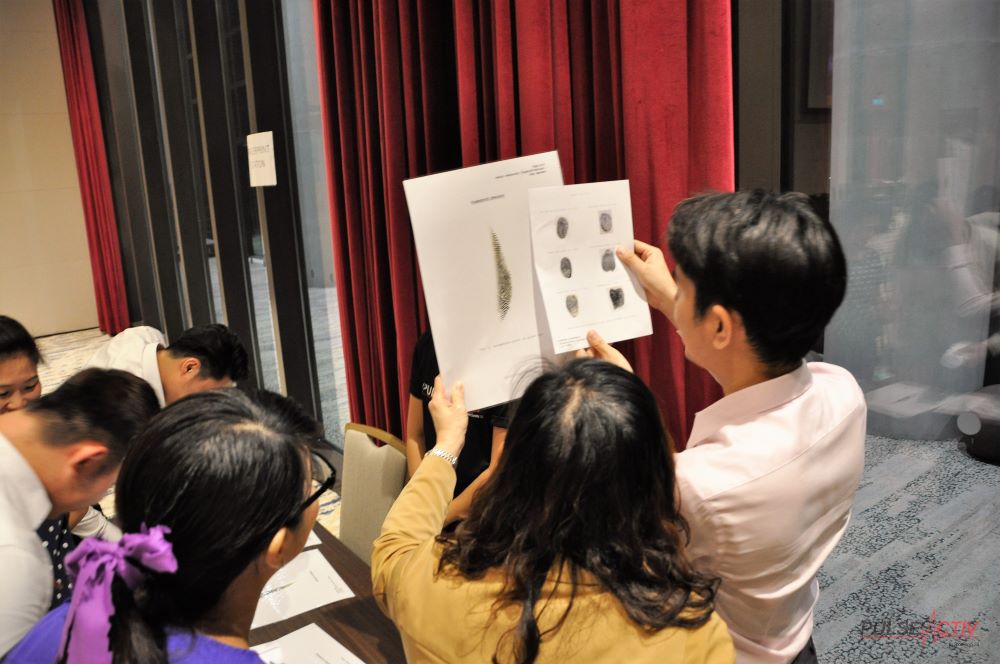
CSI Mystery is an investigation-format activity where teams work through clues, evidence, and challenges to solve a structured case. It suits groups that prefer mental engagement over physical activity, and it works particularly well for mixed groups where not everyone is comfortable in high-energy formats. The narrative structure keeps participants focused and the debrief creates a genuine shared outcome.

Best for: groups of 30 to 150, mixed groups with varied fitness levels, organisations focused on problem-solving and communication.

CSI Mystery Past Activity TB 3

10. Light and Social Formats: Makan Kakis, Minute To Win It, and Corporate 100

Not every corporate event calls for competitive energy. These formats sit at the lighter end of the spectrum and are designed to create connection through good times, laughter, and shared experience rather than structured competition.

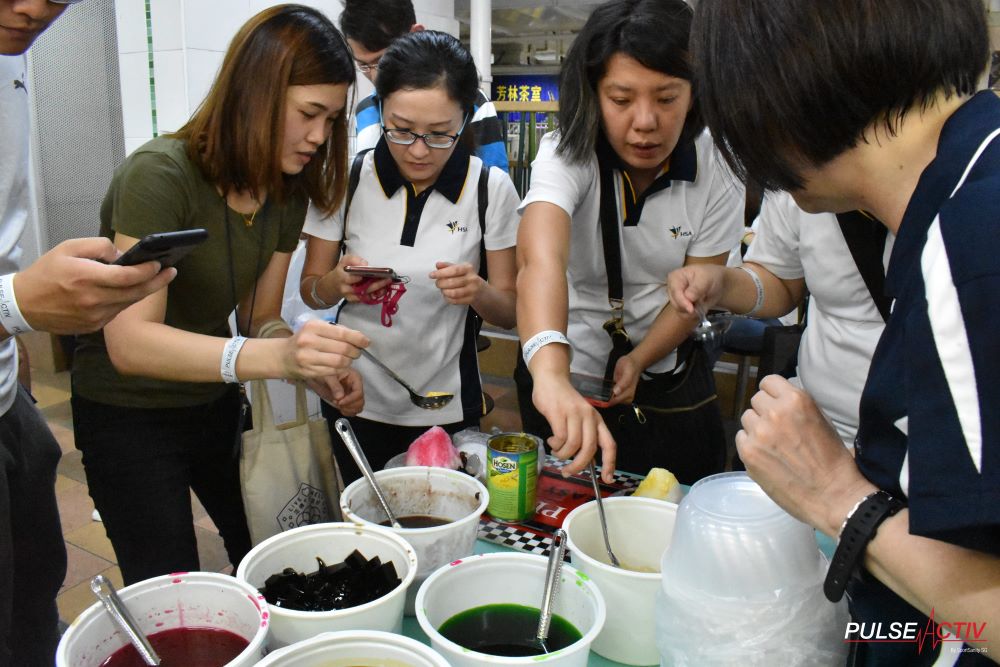
Makan Kakis centres on food as the bonding medium. Teams work through food-related challenges in a relaxed, social setting where the shared eating experience carries as much weight as the games. It works well as part of a longer event day or as a standalone programme for groups where the goal is a relaxed, enjoyable afternoon together.

Minute To Win It is table-based team bonding at its most accessible. Fast-paced mini challenges, genuine laughter, and a low-pressure atmosphere make it a natural fit for groups that want to have a good time without the intensity of competitive formats. It is consistently one of the most crowd-pleasing activities for mixed groups.

Corporate 100 is an indoor physical challenge format launching soon from PulseActiv, bringing high-energy movement into an office or function room setting for groups that want physical engagement without going outdoors.

Best for: groups of 30 to 100, corporate social events, anniversary celebrations, mixed groups where a relaxed and enjoyable experience is the priority.

CSR and Community-Giving Formats

For companies with a community giving objective, CSR formats offer a different kind of team bonding. Participants work together toward something that benefits others, which creates a shared sense of purpose that purely competitive or social formats cannot replicate.

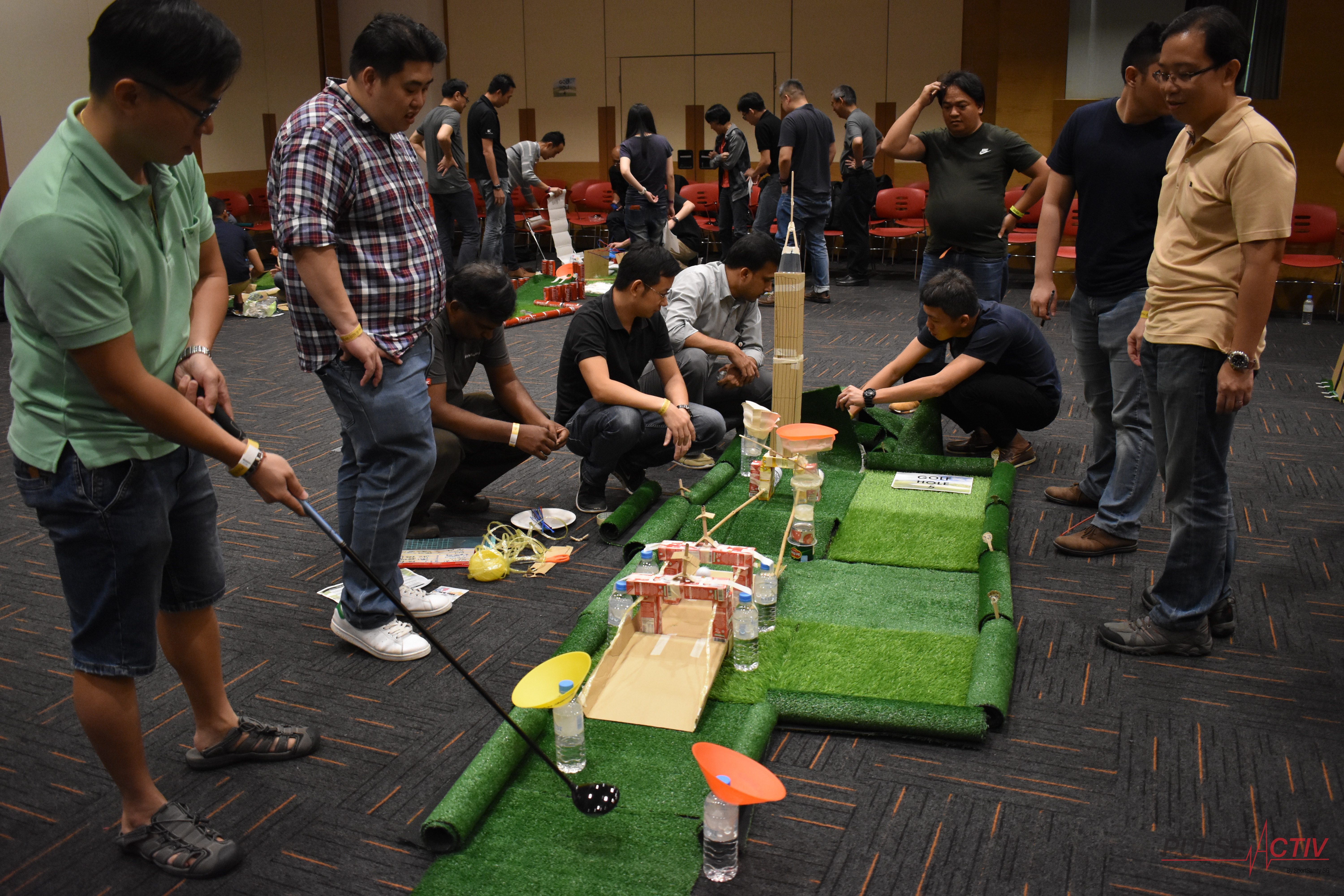
Simple CSR formats include hamper building, where teams assemble and pack care packages for donation, and wheelchair assembly, where teams build functional wheelchairs that are donated to charity. CSR Mini Golf is a build-and-play format where teams construct their own golf holes using provided materials, with the finished course donated or repurposed for a charitable cause. These formats are accessible for all fitness levels and work well as part of a longer event day.

More immersive CSR programmes involve participants directly in community outreach: beach cleanups, home cleaning and repair visits, and similar hands-on giving experiences. These are not listed on the standard activity menu but can be arranged for companies with a specific community purpose. Speak to PulseActiv directly if this is the direction you want to take.

Best for: groups of 30 to 200, companies with ESG or community giving objectives, events where a sense of purpose is as important as the team fun.

CSR Mini Golf Course Past Activity TB 1

What Actually Makes a Team Building Activity Good?

The activity name is rarely the deciding factor. Three things matter far more.

Facilitation quality

The same activity run by a strong facilitation team and a weak one produces completely different events. Energy, pacing, game explanation, crowd management, and the ability to adapt when something does not go to plan are all driven by the facilitation team, not the activity brief. When evaluating a vendor, the quality of the facilitation team is more important than the activity on offer.

Fit for the group

An activity that works well for one group profile can fall flat with another. A high-energy competitive format for a group that has never met before and includes a wide seniority spread needs different handling than the same format for a tight-knit team. The best activity for your event is the one that fits your specific group, not the one with the most impressive-sounding description.

Scalability

Not all activities scale. What works for 30 people does not automatically work for 200. For large corporate groups, the activity needs to be designed for the headcount: sub-group structure, station count, briefing approach, and facilitation team size all need to match the scale of the event. An activity that cannot be adapted for your group size is not the right activity, regardless of how well it is reviewed.

Activity Recommendations by Group Size

50 to 100 participants

At this size, most activity formats are accessible. Running Man, Wacky Wars, Pulse Amazing Race, and Build A Dream Team all work well. This is also the range where CSI Mystery and Build A Car deliver well-contained, high-quality experiences. The facilitation team is smaller and more adaptable, which gives you flexibility to adjust pacing on the day.

100 to 200 participants

Cluster formats and programmes with concurrent activity streams become more important at this scale. Mini Olympics, Pulse Amazing Race, Running Man (in cluster format for the upper end), and Property Typhoon all scale reliably here. Build A Dream Team continues to work well because its table-based structure is not dependent on floor movement. Avoid formats that require the full group to wait together between stages: at 150 or more participants, that waiting time compounds quickly.

200 to 500+ participants

At this scale, programme design and facilitation team size are the decisive factors. Mini Olympics, Property Typhoon, and Pulse Amazing Race are the most reliable formats. Running Man and Wacky Wars work well in structured cluster formats. For very large groups, the Free and Easy (Power of Choice) structure, where participants choose their own station sequence, gives the event the flexibility to absorb different group sizes and interests simultaneously. PulseActiv has delivered events at this scale for financial institutions, technology companies, and government bodies across Singapore.

The Two Most Misunderstood Activities

Running Man and Wacky Wars are the two activities clients most often misjudge from the name alone. Running Man sounds like a race. Wacky Wars sounds like chaos. Neither is accurate. Running Man is a series of structured team-based games where everyone plays together. Wacky Wars is driven by friendly head-to-head competition that creates genuine investment in the outcome. Both are carefully designed, with facilitation that brings the energy of their respective references without the physical demands or randomness people assume.

They are two of the most consistently well-received activities in the PulseActiv range precisely because the gap between expectation and experience works in the programme’s favour: participants expect fun and get something more structured and rewarding than they anticipated. When facilitated properly, these are not gimmicks. They are among the strongest team engagement formats available.

Quick Comparison: Activity Formats at a Glance

Activity

Format

Energy

Best group size

Indoor / Outdoor

Physical intensity

Running Man

Team games

High

50–300

Indoor

Moderate

Pulse Amazing Race

Station-based

High

50–300

Both

Moderate

Mini Olympics

Multi-format

High

100–500+

Both

Moderate

Wacky Wars

Head-to-head

High

50–300

Indoor

Low–Mod

Build A Dream Team

Collaborative

Medium

30–500+

Indoor

Low

Build A Car

Build-based

Medium

30–150

Indoor

Low

Squid Game TB

Team games

High

40–150

Indoor

Moderate

Property Typhoon

Strategic

Med–High

80–2,000+

Both

Low

CSI Mystery

Problem-solving

Medium

30–150

Indoor

Low

Makan Kakis

Social/Relaxed

Relaxed

30–100

Indoor

Low

Minute To Win It

Team bonding

Light

30–150

Indoor

Low

What Corporates Most Often Get Wrong When Choosing

Choosing based on what sounds exciting rather than what fits the group

An activity that looks impressive in a brochure but does not match the group’s comfort level, seniority mix, or energy will underperform every time. The most successful events are chosen by working backwards from the group profile and the objective for the day, not forwards from an activity wishlist.

Underestimating the facilitation question

Two vendors quoting the same activity at different rates are rarely offering the same thing. The facilitation team, its experience with large groups, and its ability to read and adapt to the room on the day are what produce a good event. Price-comparing activities without evaluating the facilitation behind them is one of the most reliable ways to end up disappointed.

Not asking about scalability

An activity that a vendor runs beautifully for 40 people may not translate to 200. Always ask: how do you run this for our group size specifically? What changes in the structure? How many facilitators? If the answer is vague, that is useful information.

How Much Do These Activities Cost?

At PulseActiv, pricing is based on programme duration rather than which activity is chosen. This means the full range of activities listed above is accessible across budget levels. What changes with budget is the quality of execution surrounding the activity: venue, food, prize structure, and production value.

Total event budgets vary depending on whether venue and food are included. At hotel function rooms, venue and food is typically bundled into a single per-head rate starting from $80 per person, which means the venue and food component can look like a single line item rather than a separate cost. External venues work differently and will price separately. For a full breakdown of how to read and plan a corporate team building budget, see our guides on How Much Does Team Building Cost in Singapore and the Corporate Team Building Budget Planning Guide.
If you want to know more about these activities from PulseActiv, click here.

Contact us here to learn more about these activities. Click here to read more articles like this. 

Frequently Asked Questions

Running Man is consistently one of the most requested and highest-rated activities for large corporate groups in Singapore. It generates strong post-event feedback because the format delivers genuine team energy, collaboration, and fun without the physical demands or weather risk of outdoor events. Mini Olympics and Pulse Amazing Race are also among the most frequently booked for large-group corporate events.

Total event costs depend on how the venue and food are structured. At hotel function rooms, the venue and food component typically starts from $80 per person. Activity and facilitation pricing at PulseActiv is based on programme duration. See our full cost guide for a detailed breakdown of how budget is typically distributed across a corporate team building event.

Mini Olympics, Pulse Amazing Race, Property Typhoon, Running Man, and Wacky Wars all scale reliably for groups of 100 or more when properly designed for the headcount. Build A Dream Team also works well at large scale. The key is that the programme is structured for your group size: cluster formats, adequate facilitation team sizing, and activity formats calibrated to eliminate waiting time. See our guide on team building for large groups for a full breakdown.

Yes. The majority of the activities listed above are designed for indoor environments and can be run year-round regardless of weather. For large corporate groups, indoor is generally the preferred format because it provides consistent comfort, more predictable costs, and removes the weather and logistics variables that complicate outdoor events at scale.

Evaluate on facilitation team experience with your group size, not just activity variety. Ask how many people they deploy for an event your size, what their facilitation structure looks like, and how they have handled events at similar scale before. A vendor who has consistently delivered large-group events in Singapore and can speak specifically to the logistics and design decisions involved is the right choice. Also ask how their programmes are structured: a good vendor designs the full event experience as a package, not a set of components that can be stripped out individually. Price is a factor, but it should be the last comparison you make, not the first.

Team Building Large Group Size Shot
Categories
Blogs

Why Team Building and Management Is the Key to a Successful and Well-Adjusted Team

Why Team Building and Management Is the Key to a Successful and Well-Adjusted Team

In today’s uncertain economy, having a reliable, high-performing team is one of the greatest assets a company can have. Finding and training new employees is not only expensive but also time-consuming, making it more important than ever to retain and strengthen the team you already have. This is where effective team management and engaging team building activities play a vital role. A strong, well-adjusted team doesn’t just happen—it’s built through consistent effort, trust, and shared experiences.

The Importance of a Strong Team

Every successful business is powered by the people behind it. When a team feels connected, supported, and aligned, the results show up in better collaboration, higher productivity, and stronger morale. On the other hand, when teams are disconnected, it leads to miscommunication, lower engagement, and eventually higher turnover—something companies can’t afford in today’s job market.

Why Team Management Matters

Strong management sets the tone for a healthy workplace. Leaders who provide clear direction, constructive feedback, and genuine support create an environment where employees feel valued and motivated. Effective managers:

  • Define roles and expectations clearly.

  • Recognize and reward contributions.

  • Foster open communication and inclusivity.

  • Resolve conflicts before they escalate.

This level of management builds trust and ensures that employees work together as one unit rather than in silos.

How Team Building Helps in Today’s Workplace

While management sets the structure, team building activities bring energy and connection to the workplace. These activities help employees bond, collaborate, and see each other beyond job titles. Even simple office activities can create meaningful impact, such as:

  • Coffee catch-ups or lunch rotations to build cross-departmental connections.

  • Office trivia or quiz challenges to spark friendly competition.

  • Milestone celebrations that recognize individual and team achievements.

  • Wellness breaks like group stretching, walking meetings, or yoga sessions.

  • Theme days (casual Fridays, jersey day, or festive dress-up) to lighten the mood.

These smaller efforts, combined with larger corporate team building events, help create a balanced mix of daily connection and big-picture bonding.

Why Fun Team Bonding Activities Work Best

Dedicated team building events have a bigger impact because they allow employees to step outside their routine and engage in creative, physical, or playful challenges together. These shared experiences build stronger relationships, reduce stress, and encourage innovation. Some popular team building activities in Singapore include:

  • Mini Olympics – Fun competitive games like relay races, tug-of-war, and obstacle courses bring energy and camaraderie.

  • Dragon Boat Racing – A thrilling outdoor activity that requires teamwork, rhythm, and unity to succeed.

  • Corporate Carnival Days – With booths, games, and lighthearted contests, this creates a festive and memorable experience.

  • Board Game & Puzzle Challenges – Perfect for strategy, problem-solving, and relaxed bonding.

  • Charity & Volunteer Events – Working together for a meaningful cause builds purpose and shared values.

  • Creative Workshops – Activities like painting, crafting, or building projects encourage creativity and reveal hidden talents.

  • Sports or Fitness Sessions – From yoga classes to football matches, physical activities promote wellness and team spirit.

These events aren’t just “fun days out.” They directly contribute to better communication, higher trust, and a stronger workplace culture that employees want to stay in.

The Advantages of Prioritizing Team Building

When companies consistently invest in team building activities and good management, the benefits extend far beyond the event itself:

  • Employee Retention – Happier, more connected employees are less likely to leave.

  • Increased Productivity – Stronger collaboration means smoother workflows.

  • Innovation & Problem-Solving – A bonded team shares ideas more freely.

  • Resilient Culture – Teams that enjoy working together adapt better to challenges.

  • Employer Branding – A positive culture attracts top talent in a competitive market.

Final Thoughts

In a competitive economy where replacing employees is costly, team building and effective management are the keys to building a successful and well-adjusted team. From small in-office activities to larger events like Mini Olympics, Dragon Boat Racing, or Corporate Carnivals, these experiences create lasting bonds, boost morale, and strengthen workplace culture.

At the end of the day, a company is only as strong as the people driving it forward. By investing in consistent management practices and meaningful team building activities in Singapore, organizations can create resilient, motivated, and happy teams that thrive together.

Corporate Dinner & Dance Events Singapore | PulseActiv
Categories
Blogs

Planning Ahead for Your Corporate Events, Team Building Activities, Family Days & Company Dinners

Planning Ahead for Your Corporate Events, Team Building Activities, Family Days & Company Dinners

In Singapore, the second half of the year is one of the busiest seasons for corporate events. From team building activities and family days to company outings and celebration dinners, many organisations are taking the opportunity to reconnect, reward, and celebrate with their teams.

If you’ve been thinking about organising an event for your company, there’s one golden rule to keep in mind — plan ahead. Starting preparations at least 1 to 2 months in advance can make a huge difference in securing the best venues, activities, and overall experience for your employees.

Why Planning Ahead Matters

1. Venues & Vendors Get Booked Out Quickly

Singapore has plenty of fantastic venues, from beautiful outdoor spaces like Sentosa and Gardens by the Bay to stylish restaurants and function halls. But with so many companies hosting events during this peak period, slots fill up fast. Early planning gives you more choices and flexibility — whether it’s your dream location, the perfect caterer, or exciting entertainment options.

2. More Time to Design Engaging Programmes

Every company has different objectives — some want fun team bonding activities, others prefer family-friendly carnival games, while some aim for an elegant awards dinner. By starting early, you’ll have time to customise the event programme to suit your goals, team size, and budget, instead of rushing into a “one-size-fits-all” plan.

3. Less Stress, Better Execution

Corporate events involve lots of moving parts — logistics, food, activities, transport, coordination and more. The earlier you start, the more time you have to plan every detail properly. This means fewer last-minute changes, fewer surprises, and a smoother, more enjoyable experience for everyone on the day itself.

4. Budgeting Becomes Easier

When you start planning early, you’ll have more room to compare options, negotiate better rates, and control costs. On the other hand, leaving things to the last minute often means paying higher prices or having to settle for limited choices.

5. More Time to Choose & Explore

Planning ahead gives you the freedom to explore different ideas and options before making a decision. Whether it’s shortlisting multiple venues, testing out new activity concepts, or exploring different catering menus, you’ll have the chance to compare and select what truly suits your company’s culture and preferences. This way, you’re not forced to compromise — you get the event you actually want, not just what’s left.

The Trend in Singapore Right Now

More and more companies in Singapore are making time to bring their teams together — whether it’s a team building day to strengthen collaboration, a family day to celebrate with loved ones, or a company dinner to recognise achievements.

After years of hybrid work and busy schedules, there’s a growing demand for meaningful, shared experiences. Many organisations have already started locking in their dates and venues for the coming months, which is why it’s important to plan early if you want the best options.

Now Is the Perfect Time to Start Planning

We’re entering the prime season for:

  • Team Building Events & Activities

  • Company Outings & Off-Sites

  • Family Day Celebrations

  • Gala & Appreciation Dinners

  • Overseas Retreats

Many companies are already locking in their dates, venues, and programmes. Don’t get left behind — start planning now to ensure you get the best experiences for your team.

How We Can Help

If you’re not sure where to start, working with an experienced event organiser can make the process easier and stress-free. At PulseActiv, we’ve helped over 2,500 events in Singapore design and run team building activities, family days, company outings, and gala dinners. Our team works closely with you to craft events that are fun, memorable, and meaningful while taking care of all the behind-the-scenes details.

Whether you’re planning something small and simple or a large-scale company celebration, we’re here to make the process smoother and more enjoyable.

Start planning today and secure your preferred dates before the peak season kicks in!

Categories
Blogs

The 5 Best Outdoor Activities for Team Building in Singapore

The 5 Best Outdoor Activities for Team Building in Singapore

Looking for exciting outdoor team-building ideas in Singapore that go beyond the usual trust falls and tug-of-war? Whether you’re bonding under the sun or chasing teamwork goals with a view, these activities promise more than just fun — they’re designed to build stronger connections, sharpen problem-solving skills, and leave your team smiling (and maybe a little sweaty). Here are five of the best outdoor team-building activities that turn Singapore into your very own team adventure playground.

1. Amazing Race – Explore, Compete, and Conquer

Ready, set… strategize! The Amazing Race isn’t just a sightseeing tour — it’s a high-energy adventure that takes your team across Singapore’s most iconic spots with exciting challenges at every turn. Teams must crack clues, conquer tasks, and move quickly while working together to stay ahead. But here’s the twist: it’s not always the fastest team that wins — it’s the one that collaborates the best under pressure.

Perfect for groups who want a blend of brain and brawn, this outdoor challenge rewards teamwork, communication, and a healthy dose of laughter. Plus, it’s fully customizable and can even be brought to other parts of Asia. Your team won’t just race — they’ll bond in unforgettable ways.

Amazing Race Singapore Team Building

2. Click, Snap, Move! – Singapore Through a New Lens

Who knew that team-building could be a photo-worthy adventure? In Click, Snap, Move!, your team becomes part scavenger hunt squad, part creative crew. You’ll be exploring off-the-beaten-path spots in Singapore, snapping unique and hilarious photos to complete a series of themed challenges.

The key to winning? Quick thinking, collaboration, and an eye for detail. It’s a joyful mix of spontaneity and strategy — with plenty of unexpected laughs along the way. If you’re looking for a feel-good activity that captures memories and creativity, this one’s definitely picture-perfect.

3. The Running Man – Ridiculous Fun with a Competitive Twist

Inspired by the hit Korean variety show, The Running Man team-building experience is all about fast feet, quick reflexes, and a whole lot of unpredictable fun. Teams go head-to-head in quirky, laugh-out-loud games designed to get hearts racing and alliances forming (and maybe falling apart!).

While you won’t be chased by a celebrity, you will be challenged to outwit and outplay your opponents — all while building camaraderie and trust. Expect the unexpected in this adrenaline-pumping session that brings out everyone’s playful side.

4. Squid Game: Remake – Play to Survive, Bond to Win

Think childhood games — with a twist! Inspired by the popular series (minus the dark bits), Squid Game: Remake offers a thrilling mix of nostalgia and competitive fun. Teams must rely on clear communication and razor-sharp teamwork to survive a gauntlet of cleverly designed challenges.

What starts off as light-hearted fun quickly turns into a test of adaptability, trust, and cool-headed problem-solving. But don’t worry — nobody’s getting eliminated for real. The real win? A shared experience filled with suspense, strategy, and unforgettable moments.

Squid game past activity 2

5. Mini Olympics – Go for Gold as a Team

Take a breather from the office and get ready for your very own Mini Olympics! This lively outdoor team-building activity blends traditional sports day vibes with creative team challenges that test more than just physical ability.

From hilarious tele-matches to fringe activities that anyone can enjoy, the Mini Olympics focuses on inclusivity, teamwork, and high spirits. Whether your team is aiming for the podium or simply in it for the laughs, this is the kind of sports day that energizes and unites. Bonus: there’s even an indoor version for those unpredictable weather days!

Mini Olympics Past Activity TB 1

Conclusion

When it comes to building strong teams, nothing beats stepping outside the usual office routine and into something a little wild, creative, or competitive. From photo challenges to thrilling races and nostalgic games, these outdoor activities in Singapore offer the perfect mix of fun, collaboration, and team spirit.

So, which adventure will your team take on next?

Categories
Blogs

Why Squid Game-Inspired Team Activities Are the Ultimate Employee Favorite

Why Squid Game-Inspired Team Activities Are the Ultimate Employee Favorite

When someone mentions Squid Game, almost everyone immediately knows what they’re talking about. The South Korean Netflix sensation captivated audiences worldwide with its high-stakes games, suspenseful storytelling, and intense competition. Now, the excitement of Squid Game has found its way into corporate team-building, creating an immersive and engaging experience for employees everywhere.

In the world of workplace bonding and team development, only few activities match the thrill, camaraderie, and strategic engagement of Squid Game-inspired team challenges. These events combine nostalgia, strategy, and friendly competition to create a memorable and exhilarating team-building experience that everyone craves. As we kick off 2025, it’s clear that this has become the most popular activity of the year. The excitement is likely fueled by the arrival of the new season, drawing in more participants eager to experience it firsthand.

Squid game past activity 1

The Influence of Squid Game on Team-Building Activities

When Squid Game premiered, it became an instant cultural phenomenon. The show’s blend of childhood games, strategy, and intense competition struck a chord with millions worldwide. Naturally, team-building organizers saw an opportunity to adapt these elements into safe, engaging, and fun activities that encourage teamwork, critical thinking, and problem-solving under pressure.

Unlike traditional corporate exercises, Squid Game-inspired activities offer a unique mix of mental, physical, and strategic challenges. Employees get to experience the thrill of the show—without the life-or-death stakes. Instead, it’s all about collaboration, teamwork, and making unforgettable memories.

Why Employees Love Squid Game-Inspired Activities

These challenges aren’t just fun—they bring employees together in a way that few other activities can. Here’s why these games have become a favorite in corporate settings:

1. Adrenaline-Packed Excitement

One of the main reasons employees love these activities is the sheer excitement they bring. The tension of elimination-style rounds, combined with high-energy challenges, keeps participants fully engaged and eager to compete.

2. Nostalgia Meets Teamwork

Many of the challenges are based on childhood games like Red Light, Green Light and Tug of War. This nostalgic factor creates a playful atmosphere while reinforcing collaboration and teamwork.

3. Encourages Strategic Thinking

Unlike simple relay races or sports games, Squid Game-inspired activities require teams to think on their feet, analyze risks, and devise smart strategies. Employees must communicate effectively, delegate tasks, and make calculated decisions—valuable skills in any workplace.

4. Fosters Healthy Competition

The elimination-style format adds a layer of friendly competition that pushes employees to do their best. While the goal is to win, these challenges also emphasize supporting teammates and working together.

5. Strengthens Team Bonds

While the competitive element is exciting, the core of these activities lies in teamwork. Employees must rely on each other’s strengths, trust their teammates, and collaborate, leading to stronger relationships at work.

Ultimate Survivor Past Activity TB 2

6. Boosts Morale and Engagement

Taking part in unique and engaging activities like these significantly boosts employee morale, reduces stress, and enhances overall job satisfaction. Employees who enjoy their time together outside the office feel more connected and engaged in the workplace.

7. Enhances Communication Skills

Success in Squid Game-inspired challenges hinges on clear and effective communication under pressure. This dynamic mirrors workplace scenarios where quick thinking and teamwork are critical for success.

8. Develops Leadership and Problem-Solving Abilities

Each game requires decision-making, leadership, and adaptability. Employees step up to lead, assess situations critically, and make quick yet strategic choices—skills that translate directly into professional growth.

9. Encourages Trust and Team Cohesion

Many of the challenges involve trusting teammates and working towards a common goal. These moments help cultivate a stronger sense of unity and respect among colleagues.

Squid Game past activity 3

Popular Squid Game-Inspired Team Challenges

If you’re considering bringing Squid Game-themed activities to your next corporate event, here are some of the most exciting and loved challenges:

  • Red Light, Green Light – A test of agility, patience, and focus.
  • Tug of War – Strengthens teamwork, strategy, and coordination.
  • Dalgona Candy Challenge – A fun, high-pressure task requiring precision and concentration.
  • Marbles Game – Encourages negotiation, trust-building, and quick thinking.
  • Glass Bridge Relay – Tests risk assessment and decision-making skills in an exciting format.

Conclusion

Squid Game-inspired team activities are far more than just a passing trend—they’ve become one of the most popular and engaging team-building experiences for employees worldwide. By combining nostalgia, strategy, and an adrenaline rush, these challenges create an unforgettable bonding experience that strengthens team dynamics and workplace relationships.

Beyond just entertainment, these activities promote essential workplace skills, such as communication, leadership, problem-solving, and collaboration. They also serve as a fantastic way to boost morale, increase engagement, and create a positive company culture.

If you’re looking for a thrilling and immersive team-building event that employees will truly enjoy, look no further than Squid Game-inspired challenges. Just remember, unlike in the show—everyone’s a winner in the end!

If you want to know more about Squid Game inspired activities we have at PulseActiv, Click here

Team Building Events Gallery - Group Photo